
Creator stories N° 22 / 23
South Africa
Ulrico Grech-Cumbo
Founder & CEO, Habitat XR
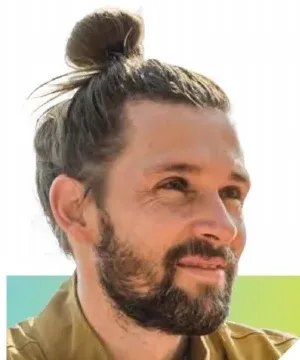
Ulrico Grech-Cumbo is the CEO of Habitat XR, a South-African based company with a mission to democratise access to nature through immersive technologies. Since his first VR startup in 2014, he has gone on to lead one of the most impactful VR companies out of Africa. His productions have captured never- before-seen-moments in the wild, which have formed a key part in the success of fundraisers for the preservation of endangered and threatened species. In this spotlight, he shares the genesis and journey of Habitat XR, his adventures in the wild, and his thoughts on the future of XR technology.
Tell us about your journey into XR and how you started creating XR solutions around nature?
I’ve always been interested in technology and engineering, so I studied mechanical engineering at the University of Witwatersrand in Johannesburg. In my third year, my schedule opened up completely and I started getting involved in planning public events like comedy shows, and music events and that sort of stuff to get a bit of money on the side.
I found that it really indulged my creative sort of itch, and I enjoyed that. By the time I came back to full-time studying, I was running a small company in the events space.
I realised that there are parts of the events world where you can immerse people in an experience, and it is within your control to create a production that completely spellbinds them and takes them through your portal into almost another world. I was running this company from 2004-2005 through to 2010. Then we started doing these events for brands. For example a brand like Stimorol, would commission us to create this amazing experience that would bring in lots of different kinds of lights and lasers and technologies and audiovisual presentations, combined with music.
What I didn’t really realise then, was that we were less in the event space, and more in the immersive experiences space, even though there wasn’t much technology like VR headsets and AR.
I started missing the engineering side of things and began to add more technologies into these human experiences, exploring interactivity and digital design more. We used technologies like motion capture, body scanning with Microsoft Kinect, RFID technology, photogrammetry, basically various different installations and experiences.
Around 2014, I started hearing the word Oculus being mentioned on the web and on social media. I came across the Kickstarter page for Oculus, though back then it was the pre-Facebook Oculus, so it was Palmer Luckey’s Oculus and they were trying to get their first VR headsets crowdfunded. I decided it was a pretty awesome headset to be able to show potential clients what an event or space could look like. I thought of it as a pre-visualisation tool, so I ordered an Oculus DK1.
One fateful day, I found myself in a room with some executives from one of the South African banks. I’d spent years trying to get into this room, so I was a little bit nervous, and maybe a bit overzealous. I was just pitching lots of different ideas, trying to figure out what it was they were interested in. I had this VR headset, and was pitching this idea of VR. I was like, “It’s amazing, you guys have to try it. You put this VR headset on your head, and it completely teleports you into another realm,” even though I’d never experienced it for myself at that point, and they said, “This sounds really interesting. Is it possible to put a real-world 360 scenario inside of your headset and have other people watch that back?” I asked them what they had in mind. They told me they had endorsed some jazz artists and if it was possible to create a digital experience where people could feel like they were part of the band. Right then, I had absolutely no idea if that was possible at all. So of course, I said yes.
A couple of days later, they issued a purchase order for this experience, and suddenly, we were thrown in the deep end. I called a friend of mine who was doing a lot of our video production work and told him we had to do something we had never done before. So, we set ourselves this sky-high goal of filming in cinematic 360 with that 3D depth. What that looked like was me getting a block of wood, and 14 GoPros, and a bunch of elastic bands from underwear, and literally stapling them into this block of wood for proof of concept.
Unfortunately, the proof of concept, while it worked, never evolved into anything more aesthetically pleasing, because the event was just a few days away. So, we rocked up to the set with our 360 camera and this Frankenstein rig on a rusted pole, which we hadn’t really tested. All we knew we could do was press record on all those 14 GoPros arranged in a ball and hope for the best. And that’s how we got into cinematic VR and into the world that we now call XR.
I thought this was going to be a side hustle, but my video editor friend and I were incredibly proud of what we achieved and both wanted to start a company on the side. He was running his production business, and I was running my experiential events business. We put up a website and said once every couple months when someone calls, and wants some sort of 360 video thing, we knew we could do it. And the phone started ringing within 24 hours of the website going up, and to this day it has not stopped. That was 2014 and we’re in 2022 still full time in the XR world.
What was your first XR experience like?
The first time I put a VR headset on, it was a very poorly rendered roller coaster experience. Initially, I wasn’t super impressed. I was in position on this roller coaster. It didn’t look great, the headset was a bit fuzzy, and I could see the pixels. Then the roller coaster started moving, and that completely made my brain do a backflip. As I was going up the steep part, just as you would with a regular roller coaster, I started sensing vertigo, which I don’t really ever feel, that feeling of being really high up and out of control.
But the part that stuck with me from the whole experience was when the roller coaster went downhill and proceeded to go into a left bank. What you would normally do on a roller coaster is to kind of lean into the corner so you don’t just tumble out the other side, and I did that. But this was VR and there were no G forces, so I fell out of my office chair, which was really weird because my brain didn’t understand whether something was happening in the real world, but I was really scared in the virtual world.
That was the first moment I truly understood that this medium was incredibly powerful. Unfortunately, I felt nauseous for the next 12 hours and at night in my bed, my head was completely spinning. So, I wouldn’t say it was a great experience, but it was a powerful experience. It made me realise with that power, there could be some amazing experiences, if they were carefully curated.
How did you get people with the skills required to build for XR? Have you personally had any training in XR development and do you offer training for those who work with you?
I realised pretty early on that we needed to hire people who had some of the fundamental skills. In our early days, our focus was on cinematic VR, which meant that we were filming live-action with 360 rigs we were developing ourselves, and we needed people who could help us with the post-production side of things. So, we were looking for people that understood Final Cut Pro and Premiere Pro. And what we needed to train them on, was how to translate 360 videos, and the process of stitching, for example, into traditional editing workflows.
To this day, we put people on a three-month probation period when they join us, and that period is mostly for learning and understanding. In the early days, we didn’t know how to do it very well. We would bring a couple of guys on, put them on a salary, tell them they’ve got time to figure stuff out, try the tools and we would put some budget towards software and other stuff like that. It worked out and not much has changed.
Have I studied anything in the XR world? I just haven’t come across anything that actually teaches valuable skills. I did quite a fair amount of talks at conferences before the pandemic, and a lot of people ask me how they can get into XR. I wouldn’t advise studying anything, because I don’t think that theoretical skills are as valuable as practical skills just yet. And we’re living in an age where so much information is democratised, so someone who’s figuring stuff out starts a YouTube channel and is doing tutorials. That is far more valuable than traditional places of education.
Habitat XR is more impact-driven, what made you decide to go this route?
There were many 100-hour work weeks for the team, which were spent on experiences for consumer products and brands, some of which we didn’t necessarily feel anything for. We started questioning our actions. “What are we doing for the world here?”; “Are we really adding value by helping sell more baby wipes?” So, around the beginning of 2016, we decided to start a division within the main studio. That division was called Habitat at the time, and was about us taking some of the profits we’d made, and putting them into our own original work - stuff that we felt would be exciting, fun, potentially involve some travel - and then experiment with them from a storytelling and creative point of view.
But if we were going to compete on a global level against lots of VR studios, our competitive advantage being in South Africa was access to nature. And we all love nature. It’s what we do when we’re not working. So if we’re going to these places on vacation, we could just take a rig with us, try filming some wildlife and see how it goes. That was the start of Habitat.
Habitat XR, was just a division within the company to essentially blow off creative steam, and as we started getting more and more into it, we realised we certainly enjoyed the work we were doing in Habitat more than the commercial work, but there was no way for it to pay for itself. So until I could figure out how it could pay for itself, we had to do commercial work, and kind of sell our souls for money, in order to fund stuff we really wanted to do.
What was your first Habitat XR project and how has it been since you started?
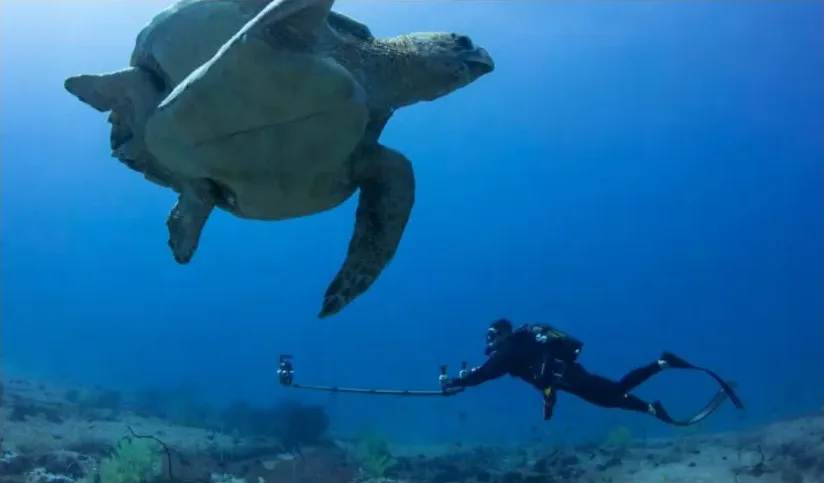
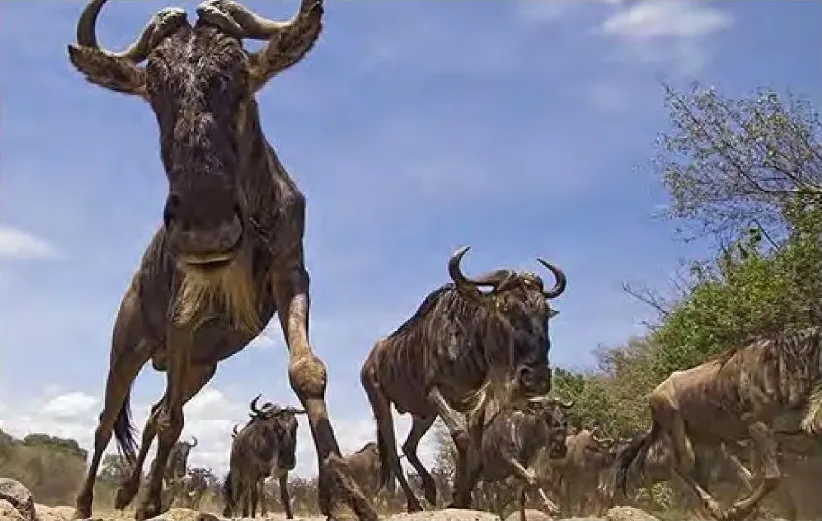
The first one we did was called Exodus, The Great Migration. The whole team flew out to Kenya, during this natural phenomenon, when wildebeest migrate from the Serengeti, in Tanzania to the Masai Mara, in Kenya. So we thought of it as a nature documentary, but one where you’re inside surrounded by the action. When we started screening publicly, we asked ourselves, who would want to come to watch. We thought of the folks at WWF, Conservation International, and these conservation organisations and invited them. When they came to watch, their eyes were the size of saucers. They came to us and said, “Guys, we need you to make this kind of thing for us, we need to use this as a fundraising tool, we need to use this as an outreach tool.”
So we started making a bit of money, creating commissioned experiences for conservation NGOs, which was a super interesting process. And when we talk about being an impact-led studio, this is the kind of genesis of impact, making films for ourselves in immersive space, and then being able to put those films on the heads of high net worth individuals, and asking them to donate to the causes of these conservation NGOs.
We work with conservation non-profits, and help them with fundraising. On average, they are seeing 12 to 1 return on investments. So for every one rand, or one dollar that they put into commissioning us to create content, they are on average, getting 12 times that back through these experiences.
I think the thing I’m just so grateful about is the fact that we were able to achieve building a business model around impact work that also fulfils us. So, we’ve just got this beautiful overlap of having a compelling mission, super exciting technology and a bunch of really amazing people that we get to work with to achieve impact. Habitat XR is now the full-time thing.
So, what’s the vision of Habitat XR?
Our mission statement is to democratise access to nature using immersive technology. Democratising access to nature is really about making sure the distance, time and money that it takes to travel to be connected to nature is no longer a reason we don’t care for it.
A lot of what we are currently doing is exploring different technologies that are kind of evolving faster because of the pandemic, like social VR, for example. We’ve done some really exciting stuff in the social VR realm, which is where multiple people can put on a headset in the comfort of their own home, but meet virtually in the same space, completely free of COVID, in environments that are completely up to us to create.
I’d say the ultimate vision really is about trying to make sure human beings have the primal connections they need to nature, using all these incredibly exciting technologies.
Could you share an example of content that Habitat XR has created that is in line with your vision?
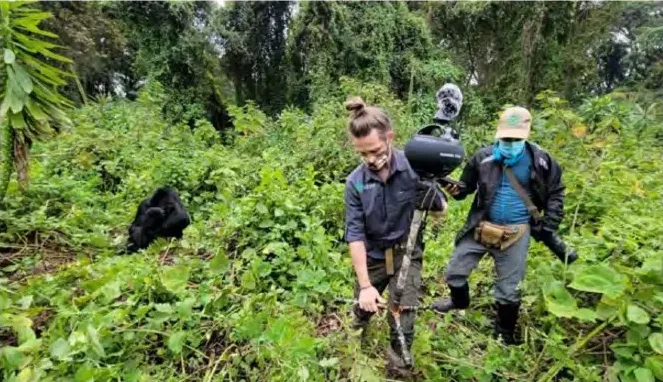
We’ve been working with the Dian Fossey Gorilla Fund in Rwanda, who do a tremendous job at conserving the mountain gorillas which are a critically endangered species. We’ve been working with them to tell stories about gorilla behaviour that helps illustrate the parallels between gorillas and human beings in terms of those behaviours like family structures, feuds, best friends and enemies, and the very complex social environments around that.
We’ve done a few experiences for them, as well as their partner, the Ellen Fund, working closely with them and even Ellen DeGeneres herself, to help contextualise the plight of mountain gorillas. The piece we did for Ellen was a particularly interesting one, because initially it was supposed to be an eight-minute long narrative experience about being around mountain gorillas.
So, we went out to Rwanda on the slopes of this volcano, where we found mountain gorillas doing what they do best and packaged that into a really cool experience. What we realised is once you put on the headset and make eye contact with a mountain gorilla, it kind of speaks for itself, so we ended up not even narrating the experience, it was just you and mountain gorillas for like five minutes.
The profound effect that it had on people was mind-blowing. The content was first used at a fundraiser in Los Angeles that Ellen was running for her foundation, and they raised $5 million in a single night. All the Hollywood celebrities, like Julia Roberts, Leonardo DiCaprio and the Kardashians were there. Based on their work schedules and their geographic locations, it’s difficult for them to get out to see mountain gorillas for themselves in the world.
So for Ellen, when she goes to all of her Hollywood friends and says, “I want to save mountain gorillas, please make a donation,” the context is missing. They can show them photos or videos, but until you’ve actually been around mountain gorillas, you don’t really understand how profoundly amazing they actually are. And that’s what the VR experience achieved that night and Ellen totally understood that power.
How do you distribute the content you create, so that people can access it beyond screenings?
What distribution used to look like for us was bringing our Oculus Gos along when we needed to screen something. It was great as far as people being able to see things on the hardware that they should use, but we needed it to live beyond me and my team being in some physical location.
We recently finished building a permanent immersive theatre for the Dian Fossey Gorilla fund supported by Leonardo DiCaprio. It’s based on projectors, and we’re getting a lot more into that world, where it’s not just about content anymore. We are putting technical teams together that can create immersive installations where experiences can live on and service many people and touch many more 1000s of hearts and change their minds.
What kind of work goes into setting up an immersive space of nature, and how’s that different from just the work you do for VR headsets?
Part of what influenced the idea is that the pandemic has now obviously become a major force in the world, and sanitation is something that has to be thought of a lot more seriously. So as part of our contributions and work at the Dian Fossey gorilla Funds campus, there are actually VR headsets as part of an installation in an area. But we wanted there to be a space that could help recreate virtual worlds, without the need for technology to be worn or operated by the user, and you could bring a group of school kids into a room, and let their minds be blown away and let all positive things about immersive technologies and experiences overwhelm them, but with the ability to still see and interact with one another, their teachers or parents.
We built a 12.5m X 9.5m Oval Room. We got eight laser 4K projectors that project onto a very specialised projection screen. We also created a tensioning mechanism to make sure the screen is always completely taught, so we don’t have any of those shadows or defects in the wall, etc. The whole theatre is a 25k resolution theatre. The walls are 2.5m higher than the projection face; and there’s a 10.2 surround sound audio system, so you’ve got spatial sound inside this theatre, which basically allocates the sound coming from where you see a lot of the screen.
To get a laser 4k projector two years ago would have cost several tens of thousands of dollars per projector. We saw the same thing happen with VR headsets back in the day. Our first VR headset in 2014 required a PC and that whole kit cost maybe $5,000 and now, Oculus Quest 2 cost 200 or 300 dollars. So the same thing has happened with different technologies.
How are you able to get people to buy into new tech, especially when they are not very familiar with it?
You’ve got obstacles that happen on the actual production side, and you’ve got obstacles on the consumer side of things. Nine years down the line, these things are no easier than they’ve ever been. Technology is evolving all the time, and so fast that nothing ever really gets a chance to perfect itself, which is always on to the next thing. That has been super challenging. But ultimately it’s about creating a human experience, and once someone feels that, they get it.
It’s the ability to embrace uncertainty and swat through problems no matter what they are that form the core tenets of the Habitat XR team. We hire people who have resilience with dealing with lots of things not working very often.
Even though we are in this space all the time, it’s still sometimes a little difficult to understand. There are lots of phrases that people have heard, but for them to be tangible, it requires people who understand it to explain it in really valuable ways. We can’t work with conservation partners if they don’t understand what they’re going to get and how it actually affects people. So that process is really hard, but we’ve been in this long enough to understand how to distil complex ideas down into bare essentials. I also think just being able to anticipate that things will always go wrong, has made us a lot more resilient toward that actually happening.
Is it possible for you to pick out a project that you consider most impactful or do you have one you’re extremely proud of?
That’s a tough question. There are so many things I’m proud of. We’ve overcome insane challenges in various ways on various projects, and I would say no project we’ve ever done was easy. I can certainly give you some examples. I’m very proud of what the fundraising results were for the gorillas. I’m very proud of a social VR project that we did in 2020. There was a Wildlife Film Festival that was supposed to happen in Durban, South Africa, and because of the pandemic, people couldn’t travel and congregate. They were going to cancel, but I got in touch with them and told them about Social VR.
It was such an incredibly technically and operationally difficult thing for us to pull off. We needed to acquire a whole bunch more VR headsets, but no one was shipping and all the flights were grounded. So, what we did was literally ship our headsets to people who had enrolled for the event across like seven or eight time zones in about 16 countries.
We had 300 people engaged for a week in this virtual festival. It was an incredible experience for everybody.
Then the stuff we’re doing for Dian Fossey is really a glimpse into the future of Habitat XR. I think 25K immersive theatre is a phenomenal thing that exists in the world. We’re also doing an Augmented Reality experience for them. We’ve intentionally stayed a bit away from AR over the years, because we didn’t see it as being incredibly valuable and immersive just yet. It seemed like more of a gimmick. We were waiting for the technology to catch up and see what it could do.
The new Dian Fossey campus is an impressive series of buildings, where the immersive theatre exists too. They’ve got a wild garden, which is full of vegetation you would find in the gorillas’ natural habitat and there’s a pathway between the buildings. The AR experience, which is called GorillAR, is basically putting a photorealistic silverback gorilla onto the pathway amongst the real plants. He interacts with these real plants by feeding on bamboo and stinging nettle, and makes a nest to sleep in for the night, etc. Even though we’re not finished, I’m really proud of the fact that we were able to sell the idea to our partner, the Dian Fossey gorilla fund, and proud of the technical achievements we’ve made so far with its development.
But the single thing I’m most proud of would have to be the snow leopards we filmed in India. We were brought out there by UNDP, India. They wanted to put an experience together for CMS COP, which is a conservation conference that shows the astounding natural beauty of the Ladakh province in northern India. Now, snow leopards are one of the most elusive animals in the world, and we had these very lofty ideas about being able to capture them in 360. The partners we were working with laughed at us, because they’d been camera trapping snow leopards for years and they understood their behaviour, so there was no way our idea was going to be possible.
I said to them, “It seems to me that if nature wants us to tell the story, nature opens a door, all we gotta do is walk through that door, and do everything we can.” We’d been in India for two weeks, saying we were going to get snow leopards and on the very last full day, when we were in the Ulley valley area of Ladakh, one of the village elders told us about some weird marks in the snow, a couple of kilometres up on the hillside. And this was the Himalayan mountain range. So this old guy had a look through the scope and identified there was a disturbance in the snow. So, we got into the car to have a closer look and drove up as far as we possibly could. We took all our gear out, walked closer, put the scopes up toward the mountain side, only to see there were three snow leopards that had made an Ibex kill (it’s like a large goat). They were chilling on the rocks and the kill was lying in the snow. Occasionally, they would come off the rocks and feed on the kill. In a gap where they moved off for a few hours, we were able to get the camera next to the kill, and the technology worked in a way that it had never worked before. We were able to remotely trigger our camera from a distance further than we’ve ever been able to do, maybe because of the density of the air and cold and stuff. In the end, we got 45 minutes of footage of snow leopards feeding on this ibex like a metre and a half away from the camera. It had never been done before. I can’t imagine it’ll ever get done again. On paper, it is impossible. It was just such a hugely triumphant moment for us. We even printed out a 2.5m long canvas of the shot of those snow leopards and we put them up in our main editing suite at the office as a reminder that there is no such thing as impossible.
What does it take to film wildlife in 360?
To film wildlife in 360, you need a camera on a tripod, usually within about five metres of whatever it is you’re trying to show, otherwise, it’s not a great experience. The benefit of a traditional camera is that you’ve got a fixed frame, and you’ve got a zoom lens. That means you can sit on the back of the vehicle, for example, and you can film a lion. That lion could be 100 metres away, but it’s going to completely fill the frame of your TV screen.
But your 360 camera has to be very, very close to the action for it to be a good enough experience for somebody to feel like they’re really gaining access to this incredible moment in time. And from a cinematography point of view, what that means is that we have to be able to be where the action is, and predict where that action is going to be, and that’s super difficult. For example, if you’re filming lions and you are standing next to your camera, you’re going to get eaten. So you have to be able to predict where the lion is going to be within five metres. Same thing with elephants, rhinos, gorillas, etc. That’s why it’s challenging to film wildlife in 360.
What would you say makes XR Technologies unique?
Empathy. There’s a fairly huge amount of studies and white papers out there about this kind of stuff. There’s a physiological effect that takes place when a person goes into an immersive state. So when you, as a content creator, are able to create that state, which we call telepresence, there are amazing things that can happen for empathy. And basically, it turns a person from being just a spectator to being an active participant in an environment, an active witness in a scene, and makes you care a lot more internally about these things.
Research from the likes of the Stanford Human Interaction Lab, and some of the stuff that’s come out of Cambridge, and the UK and the health system, show virtual nature is incredibly important and powerful. And we know this through objective forms of measurement, such as heart rate, pupil dilation, galvanic skin response, etc.
I think we are fighting against some very old preconceived ideas - outside of the African continent - about what Africa is capable of, and I think we’ve all been born into an era where it’s now our responsibility to challenge those conventions and ideas, by blowing people’s minds.
Ulrico Grech-Cumbo
What’s your response for people who are sceptical about using technology to access nature?
Some people are concerned from a behavioural point of view. They understand that it’s cool if you can stand next to a wild lion in VR, but kids can go to a game reserve and think they can do the same. That’s one form of scepticism.
Another form of scepticism says there’s no replacement for nature, you have to be truly present to know what nature feels like. What we do is that when we communicate with the public, partners and clients, we try to take the technology layer out of those conversations, so people don’t feel overwhelmed.
Usually about 98% of the scepticism we hear about is completely silenced by people getting their own experience. They get this “aha!” moment.
Could you tell us about the equipment you use?
We have different tools for different outcomes. If we’re talking about cinematic VR, you need really high-end editing computers. So we use a combination of Apple and PC-based computers. Our current favourite camera to film with is the Insta360 Titan, it’s a really big camera. A lot of people don’t like it because it’s heavy, and because stitching is hard. We’ve got some cool spatial audio microphones that record sound in 360 we then pair with the 360 footage.
We also do a combination of things like photogrammetry, where we use traditional photographic cameras to 3D Scan assets in the world, like plants and rocks and trees. We’re getting to a point where we’re going to be 3D scanning real-life wild animals and bringing them into these virtual experiences. Currently, the best headset we are working with is the Oculus Quest 2. It does a lot of great things for us, including inside-out tracking. We’ve still got those 150 Oculus Gos, so we’ll use those for big groups of people. I still think it’s a very important device.
How easy was it for you to be able to access all this hardware?
We certainly have struggled. You can’t buy iMac Pro machines in South Africa, they have like a two- or three-month waiting list and are far more expensive to buy locally. So what we did for that is we actually sent a guy to Dubai, who went to the iStore, bought two of the iMac pros, and got on a flight back. We saved thousands. So we decided to use this option whenever we needed more hardware.
Another time, we needed to get 50 headsets, and the Oculus Go didn’t exist yet, so we looked at what the phones cost in South Africa, and compared them to Amazon. It was so much cheaper. So we called up a friend, Haley, in the US and gave her an offer to come to South Africa on an all expenses holiday with a friend if she would bring 50 cell phones. We ended up saving several hundreds of thousands of rand which is several tens of thousands of dollars. We also used to go to the States at least once a year to stock up on equipment, because it is so much cheaper at the end of the day.
What are your thoughts on the representation of Africa in the global XR space? Do you think we are adequately represented?
Not at all, not even close! I think we are fighting against some very old preconceived ideas - outside of the African continent - about what Africa is capable of, and I think we’ve all been born into an era where it’s now our responsibility to challenge those conventions and ideas, by blowing people’s minds. The Dian Fossey project with the Irmelin DiCaprio immersive theatre is a great example of that. It was completely designed by South Africans and built by South Africans with its content fully produced by South Africans. And now, the most impressive panoramic projection theatre in the entire world is literally in the jungles of Rwanda. In many cases, we are ahead of the rest of the world, and there are some incredible minds, artists, technologists, and technicians working in this space, so I don’t think Africa has a rep for that. But the more examples we can put out into the world saying this was created in Africa by an African, the better.
What are some of the biggest challenges you face as an XR Creator in Africa?
Besides generating revenue which is a constant challenge, you’re having to deal with technologies that people don’t understand, so you have to find a use case, something people are willing to pay money for.
There aren’t massive pools of budget available. We’re for profit so we have to create something in exchange for funds that exist. Those funds that exist on the continent are quite small, so our way around that is by trying to work with partners who operate in the US or who are based in the US but operate in Africa. So we have African stories, projects and installations that are funded by US dollars.
The other challenge is finding people who we can hire today, who can start working today. You know, rather than trying to find people who’ve got fundamentals, like a video editor, but now need to spend three months teaching them high-end stereoscopic stitching, roto paint and stabilisation, we find ourselves in a tough place where we have a very high bar for the quality of work we want to produce, but at the same time, we have a very strong insistence that we should be sourcing from the continent.
Narrowing those two ideas has been very challenging for us for every year we’ve been around.
Could you give us a sense of the size of your team?
We’ve got a core team with everybody based here in Parkhurst, Johannesburg. Then, we’ve got a team of contractors that come out on a several month basis. So the core team at the office, and the guys who are working on stuff all the time are a team of eight. It kind of fluctuates, but it’s about 13 people, as part of the expanded teams of people who are on contract with us. So yeah, it’s still small, but bigger than we have been in the past.
What are some misconceptions you’ve encountered about the work you’re doing as an African XR Creator?
Because you are from Africa, you can produce substandard work. Otherwise, I feel like we deal with misconceptions about technology more than we do about the fact that we’re from Africa.
What kind of community events have you been engaged in and what are your thoughts on the African XR community?
I think the African XR community is getting more interconnected than ever. weareVR is a WhatsApp community of probably about 150 to 160 different people from all over Africa. We’ve got creators from Rwanda, Chad, Nigeria, South Africa, Botswana, and Ghana, which is just super exciting.
Could you tell us about some of your other projects and products, and your business model?
Even though Africa does get a bit of a bad rap, one of the things I do think Africans are super good at is doing an amazing job with less, and just being far more resourceful. External funding into a business, like from a venture capital, is an unhealthy thing. I think the challenge with venture capital funding is if you take a million dollars from some venture capital firm who will then take 65% of your business, you’re not incentivized to ever create value, you’re incentivized to market, bring in new rounds of funding, a flashy website to hire a bunch of staff, to have a kick ass office, with pool tables and beanbags. But at the end of the day, the emphasis on creating true value, which is what I think all businesses should be doing, is de-escalated and deprioritized.
We’ve had buyout offers, but we’re not really interested in having that conversation, because we want the pressure on us to always create value. Also by creating value, we are earning money. What we found is that creating original content is often a great proof of concept or a calling card that results in a commission. So to put that into perspective, for Exodus: The Great Migration, we put about 30,000 US dollars of our own money into creating that whole project, marketing it, renting venues, showing some people, trying to get it up onto the Oculus platform, etc. We never made money from people coming to watch it at the events. We never made any meaningful money in that way. We made no money trying to sell Exodus on platforms. People just weren’t in a place where they were willing to pay a premium amount of money for it. So from that point of view, there wasn’t any revenue, that was a big failure. However, we showed the experience to WWF and they turned around and said, “Well, we’ve got $10,000 or $12,000, we want to put into commissioning you guys to create something.” We then took Exodus: The Great Migration to a Nature Film Festival in the UK called Wildscreen.
There were some people from Wildscreen who just so happened to want to do an experience with Lupita Nyong’o. They met us, and they realised we’d already done this. So instead of commissioning these British guys to do it, they were going to commission us and it was like 50,000 to 60,000 thousand US dollars. Suddenly, we’ve made more money on commissions because of the fact that we took the risk on original content.
We’ve also begun a licensing business. Since our teams have been out in the wild filming lots of different species of wildlife in the cinematic VR offering, a lot of that content belongs to us and increasingly, when we go out there, we charge the client less in exchange for being able to retain some rights to our own content. What that means is, we’re now sitting on the world’s biggest library of wildlife VR content, and in a world where production crews from the US and from all around the world can’t travel to shoot, they are licensing the stuff from us, which is really cool.
So that’s another way where some of the originals in the work we’ve done at risk are starting to pay off. Some of the licensing deals that exist out there for packaged content are in the 10,000 to 15,000 US dollar range. And you can licence that four or five times to different people.
If you had access to more funding, what would it do for you?
I will put money into building a bigger, more hyper-specialised team where we aren’t necessarily changing the hats we wear. I’d develop capacity internally and then knowing that we have that capacity, start shopping for more projects and longer term projects.
What kind of policies do you think policymakers can create to support the XR industry?
I think it’s less about XR. It’s more about storytelling, filmmaking and game development, all those worlds together need more support from governments. Whether it takes the form of tax incentives, grants or subsidies. These will be amazing things to help encourage more people to get into these realms and to keep businesses alive. I know several businesses in Africa, XR businesses that have had to close because it’s a tough industry with very little support from the people we pay taxes to.
What role do you think big companies like Meta and HTC can play in engaging creators on the African continent or changing the industry in Africa?
I think that Meta (formerly Facebook) gets a really bad rap from a lot of people. I’m quite in their court for a couple of reasons. A lot of people don’t realise that Meta is subsidising the cost of VR headsets for the big picture. So I like the fact that they’re actually making a loss on their VR headsets so that we can get access to a device that is powerful for that price point. Building an actual product is a very difficult and incredibly expensive commitment and they’re actually doing it and I’m excited about that.
I’ve got to know them a little bit more intimately because of the fact that they’re a client partner. We’ve distributed stuff through them and they’ve really backed and supported it. I have to say that I haven’t experienced much scepticism or hesitancy from them because of the fact that we are an African-based studio. I think they are quite eager to engage with people around the world, and they’ve done great things for the industry.
Where do you see XR globally and in Africa over the next year and let’s say the next ten years?
I think that it’ll just continue to grow and flourish and find its feet. My hope is that the continent of Africa will produce on the same level as anywhere else and kind of remains at the forefront of a lot of the new developments in each of the different XR technologies.
I’m most interested in tertiary education, picking up the mantle and actually starting to teach some of this stuff formally and in a really valuable way. I hope to help to form curricula so that more and more people actually have these skills, realising that there is a job marketplace for it.
We need more companies starting across Africa that can employ these guys coming up with the skills and in creating more projects that are furnishing the needs of whatever industries they’re working in. I just hope that XR becomes more saturated with companies, competitors, work and with the skill base that we need to keep the stuff on the continent.
From the Africa XR Report 2022, pages 278–295. Open the PDF at this interview.