
Creator stories N° 21 / 23
Tanzania
Tulanana Bohela
Director & Co-founder, OnaStories
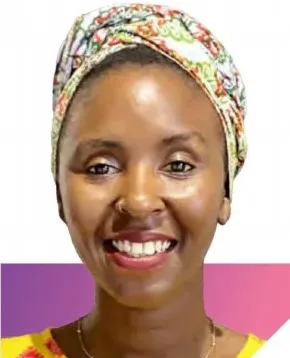
Tulanana Bohela is a Tanzanian journalist, producer and filmmaker. She is the co-founder of Ona stories and the director of their immersive unit called Ona Kesho. Her first 360 film, ‘What Could You Do,’ was featured at the Sheffield International Documentary Festival. Tulanana worked as a journalist for more than 10 years with the BBC World Service. In 2016, she co-founded the media company Ona Stories and finally quit her job in 2019 to focus on telling immersive stories. In this spotlight, Tulanana shares how she made the move from traditional journalism to immersive storytelling.
How did you find yourself drawn to immersive storytelling?
So, I knew of the immersive world around 2015/2016. At the time, I was more interested in the mobile platform, how it was influencing how we created content, and how we created business models around that. Through my interest in that, I got the opportunity to go to Cape Town and that was the very first time I interacted with some VR equipment. It was at this event called the Media Africa Party. From there, I guess you could say, the universe has a funny way of working. I was in Nairobi giving a talk about being a video journalist and documentary filmmaker, when I met this lady called Nyasha Kandadara; she invited me to this VR hackathon in Nairobi with journalists and creatives.
I went for the hackathon and that was the first time I met Ingrid Kopp from Electric South, Trevor Snapp from Gisa Group and some folks from Black Rhino VR. The hackathon lasted for three days and we had to create a 360 piece in that time. That’s where my first 360 piece came from. This was in 2016/2017 I believe. At the hackathon, I got a 360 camera and a headset, and you know I began to create and just share the gospel of VR.
What came next for you after the hackathon?
At the hackathon in Nairobi, there were two Tanzanians, I and another lady, Veronica Natalis Mataba. I remember the day after we got back from the hackathon, we both looked at each other and asked, ‘So this camera, how do we explain it to people? What do we tell people it does? Most importantly, how do we communicate that in Kiswahili?’ We were thinking about it and we were struggling. We ended up going with a pretty literal translation. This was our first experience with one of the unique challenges of bringing VR to Tanzania, where there is already this issue of digital illiteracy.
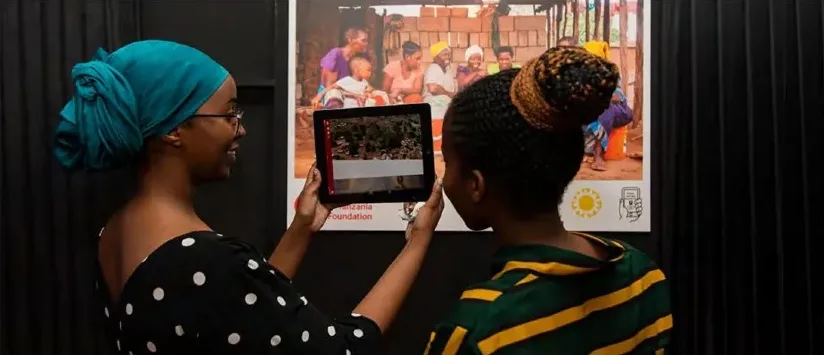
After the hackathon, we organised the first VR showcase at this very big innovation festival called Innovation Week which lasted five days. Our booth was full of so many people. I remember being told that two people could not man a booth; that we would need more. They were right. Afterwards, we got more interesting people wanting to explore VR and use it in different sectors, which led to the next project I worked on. It was an AR photo gallery with the Vodacom foundation which was part of a social impact report they were launching. That project helped us with exposure. In October 2018, I went for the New Dimensions Lab organised by Electric South, which really got me thinking about more VR projects I could work on. After that, I got my own equipment - a 360 camera and a laptop that could handle it. And then with Ona Stories, we set up our immersive unit Ona Kesho, where we have been training and working with people interested in learning about the technology and applying different formats.
Tell us how you got started with Ona stories?
Ona Stories started in 2016, but only got registered in 2017. The idea was to create a graphic journalism hub where creatives, technologists and journalists could come together to work on stories, explainer pieces specifically, sort of like the Vox Media Studio model. We would be explaining the unexplained, explaining parts of ourselves.
We started out moonlighting, did some stories here and there. And then we created our own explainer piece of journalism, which we used to open our page. It was a video called Dodoma Kunani that went viral. It was the first thing we put out and it went to 15,000 views and people were sharing it on WhatsApp. That gave us some form of validation.
But then we ran into a challenge, Tanzania entered a new regime, the media laws changed and we couldn’t create the pieces we wanted without getting unwanted attention. So, we pivoted our model and started telling brand stories. We approached brands with proposals; we told them that instead of advertisements and commercials, we would find stories within their brands and tell them. We found those stories and then told them through videos or writing or photography, whatever worked best. We’ve settled with this business model for quite some time now. I quit my job to work on Ona Stories full-time in 2019 and my co-founder quit in 2020.
Parts of your journey with Ona Stories and your immersive work happened simultaneously. Could you tell us about the moment they came together and formed Ona Kesho?
Ona Kesho started off as a playground for experimenting with new formats of storytelling, my co-founder Princely wrote an essay using Artificial Intelligence.
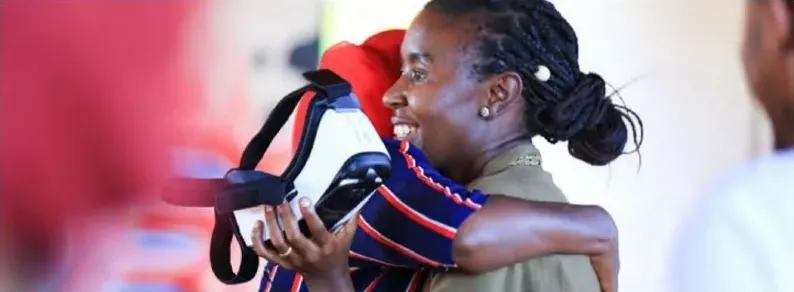
When it came to immersive content, as a journalist, literally every time I went to do a story, I would carry my 360 camera with me and go record. I would just shoot stuff. I always felt like we needed more stock footage of the country in both video and photo. I would record and if I had some extra time, I would experiment on my laptop. This was very helpful, because when I would start teaching this to people who expressed interest, I could show them footage not of America, but of a river that they knew, places they were familiar with. So it started with me just doing that. Gradually we started to build a team. We got a producer, a motion graphics person who also does a bit of video, and with this team, we converted the videos I shot into stories. On our Ona Kesho page and LinkedIn page you can see some of those. We also recently started making little planets animations and stories. These little exercises serve as instant gratification that I realise the team needs. We also introduce them to virtual tours and other things like that so they can experiment around. There’s a lot of this happening in the team, because I don’t believe we should just sit around and wait for clients. I believe we should go out there and experiment. I tell the team this very often.
As the team grew, we just sort of realised that we were mixing a lot of Ona stories work with immersive work so we decided that immersive work should have its own branch and that’s what we call Ona Kesho. Ona means to see and Kesho means tomorrow: Ona Kesho - See tomorrow. We have focused on building that now and exposing young people to it.
Could you tell us about some of the early work you did and how easy it was getting them?
We did a 360 film called ‘What could you do’. It was a film I did that essentially revisited my first time being sexually harassed in public transport. That went on to be featured in the Sheffield Documentary Festival in the United Kingdom. Then we also did a project with Vodacom Foundation Social Impact Report. My co-founder, Princely, directed the AR photo gallery with them. We’ve done some work with USAID to create Augmented Reality stories for their youth program called advancing youth. They showcased that in Washington DC. Last year, we did a project called Ghosts of the Present which was a VR collaboration with Kijiweni productions, as well as Black Rhino VR.
Last year also, we collaborated with these guys called D-lab. They essentially work with data, it’s called Data Lab. They had this festival called Data Tamasha where we did some AR work with them, showcasing their work through AR at the festival.
We’ve also worked on exhibitions with the Human Development Innovation Fund. Recently, we have launched the #DuniaDuara project where we want to make a series of tiny planets with scenes and stories from all over Tanzania. That’s kind of like essentially using all the footage we’ve collected from my travels, and showcasing different stories using tiny planets. That’s like our Instagram series we’re doing currently. Some of them can be found on LinkedIn, but mostly it’s on Ona Kesho and Ona Stories, and we plan to continue with that this year.
I don’t believe we should just sit around and wait for clients. I believe we should go out there and experiment.
Tulanana Bohela
What would you say has been your most impactful project so far?
I think the collaboration we did last year was the biggest, most significant one we’ve done. It really showed me practically what is needed and where the gaps are in terms of capacity building, and also lining that up with incentives for young people to learn this technology. I also saw gaps in the staff and in the production value chain that we needed, and I was just so grateful for that.
We’re still in the editing phase. We did a soft launch of the film, and are looking for funding to be able to complete the editing. But I can say it just showed me the power of collaboration as well. The fact that Kijiweni Productions came with a story, we came with the crew, and Black Rhino came with the technical know-how and the equipment, especially when it came to post-production.
I was really grateful for that. That willingness that we all had to just put out content that’s our own, and the fact that the film also is in Swahili, and it also targets a very sensitive part of our history. It’s called Ghosts To The Present because it talks about the historical gaps or amnesia that we have as a country in regards to parts of our history. This is specifically the Zanzibar Revolution, which we celebrated on January 12. This is something you can’t even find a lot of footage around, because it’s something they tried to wipe out. This is a time in which there was an African uprising, there was a revolt against the Sultan that ruled Zanzibar and the British.
It led to a massacre of around 13,000 people there and a lot more were exiled. There are people who have very sacred memories of that time. For some, it’s a day of celebration, and for others, it’s just a day in which a member of their family was killed or fled the island. They call it the shortest revolution in the world because it happened within a few hours So that project is something I’m very proud of.
What are some of the challenges you’ve faced so far on your journey?
One of the biggest problems we have faced has been around financing. Getting started was me taking this huge leap financially. For example, I bought the laptop and the GoPro fusion with my own money. Then there are the headsets we bought as Ona. Then came the matter of justifying these costs as a company that needs to make a profit to survive. I think we realised early on that the only way was to go out and create use cases for it (XR), so people could see this technology in action.
I am pushing my team to create short stories from the footage we have. We have one on our YouTube page called I Am Kilwa. The idea is for people to see that this is useful in their day to day life and they can see how to make products from it. For us, the question has primarily been how do we use this technology? How do we solve some issues and problems around this? How do we create content from this? In answering these questions, it has mostly been self-funded. No one has given us money to buy this equipment.
The thought here is that when we find a healthcare expert or an educational expert to collaborate with in solving some of the problems we want to solve, we already have all this equipment, we already know about the value chain of production, so we can go out and make things happen. It’s the strategy I’d rather go with.
So another problem for us has been trying to convince people that this technology is more than a simple gimmick. Because you see, the people in those decision making positions, they don’t understand it. They don’t see the potential for it. So our job is to work on convincing them, and we are.
That’s the thing with new technology like this, when it comes to innovation, adoption is slow, especially in a place like Tanzania where there is the problem of digital illiteracy. Not just among the population but also among policy and decision-makers.
So before the technology can take off, we need to do the hard work of making sure people understand it, especially with policymakers, so we don’t have a repeat of what happened a while ago where for this four-year period, vloggers had to pay $900 to the government to start a vlog on YouTube. This was eventually reversed but we learnt there was a complete lack of understanding of the space, and they were seeing all these famous online influencers on TVs with these ads and I think they were asking themselves where were the taxes for these ads they were seeing.
So with this technology, we also need to make sure people really understand what it is about. There is a long journey there, but it needs to be started from inside the continent, not outside.
Why XR? Why now?
Immediately after the hackathon in Nairobi, I think I sat down with Ingrid Kopp and said ‘This is it for me. I have arrived.’ It just felt like finally, this was something that spoke to what I wanted to do. This technology is new and so we have an opportunity we have never had before. I tried to see it in a way like when TV first came, or when radio first came. The format and how we deal with radio and TV today, were created for us. We are only just now learning them in journalism school. Learning how to interview and how to create b rolls.
With XR, we have the opportunity to create our own formats that work for our own context. We are on a clean slate like everyone else. I don’t want there to be a situation where someone from Paris is coming down to Tanzania and is teaching me how to shoot in 360, or what the format is. No, I can now dictate this kind of content. I can dictate the format, the style and guide to speak to our own unique perspective. I mean if you search Youtube Africa what do you get? You get animals and that’s so dangerous. I believe with XR we need to create this content to mark the domain with the things we want to be represented with quickly. Part of that involves creating XRvocabulary, in African languages. As OnaKesho we are currently working on Kamusi ya Kesho, ‘tomorrow’s dictionary’ in Kiswahili’ a repository for words, definitions of emerging technology.
We have the opportunity of a clean slate to create the content we want; to tell the stories we want; rather than playing catch up. I guarantee you that once this (XR) becomes mainstream, Africa will use it in a completely different way. It happened with mobile phones, with finance. Someone in the Northern hemisphere would never have thought about using it the way Africa currently uses it. Look at Whatsapp Business, it wasn’t supposed to be Whatsapp Business, they did it because of how Africans were using it. Africans are integral to how technology evolves and we need to take responsibility for that.
Who have you collaborated with and gotten support from?
I’d start by talking about some of the places we have received funding from. We have been able to secure a few grants since we started this work. The Nafasi Art Space ‘Feel Free’ Grant, allowed for Kijiweni Productions, Ona Kesho and BlackRhino to work together. We also secured a grant from Aga Khan University, Innovators Residency program, that will allow us to create some augmented reality work for news. Black Rhino has been a very big force in Ona Kesho’s growth, especially in terms of information, connection and getting people to pay attention to us here in Tanzania. They’ve been really helpful in that process.
Electric South also, I don’t think I’d be here without their residency programme.
They connected me to people like Trevor Snapp and Ben Kreimer, founders of Gisa Group. We came together to form Collaborative Futures, a co-invention lab where we put activists, and advocates against gender based violence together in a workshop with creatives, artists and technologists to hack gender based violence issues using virtual reality. It was called Mimi ni Wewe
These people have been really helpful to us through their work, through their community, just being open to sharing what they’re learning or their connections or their networks. It’s really helped get us to where we are. Within the network here, we are the ones that people are looking up to. The way I look up to Black Rhino, other people also look up to us. It’s essentially like a chain.
What do you think the future holds in store for XR and what part do you think Africa will play in that future?
I think that in the next year, we’re going to start seeing the rewards from some of the workshops and spaces that have been teaching and trying to build capacity within the continent. We will start seeing people come up with their own ways of doing things and building their own solutions using XR.
I see a lot of things happen on the global stage, but my mind always goes back to Africa and wonders how it is useful to us on the continent. We still have gaps in our basic needs like figuring out transportation and healthcare and all of that. So our issues are different than just playing XR games at home or holding meetings in AR rooms. We are figuring out a way to use XR that will be useful to us and that’s where I see us making progress.
From the Africa XR Report 2022, pages 270–277. Open the PDF at this interview.