
Creator stories N° 23 / 23
South Africa
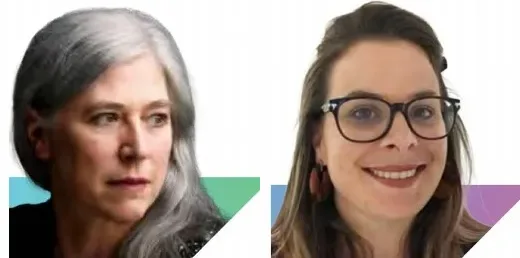
Ann Roberts & Carly Whitaker (TMRW)
TMRW (The Mixed Reality Workshop) · Ann Roberts: Founding Director 2018 - 2020, TMRW · Carly Whitaker: Curatorial Director 2020 - 2022, TMRW
TMRW (The Mixed Reality Workshop) is a South Africa based digital gallery and collaborative space. Since opening its doors in 2018, TMRW has hosted and run more than 20 exhibitions. Unlike traditional art galleries where visitors are expected to remain passive and simply look, TMRW invites the audience to immerse themselves in the experience. TMRW is focused on collaborating extensively with artists to explore the fascinating intersections between contemporary visual art, technology and mixed realities. Currently, on a sabbatical, this is the story of TMRW, some of the unique challenges it faced and what the future holds.
Ann Roberts
Combining in-depth knowledge of contemporary art, business management and creative production processes with technical and networking skills to produce and project manage an array of creative endeavours. Applying skills and knowledge acquired leading an acclaimed production company for 12 years to the contemporary art industry.
Carly Whitaker
Carly Whitaker is an independent curator, researcher, designer, and artist based in Johannesburg, South Africa who focused on the digital medium. She holds a MA in Digital Interactive Media and is currently a PhD candidate at the University of Reading in the UK researching curatorial networked methodologies in South Africa. Whitaker is interested in the positioning of artistic research and investigating how artists can develop a practice online through and with the medium. Whitaker started Floating Reverie, an online digital residency programme in 2014, and Blue Ocean in 2021 which is an online digital art space. Whitaker was the Artistic Director of The Mixed Realities Workshop, in Johannesburg where she worked closely with artists to support their digital creative practice. She is currently Head of Digital Product Design at Umuzi, a tech and design NGO in Johannesburg.
The idea behind TMRW Gallery was to give contemporary visual artists access to technologies and creative technologists to guide them and see what they would be able to do
Ann Roberts & Carly Whitaker (TMRW)
Genesis
TMRW started after Ann Roberts and creative technologists Rick Treweek and Gareth Steele from Eden exchanged ideas for a dedicated digtial art gallery during Season 2 of William Kentridge’s Centre for the Less Good Idea. Ann Roberts, a filmmaker with a portfolio spanning over 25 years, met During her film career, Ann worked predominantly in advertising with a concentration on television commercials. With a career spanning such a long time, she has had a front row seat experience of the growth of digital technology over the last three decades; she has watched filmmaking go from celluloid to digital.
Ann mentioned in an interview that one of the things that stood out for her during her career was the disconnect between artists and the emerging technologies of the 21st century. In her own words:
“I realised there were artists who didn’t have access to technology and expertise to achieve high production values for their work.”
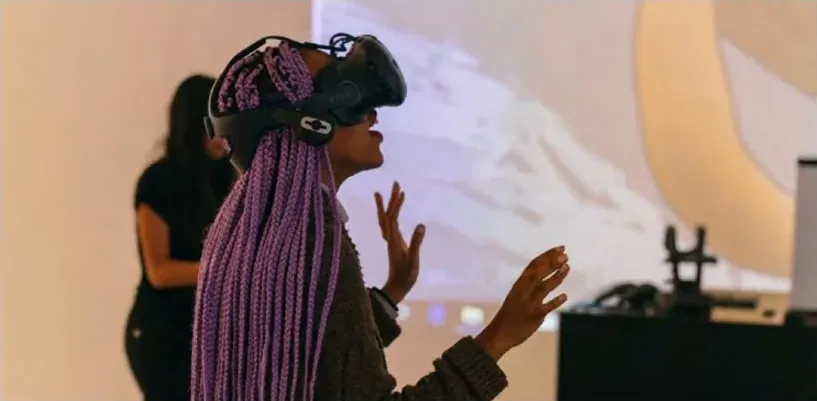
This problem was further emphasised for Ann when she crossed over from advertising to art through a mentoring project she did with the Centre for the Less Good Idea (www.lessgoodidea.com/). For the centre’s season around tech, Ann, with the help of Gareth Steele and Rick Treweek (now of Eden), gave artists the opportunity to interact, learn and collaborate in augmented and virtual reality. This experiment illustrated for Ann what happens when artists are given access to technology and experts to guide and train them into creating digital art with digital technology. This is where TMRW was born.
With the help of partners at Tomorrow Co and Eden, The Mixed Reality Workshop was set up as a not for profit company (NPC) including a physical space in the Trumpet Building, Keyes Art Mile, Johannesburg (the TMRW Gallery.) The workshop’s purpose was to connect artists with the technology and the skills to create digital art. The physical location served as an opportunity to answer questions about how digital art could be showcased in the physical world. More than 20 exhibitions later, TMRW was able to impact the world of XR and art significantly. For many of the artists they collaborated with, they were able to, for the first time, not only create digital and immersive art but also showcase that art to an audience.
Running
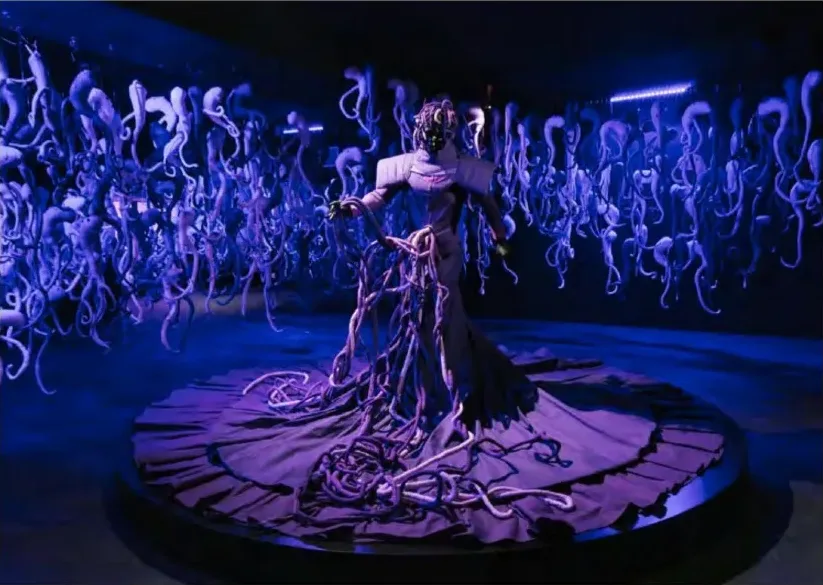
One of the earliest exhibitions hosted by TMRW was Mary Sibande’s ‘A Crescendo of Ecstasy.’
Produced by Eden, the exhibition was a collaborative effort between the gallery, artists and technology. Going into this exhibition, Mary Sibande had an extensive career working with sculptures and still art. This was her first time working with animation. According to Ann, Mary said working on the exhibition was her first time dreaming about her work. The exhibition consisted of both physical and virtual elements. On walking into the space, the audience was greeted by Mary’s sculptures suspended from the ceiling. VR headsets attached to an image of Mary’s face took the audience from the physical gallery featuring the installations into a mirror virtual world where the sculptures came to life. The work has travelled to the Havana Biennale and Moody Art Centre in Texas.
The gallery was constantly morphing for the exhibitions it held. Often guided by the artist’s vision and what techniques and technologies worked best for it, these exhibitions employed everything from VR headsets to projectors and AR apps that used physical artworks as markers. Carly Whitaker, who started working at the gallery in the middle of the pandemic had this to say about the fluid nature of the gallery:
“Every exhibition is different. It really depends on the show, the artists and what sort of different technological medium they’re working with. Primarily, it’s about making space for the viewer and the audience to really immerse themselves in something unique and different. It’s about shifting a mindset around artistic practice.”
Carly is an artist and curator working primarily in the digital space. She has a fine art background with a master’s degree focusing on digital interactive media. She is currently doing a PhD researching curational methods. She also runs a digital residency called Floating Reverie. She served as the Curatorial director for TMRW Gallery from 2021.
She described the work of the gallery as an opportunity for artists to explore the digital medium without the barrier of learning new technical skills.
“For artists, initially, it felt like you had to learn a lot of the skills yourself. And I think what’s really nice about TMRW - is that artists can come to us, and they don’t have to have all the skills. They don’t have to know how to render or if it will work in VR. We can help them and teach them how to do that. Or they can translate their ideas for us and we can work a little bit more closely with different technologists to make sure that we execute the vision that they have.”
TMRW Gallery hosted both group and solo exhibitions from many artists including Kombo Chapfika, Mary Sibande, Aluta Nuli, Nathan Gates and many more. You can find a full list of their exhibitions on their website.
Challenges: Covid, Sabbatical, Future
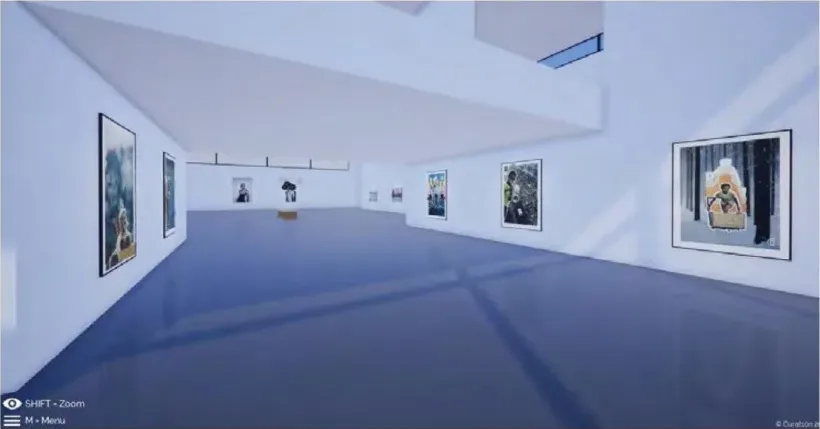
TMRW had to close its doors in March 2020 due to the Covid-19 pandemic. A big part of the mandate for The Mixed Reality Workshop team is to have this physical space where people can interact with digital art. Their work, as Ann sees it, is to come up with new ways for people to engage with digital art. With the pandemic, the gallery had to think of ways to keep that mandate going even without being able to welcome people to a physical space. This is just one of the unique challenges running a gallery of this kind has involved. The gallery eventually adapted to the pandemic and hosted some of its exhibitions virtually. In 2021, they opened their doors again for physical events but in the new world, having to think of safer ways to host these events.
“Cable management is a challenge. That’s definitely one of them. There are a lot of technical challenges. it’s a lowkey one but there are lots of technical challenges that can emerge often in installations and exhibitions.”
Carly mentioned that working with technology provides a unique set of challenges that you might not find with traditional art exhibitions: knowing what USB cables work for certain screens, keeping devices charged during an exhibition and the general logistics of having installations done in a space acting to bridge the gap between the physical world and digital art. TMRW’s work in the field has helped write the playbook for working around these challenges.
Another challenge that came up in our conversation with the team was commerce. There is a unique question of how to create a sustainable model to continue to showcase art like this. During its running time, the TMRW Gallery did not work with a revenue generation model. As an NPC, The Mixed Reality Workshop was able to sponsor its projects and exhibitions through the generous contribution of financial partners. Finding new financial partners and a sustainable business model is one of the challenges the team is hoping to solve in its next iteration.
The rise of NFTs and the metaverse concept have begun to present new possibilities for digital art. There are considerations to be made and a healthy amount of scepticism related to the possible drawbacks of the current rave and buzz around the medium. The encouraging thing is that conversations are happening now and the world is becoming increasingly receptive to immersive technologies.
In 2018, when the gallery first opened its doors, it had to not only convince artists but also the audience. According to Ann, the majority of people that visited the exhibition were experiencing AR and VR for the first time. The feedback from this first-time audience was incredibly enriching for everyone involved. Carly reported
“That’s one of the most amazing things for a curator, to know that your audience has been affected by the work you’ve presented, and for all these different artists coming together on that specific group show (re: Digital Gardens), I think none of them maybe saw that. But it was really beautiful.”
TMRW embarked on the ambitious journey to redefine how the physical world engaged with digital art and was able to find a level of success for over 4 years. Now, in its sabbatical, the team is musing over ways to solve some of the challenges they weren’t prepared for in their original model. It is uncertain when the Gallery will open its doors once again but it will return with a physical space to continue doing the work it set out to do.
Ann: The TMRW has not died, TMRW is on pause/hiatus at the moment. It astonishingly survived the lockdown despite there not being a physical space, Carly Whittaker did an amazing job of that. We haven’t disappeared and I do think it’s going to come back. We aren’t sure what form it will take but it will always have a physical space.
From the Africa XR Report 2022, pages 296–303. Open the PDF at this interview.