
Creator stories N° 20 / 23
Tunisia
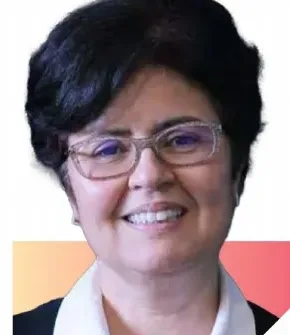
Samia Chelbi
Founder, 3D Net-Info & DigiART Living Lab
Samia Chelbi is a social innovator in the creative industry, an education expert, and a disruptive entrepreneur, from Tunisia. She is the founder of 3D Net-Info and DigiART Living Lab, and has over 20 years experience specialising in training in software engineering. She is highly invested in creating high-impact social projects and supporting the growth of digital arts on the continent. In this spotlight, she talks about the nature of her work and the impact of emerging technologies in Africa.
Can you tell us more about 3D Net-Info?
We started activities related to virtual, augmented, and mixed reality in 2016. Our selection by Facebook for a VR Development Grant allowed us to set up a laboratory equipped with 10 virtual reality headsets. This laboratory allowed us to launch our next actions - training sessions and coaching programs to produce prototypes. In 2018, the first edition of the African AR/VR hackathon was held. We were the Country Partners in Tunisia, working with the organisers, Imisi 3D, chaired by Judith Okonkwo. We started our first professional production experience in 2019, after training young talent and doing a lot of experimentation to set up a professional production pipeline. Since then, we have continued experimenting with the technologies in terms of software and hardware. Our objective is to be able to offer the best user experience and produce projects with social impact. We want to highlight the importance of these technologies in our ecosystem, especially to decision-makers and investors.
What is the structure of your production?
If we consider the production of our turnkey XR projects, it’s 40% of our overall production activity. On the other hand, as it relates to 3D content producers for XR projects, we are at 90% of our production and activity. I am a teacher in software engineering. Since 2010, I have immersed myself in gaming development via the training courses that I lead at Net Info, and also via the production support that I do for my students and team.
In 2016, I started training and producing a massive project which allowed me to learn a lot, and I find this is the best way to learn. We strongly believe in the development of projects that have a high social impact. For this reason, we had set up the first African Living Lab, certified by the European Network of Living Labs, in 2015. Our main vocation is to develop 4P-type projects. This means developing Public/Private/People/Partnership Projects around 3D, gaming, and immersive technologies.
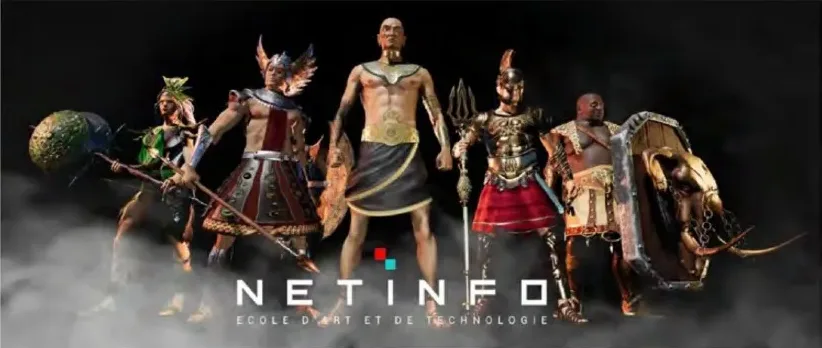
In this context, we have developed XR projects for the enhancement of our cultural heritage, and also VR and AR applications for autistic people. We also developed an educational application for learning mathematics, and the last one is an application to protect teenagers against addiction to screens.
What equipment do you use for your projects?
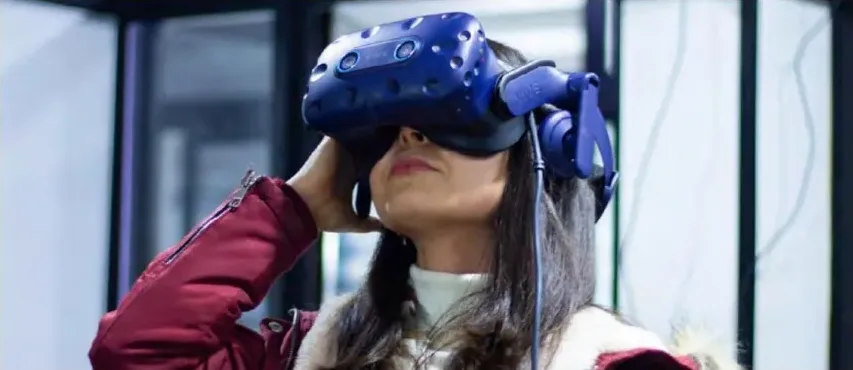
Our laboratory is equipped with HTC Vive, Samsung Gear VR, Oculus Go, and Oculus Quest headsets.
How have you been able to access equipment?
The equipment is too expensive in the local markets compared to the costs in the global market. For this reason, we have budgetary constraints, and a lack of availability, especially for the new equipment we need for experimentation.
What are your thoughts about the XR industry in Africa?
I think XR is an emerging discipline in Africa that will soon explode in the future.
The equipment is too expensive in the local markets compared to the costs in the global market. For this reason, we have budgetary constraints, and a lack of availability, especially for the new equipment we need for experimentation.
Samia Chelbi
What challenges do you think the XR space in Africa is facing?
Our major challenge in the continent is the lack of well-trained IT personnel. We need them to be able to set up a sustainable XR content production industry.
Have you taken part in any other XR industry events?
The only events that we know about on the continent and have participated in so far, are the African AR/VR Hackathons organised by Imisi 3D.
What is your take on building XR communities?
Yes. This kind of attitude is very important, but it needs continuity to help winning teams go further in this industry.
How do you go about funding your projects?
We have some support from the Finance Institute and the US Embassy in Tunisia, who sponsor our activities. But it is not enough. We need to have more programs and funds to support our production community and launch good projects.
Have you considered the role of policy in the growth of XR space on the African continent?
I think our decision-makers should establish a global strategy for the XR industry. They must be convinced of its impact on innovation and the economic development of our countries, especially in terms of jobs and startup creation.
In this era of the Metaverse, the major challenge is content creation and the development of the community. We should help the community transition with confidence. We should learn to support them and help them to take a relevant position in the market.
Above all, we should help them find their balance between conception and production. We can take our place in this revolution by being decision-makers in our technological future. All African talent needs to contribute to the enhancement of the continent as innovators and content producers.
In ten years, how far do you think XR technology would have gone?
It is so hard to foresee what will happen in ten years. Already in one year, we could have a lot of surprises. I think there will be a lot of innovative projects, but we will face a lot of problems linked to social, ethical, and economic issues.
From the Africa XR Report 2022, pages 266–269. Open the PDF at this interview.