
Creator stories N° 18 / 23
Nigeria
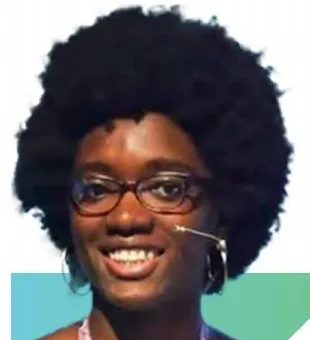
Onome Ofoman
Software Engineering Manager, Microsoft
Onome Ofoman is the engineering manager for Microsoft’s Mixed Reality team in Lagos, Nigeria. She graduated from Stanford University, California, USA, where she studied Electrical Engineering. She worked on trading software at Goldman Sachs, before heading to Google where she worked on cloud and search infrastructure. She returned to Nigeria, excited to be a part of the growing tech ecosystem. In this spotlight, Onome shares her experience in building the Mixed Reality team at Microsoft, the challenges with hiring talent and why Africa needs to develop Deep Science teams.
Could you tell us about your academic and professional journey?
I studied electrical engineering at Stanford University, California and ended up taking some classes in computer science during my first year. I enjoyed those classes because they were really fun and had to do with problem solving, that’s how I ended up working on computer software.
I did a couple of internships with software companies, when I was in school. It was through these internships I learned to programme as an engineer. I worked at Goldman Sachs for about a year and a half and moved to Google from there. I was at Google for four years in the US. It was after that, I decided to move back to Lagos, when the engineering office for Microsoft was opening up.
What prompted your moving back?
I have actually wanted to work in Lagos as an adult for a long time. I initially left Lagos to go to Stanford University and since then, all of my professional work has been in the US. I moved back because my parents are here and I’d like to spend as much time with them as possible, and the other reason was because of Google.
While I was in the US, I volunteered as a mentor for one of the accelerators Google ran that was focused on Africa and startups. I got to meet a couple of different startups like Paystack, Flutterwave, etc. they were part of that round. I was actually a mentor for Paystack and ended up consulting with them long term after that programme. I came to Lagos to work with them for about six weeks, and got a sense of what was happening in tech here.
I really felt that energy and saw we had lots of talent and that was what drove me to start to look at more permanent opportunities to work in Lagos. So when Microsoft said, ‘Hey, you want to start this thing?’ I was like, ‘Yes, I want to go back to Lagos, I think we have great talent there and I think Microsoft can be really successful there.’
Did you have any experience with XR before joining Microsoft?
At that time, I wasn’t doing anything related to Mixed Reality. I was completely focused on search and cloud infrastructures. I was just interested in knowing what big companies were moving to Nigeria, and how I could plug in and be a part of that.
For Microsoft, it was specifically the Mixed Reality team that started out here. I just got really excited about the potential of Mixed Reality. It gives people the ability to be able to collaborate even though they’re not in the same physical space. It also has applications in healthcare and in education to really drive deeper understanding and deeper clarity of processes.
When did you come across XR for the first time and how did it feel?
I had some experience with VR through Google, especially with search infrastructure. We did a lot of work on AI (I have some background in AI). We did a little bit of computer vision work with image search, so some background in computer vision through image search but not a lot in VR specifically. I knew the science behind it, but not a lot about the practical applications of it. It was a big learning experience and also a big learning opportunity.
This is one of the good things about software, you can never really get bored because there are so many different parts to it. So whether you’re interested in FinTech, InsurTech, Deep Tech, XR, there’s just so many different applications of tech. As long as you’re interested, you can always pick up new things and go from there. So I didn’t have a background in XR. But I was able to learn everything I needed to on the job.
Do you feel there is a dearth of talent in the African XR creator space?
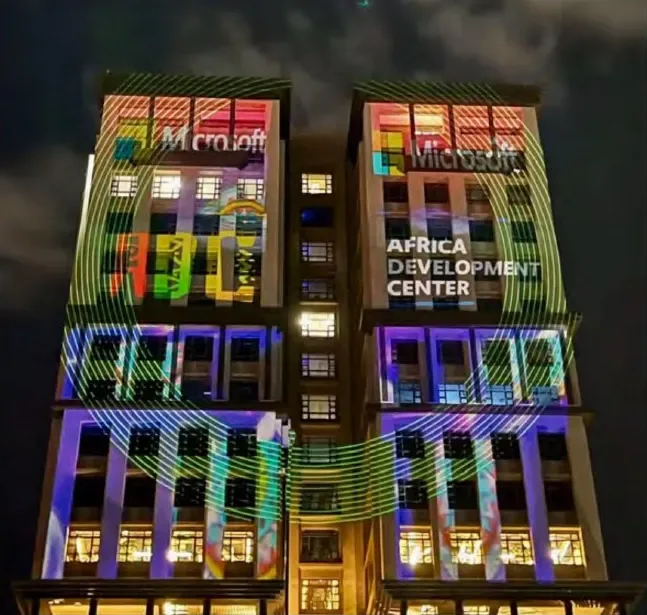
I like to think about it in these three axes; you need deep science skills for the models, generic software engineering skills for building services, and then you need artistic creative skills for building and designing.
On the second and third axes, I think we have a lot of talent in that regard. There are lots of designers in Nigeria that I’ve personally met, and that I know of, so I don’t think there’s a big gap there. There might still be a gap with access to training and resources, but in terms of the talent, I think it exists. The same goes for the software engineering side of things; building services. The slight gap I see there, is we don’t have as many Senior Principal level engineers that can take on the role of Team Lead and build and actually lead projects. But over time, that will start to change as more people grow through the ranks, get more experience and get more exposure.
However, on the science side, I think that’s where the biggest gap is. We had fantastic luck, we hired from the very beginning two really brilliant scientists here in Lagos. Both of them have since relocated, but what we’ve tried to do now is focus most of the science work outside Nigeria. Most of our science teams are in the US and in the UK, actually in Europe in general.
The school system here does not have the deep background we need for building up the talent in science for computer vision. It is a challenge that I think we all recognise being in this tech space. But we can also do something to help out schools, to help either revamp curriculum, provide resources to schools, provide resources to PhD students, and fund research to build up that pipeline. I don’t think it’s sustainable to say, ‘oh, okay, it will always be the folks in the US and the UK working on the deep science side.’ We need to start honing those skills at home.
What are some of the challenges you face when it comes to hiring?
One of the things we’ve learned is very important is just having a good balance between people who have a lot of experience and people who are still growing through their tech career. On our team it’s very important to have a ratio of four engineers to one senior, though we’ve not always been able to strike that balance.
But in general, as we continue to grow, it’s been very hard to find senior engineers, which is related to the fact that senior engineers, principal engineers have so many opportunities within and outside the country. And with the economic situation of Nigeria, nobody really wants to focus on companies in Nigeria paying naira. They would rather work remote jobs where they can make money in a stronger currency. That’s something we have to deal with as a global company working in Nigeria, and compensating in the way we do.
We’re focusing right now on growing the talent in house - growing the people that we have on our team through the senior and principal ranks - and that’s working out really well so we’ll continue to focus on that. In terms of the people that we’re also hiring, we are looking to work closer with universities to make sure that those graduating with computer science degrees can actually apply to work at Microsoft from the get go.
Right now, there is that disconnect between what people are learning in universities and what they need to work a software engineering job. We have an ecosystems team that is trying to work with universities to make sure there’s that communication. There’s also a resource share between Microsoft and schools. These have been the two major challenges around recruiting, and then also around the economic situation in Nigeria and how that makes it difficult to attract talent.
Could you tell us about the product you’re working on currently?
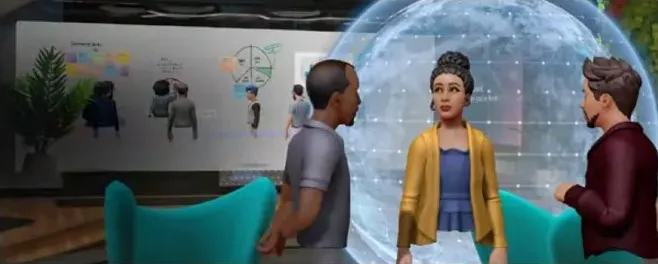
The product we’re working on right now actually works across different kinds of devices and is called Microsoft Mesh. It is essentially a platform that allows people to design and create collaborative Mixed Reality experiences or Metaverses. Platforms like Alt Space already allow you to host conferences or meetings in Virtual Reality. So you can create a space, design that space however you want virtually, and have people join as an avatar or as a hologram and then interact with other people within that space.
I think the first big release that most people will be aware of is Mesh for Teams. This has been publicly announced, but is not available yet. Within Microsoft Teams, which is already a collaborative platform, you will be able to have more Metaverse-type interactions where you can actually create a space that feels like some other physical space that you’ve been in.
So we can have a space like this room that we’re in within Microsoft Teams, and we can have an exact replica view, but as an avatar, and we can be having this interaction virtually, you on your phone while I am on my HoloLens. That kind of experience is device agnostic because it will be through a platform that allows you to access it on any kind of device you have.
It elevates the experience. Think about what a Microsoft Teams conversation could be - just two people on their phones with a picture showing, talking to each other. That’s the baseline experience. The second level experience can be turning on your video. What we are basically saying is that these two experiences work, but imagine what else it could be.
We are making Teams a more immersive experience. It’s not fully immersive, because you are not using a head mounted device, but it’s a lot better than what you were doing before with just a picture. If you have a head mounted device, great, then you get that full immersion. But if you don’t, you still have something.
What else has your team created for the XR space?
There was a time we had two different projects to work on. One was an Object Understanding Service which is essentially a service that allows people to look at some objects in a room, and then the service determines if it’s a chair or a table for example. Then based on the understanding of what the object is, you can do interesting things, maybe superimpose digital information, or allow avatars to interact with that object in different ways.
So we built that service. Usually building the service means two things. It’s building a cloud service around an implementation of some scientific model that exists. So we had to work with a science team that was based either in Redmond (US) or in Europe. And for all of us, a lot of it was really understanding the science behind the service that we were trying to build. We spent a lot of time in meetings with our team in Redmond, really trying out the models, working with the models ourselves, and then on our side, doing the design and architecture for this cloud service that we were building on top of the scientific model. We did that about three times.
Object understanding was the first one, then we built a service for synthetics, which is essentially a service that allows you to generate images that can be used for training computer vision models. We did a couple more services that really honed our skills in building services, because our expertise is in building cloud services. We build cloud services for Mixed Reality, but that doesn’t mean we can’t build cloud services for other things. The interesting bit comes from the fact that we need to really understand the science behind what we’re building our service on top of, and we need to make sure that those models and services can work in any kind of environment, especially in the one we’re in, in Nigeria.
Which service would you say is most significant or impactful?
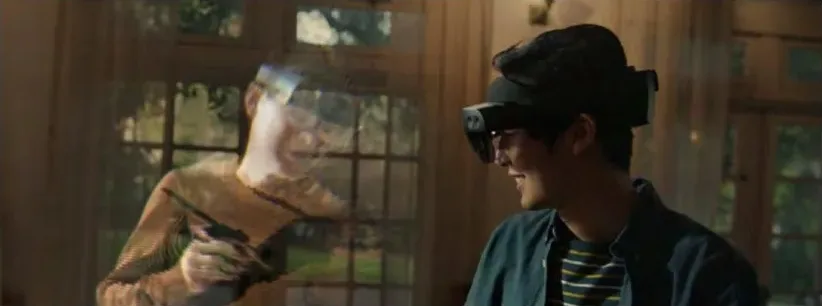
Object understanding, which is now called Azure Object Anchors. So it’s widely available on Azure Synthetics and Azure Remote Ranger, we worked on part of that. All of these are currently available, but they’re all enterprise services. They’re used by large organisations that do Mixed Reality. Those are probably the most impactful because they are now generally available and are being used by organisations in their day-to-day to drive efficiency in their work.
On the other hand, Mesh has the potential to do so much, especially in terms of virtual interactions and not just on the enterprise level. On the consumer level, I think there’s a huge opportunity here for Mesh. We haven’t realised it yet, so I wouldn’t say it’s the most impactful, but it’s the one I’m the most excited about.
We are still missing that deep science on the XR side. We do actually have a lot of community. At least I see a lot of community engagement and community activities happening. A lot of it is through organisations like Imisi 3D, and that’s encouraging. There are communities nurturing talent through programming, hackathons, podcasts and so on. The big gap I still see is just more deep technical knowledge of the science behind XR.
Onome Ofoman
What are some of the different ways Mesh can be used?
So the first easy way would be through Mesh for Teams, that would be the first way a lot of people actually see and get to interact with it. You would be able to have avatars on teams. After that, there are a couple of different things planned that I can’t speak about. We’ll have to start to get app developers to then build their own apps that are similar to Mesh for Teams or that really use those capabilities for collaborative Mixed Reality experiences. I don’t know where this will go, but I think that’s where we need to engage a lot more with the creative content creators to see what they’re thinking about in terms of how they could use this. Our job is to provide the platform and we have ideas on how it could be used. But I’d rather hear from people what they would want to use it for.
Microsoft Teams will be the very clear way that consumers or end users like me and you would interact with Mesh. The API will also be released at the same time, but then at that point, it’s for app developers to use the APIs to build their own experiences (i.e build their own apps they release to other end users).
How would you gauge the maturity of the XR space in Nigeria or Africa?
I think it’s quite nascent. When we say XR space, I like to think about it from those three axes I mentioned before, in terms of the people that we need - deep science, the generic software, and then the design. We have lots of people for software and design. We are still missing that deep science on the XR side. We do actually have a lot of community. At least I see a lot of community engagement and community activities happening. A lot of it is through organisations like Imisi 3D, and that’s encouraging. There are communities nurturing talent through programming, hackathons, podcasts and so on. The big gap I still see is just more deep technical knowledge of the science behind XR.
What are some of the biggest challenges for XR creators in Nigeria?
One broad category of problem is infrastructure. So access to high bandwidth internet, and consistent power. As an example, once we started working remotely, a lot of the work we were able to do from the office (because we have really good internet at work) was just really difficult to do at home. Remoting into virtual machines elsewhere in the world started taking too long. Little problems like that really really hamper the ability for people to move quickly or learn things quickly. Even access to devices that are powerful enough to run models.
So beyond infrastructure, it is just access to the kinds of devices you need to run these models, whether you have enough money or resources to purchase them. And that would go into key things like the head mounted devices, how expensive and accessible they are.
The third thing might just be XR. It’s not a niche field, but it’s also not like FinTech or some of the other more obvious categories of tech within Nigeria, where there’s an obvious problem that this thing is solving, or there’s a very fundamental problem that it’s solving. Usually things like XR are not really solving fundamental problems, but they’re getting us to a point in time where the world is going. It’s a more future-looking technology. And I think with future-looking technologies, people almost think about it as sort of ‘a nice to have technology,’ and then it’s the kind of thing you put money towards once you’ve dealt with everything else.
What about the hardware and software used to build the products?
I’d say on the design side, Unreal Engine, Unity 3D and then just the basics, like Figma for design. On the service side, everything is based on Azure, because we are Microsoft. So Azure services are our bread and butter. I would just say, in general knowledge of cloud infrastructure and how to use cloud services, Azure is Microsoft-specific, but really, any cloud infrastructure knowledge is key. We use C sharp for the most part. For building out SDKs and APIs, we use Python and C++, as well.
What’s the spread of responsibility across the team?
We have three technical designers that work on sort of designing worlds - the Metaverse or any sort of virtual world - and virtual assets that would be used either for people or so avatars replace spaces for things. We have two TPM (technical programme managers), and they are responsible for driving the execution and the workflow for the engineers.
Then the rest of the 35 people work on services. The way we’ve split things up is we have small groups working on different services, because we have multiple services. So the rest of the people are engineers spread across, entry level, mid-level, senior-level. As I mentioned before, we try to have at least one senior person per small subgroup. That’s how we’ve tried to break things up across the 35 people on the team.
What XR community events, activities have you been involved in?
Personally, I haven’t been involved in many. But the team as a whole has been involved. I know Kendra has been involved in a lot of the events. So there was a hackathon last year, with Imisi 3d. I actually was involved in that as a mentor, and we had other people in the team as mentors as well.
Also last year, there were bi-weekly community series-like workshops. Kendra is our ecosystem’s engagement champion, and her role continues to be more work like that. But we have other people on the team who actively speak and represent the XR community, and who engage from time to time. Folks on the design side don’t focus so much on XR, but they’re a huge part of the game dev community. So that’s another community we try to do a lot of work with.
For the ecosystem to grow, what policies and regulations do you think can make this happen?
As long as there aren’t policies that would limit people from trying out things in XR. I think that’s generally the trend we tend to see with the policies and regulations that come up. There are policies that are needed around protection of data. We need a bit more of those kinds of policies. If you think about what the Metaverse is, it’s just another space in the world where people could potentially have their data stolen, or be harassed by people. So we need a lot more tightening of those kinds of restrictions in terms of what people can do in a digital space.
If I were to talk about policies, we need more policy for the Institutes of Technology, Universities, and Polytechnics, and maybe more resources into thinking about our future where things have been done more virtually. That for me, is a huge gap, and that gap will only continue to widen if our institutes are neither thinking about this nor putting resources aside for it.
What changes need to happen in this part of the world for more science teams to perform?
From what I know about our other teams that have deep science knowledge, a lot of these people have PhDs in different fields within computer science or computer vision. That is a huge thing that we’re missing here. We need a lot more people doing PhDs in computer science to focus on computer vision. There need to be universities that are set up with the right kinds of resources to hone that talent. There’s definitely work that can be done on the part of the Ministry of Education, on the part of private universities, but also on part of private companies to be able to provide or fill that resource gap that universities seem to be having. But I can’t really speak to the actual issues that are happening in universities because I don’t know firsthand what universities are going through. We have an education outreach team that just started in January and their work is to figure out how we can best help universities bridge the science and skills gap we see in the people we’re trying to hire.
What do you think is the short term/long term agenda for XR in this part of the world?
I think for the short term, a lot of the XR advances will still be on the enterprise side. Most of the value is actually in the immersiveness of the technology. Enterprises are the ones that are able to afford the actual head-mounted devices, and there’s just so much they gain from being able to combine the digital and physical world. So for them, the win is clear, and they have many companies and organisations that have invested in Mixed Reality devices and Mixed Reality technologies.
In the short term we will see a lot more creatives start to think about how to get their work out there in a way for consumers to access. Long term will be more focused on what we’re calling the Metaverse, which is more things happening immersively virtually. And then we’ll start to see the winds of the creative who have created content already there. As content creators in Africa, we can now start to focus a lot more on making sure we have digital representation so that once we get to that future where things are happening more virtually, we’re prepared.
I personally hope things don’t become more digital than physical. There’s a lot of value in the physical world, but there’s also value in being able to collaborate without all being in the same space, and this is likely going to be how things go on for a while. So thinking about how we can all have representation in those virtual spaces is very important.
From the Africa XR Report 2022, pages 244–253. Open the PDF at this interview.