
Creator stories N° 17 / 23
Egypt
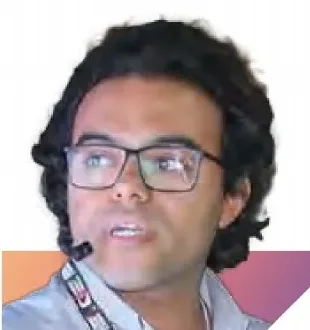
Mohamed Attef
Founder & Immersive Media Director, Egypt VR
Mohamed Attef is the Founder & VR content creator of Egypt VR - a virtual reality production company for 360 videos and virtual tours. He graduated from Alexandria University, where he specialised in Physics. In 2013, he began his career in 360 panoramic photography and 360 videography. Mohamed has also provided VR content worldwide for photography publications and VR industry leaders like Oculus. His work has been featured globally in Space.com, Mashable.com, Round.me & 360cities.net. His 360 photospheres have over 21.8 million total views on Google Street View. In this spotlight, he shares his XR journey, achievements and ambitions for the future of XR in Egypt.
What was your first experience with XR?
It was the little planet pictures. I saw one, and I was like, “Wow! How can you achieve that effect?” How can I capture everything in one photo, and I started googling.
After I was done googling the little planet photo, I discovered that there was something called 360-degree panorama. Up till then my knowledge at that time was of 180 panoramas - the ones where you take a sequence of photos and then merge them in Photoshop. I didn’t know you could have a whole sphere that captures everything in one photo. So I took my camera and started taking photos, went to Photoshop and I failed miserably.
I went back and discovered I had to use a panorama kit. So I started to look at every camera shop in Egypt. I didn’t find anything. Nobody knew what I was talking about. I looked it up on Amazon, but they didn’t ship to Egypt at that time. So my only way was to make it locally. I had to craft a panorama kit that met the specs of the standard panorama kits sold outside of Egypt.
I started making them out of wood and failed. My fingers were hurting, and I cut my hands, so I concluded it had to be something more solid than wood, but dynamic to calibrate each lens and camera body. To cut the story short, two weeks after going back and forth to that workshop, I had a self-made panoramic kit made out of metal. It was excellent and precise down to the millimetre. I spent eight hours every day for two weeks crafting every part of it and doing some inventing.
Then I had to come up with a solution for a rotation mechanism that was smooth and precise. After a couple of revisions and testing, it was really good. Then, I needed a fisheye lens to be able to capture the whole 360 view and only like four or five photos max so I sorted that.
After three or four months, I was doing my first panorama with that kit. It weighed around six kilograms, which was heavy. Its edges weren’t smooth, so I kept it and archived 30% of the VR content I created here in Egypt.
The next kit I had was a Bushman panoramic. It’s a French company called Bushman panoramic and the model of the panoramic camera is the Gobi. The current one I have is the Nodal Ninja Six, which is completely high end compared to the Gobi. The Gobi has very small panoramic kits. I used it because I was using a very small mirrorless camera, which was the Sony Alpha 6300.
What pulled you into 360 pictures?
At first, I wanted to create that little planet I saw. Then when I got into the VR space, I tried my first VR experience inside a VR headset by Google. It was an immersive feeling, and I understood that I had to create this 360 content so that when you viewed it inside of VR, it would be a tool to teleport the viewer to the space you are in. So basically, it’s like you have a key to a door and it can teleport anyone, anywhere in the world at any time, at any stage, at any age to that exact location you are in.
What was your first experience with VR?
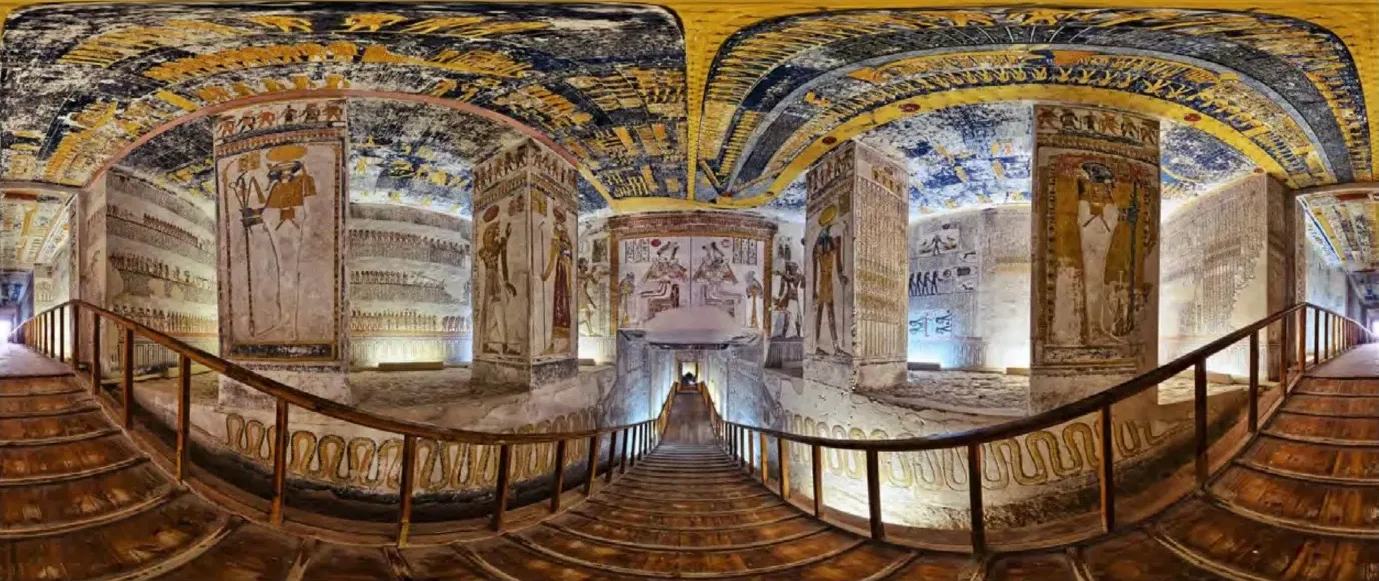
I think it was Ramses the sixth tomb in Luxor - the Valley of the Kings. This panorama is my ultimate favourite panorama that drove my business to this day. It is the first panorama I uploaded on Facebook. This is another story about how easily VR went viral, and the start of mainstream VR as Facebook started to support 360 panoramas.
At the F8 conference in 2016, Mark Zuckerberg announced Facebook was supporting 360 panoramas. I uploaded a picture of the Milky Way panorama shot in South Sinai and two shots of one of my favourite camps. People shared my panorama ten thousand times, and I started to refresh the page and roll my eyes. At that time, I was travelling all over Egypt. I had many panoramas on my hard drives everywhere, everything in VR.
After hitting the upload button, I couldn’t sleep for two weeks; you have no idea. People asked me if my pages were promoting Egypt using VR, which was this new technology they had never heard of. That drove me crazy because I wasn’t even in contact with anyone in the government. So that helped me because after the pages went viral, I had clients everywhere who wanted to try this new tech.
So at what point did you decide to start a company?
I started to see the traction of the future of the VR space and 360 panoramas, even before Facebook tried to support it. So I developed my rig out of GoPros. I made my first rig using six GoPros, and I started to shoot 360 videos. I took that GoPro rig almost everywhere. After that, I developed more ways to get a higher quality 360 video.
Tell us about some of the projects you have worked on.
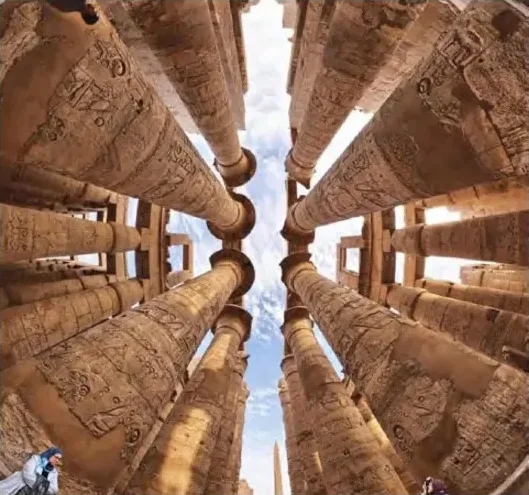
I did some work with Google inside Egypt for the Pyramids of Giza Street View project, Petra and Jordan, also a Street View project. I didn’t actually shoot 360 panoramas for them, but I was managing the process of capturing 360 panoramas using their own device.
I did a high-value production for Vodafone and Lenovo. It was like a music mashup experience. It was shot using only one camera. I used the same technique I used to capture 360 panoramas, but in videos, which is why I took so many videos at the same time. Then I started to sync these videos together. Using a scripted scenario, I took advantage of every shot being shot at the same time. Then started to film the same character in different styles, different clothes, and playing different instruments. Sometimes the piano, the electric guitar, and then started live mixing from the cell phones of Lenovo company. It was very high quality at that time.
We also did AR For for a furniture company and an electric products company, but they were for internal usage for the investors and the board meetings and stuff like that. So, we used AR technology to project the product, and to explain it and take apart the composition of certain parts of the product and its features.
Which project would you regard as most significant or impactful?
There is a long term project I have been working on to this day, which is documenting the cultural heritage of Egypt using VR technology. It has been running for about nine years now. I have some of these pictures or VR content available for the public to access via our VR app. It’s called Around Egypt. It is available on iOS, Android, Huawei Appgallery and Oculus Store via Oculus Go.
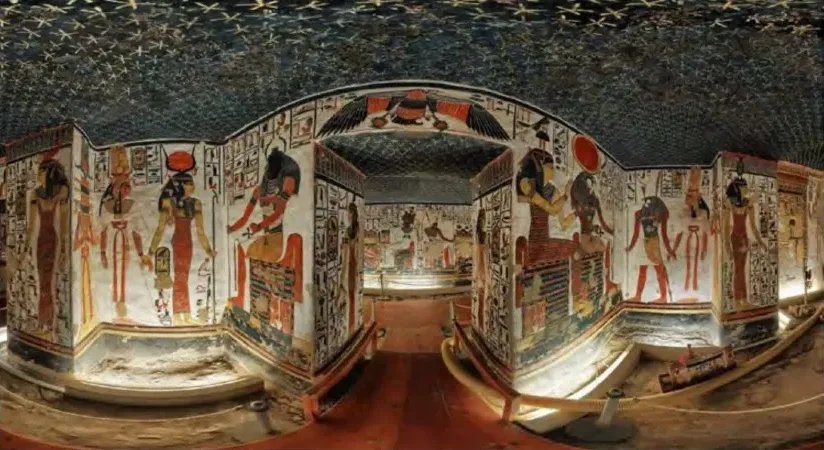
Using this app, you can get access to almost 60-70% of the content that I have here in Egypt and that content covers up almost every historical location related to Ancient Egyptians and even from the Christian and Islamic eras. It has over 56 virtual tours. It’s like the most important project for me because I do feel there is even a lot that I haven’t covered. The last location I added is the tomb of Queen Nefertiti. It is the most beautiful tomb you can ever see in your life. The paintings on the wall look like they were painted yesterday. It’s extraordinary to get inside and shoot it for VR.
What hardware and software do you currently use for most of your work?
I use the Sony Alpha cameras. For panoramic head, I use Nodal Ninja six. I use different software for stitching but PTGui is my go-to software for that. I know it like the back of my hand, and it’s terrific. I use Lightroom and other software for photo mapping and exposure.
I also use Unreal Engine in developing VR environments. Also, we have been able to turn 360 panoramas into 3D models and talk inside them wearing an Oculus Quest VR headset by using a couple of software plug-ins, we also use the KRPANO.
How large is your team?
We are not a very large company because as you can see, VR has become basic media now. It clearly doesn’t require a big team because, until this day, I have been working by myself. I still do work by myself. So I like to shoot, edit, develop, be involved in the latest technology, and know what needs to be learned. I’ve also been involved in virtual filmmaking.
If they can support us with the proper hardware, we can focus on the skill part of creating VR content because, in the end, content is king. If you have a VR headset of the highest quality, the highest hardware available, and it’s empty, it’s useless, just a plastic device you can’t do anything with.
Mohamed Attef
How do you develop your skills to use the equipment?
I have never taken any online courses. I just watch YouTube and learn by doing. I download software and follow the forums and they say get your hands dirty. You start by trying and failing and trying and failing again. That is the best way to learn.
What are some of the challenges you have faced?
The biggest challenge is the hardware - VR headsets. Till this day, it’s not coping with the software. You have to have a standalone VR headset capable of running high-quality graphics, a high-quality VR experience without being tied up to a PC. That would be the middle point when comparing VR to traditional media. VR is still in the developing stage as I see it. Even after COVID, more people want VR experiences to be able to teleport themselves without being physically in the same place. So I think we have to be more updated with the latest technology in the education division.
We face many challenges when it comes to VR because of so many factors, whether it’s people misusing VR, or people creating bad content or content created and edited in the wrong way. When you put it that way, sometimes people want to try everything even if it’s not suitable for VR. For instance, in 360 videos, you can’t have the same shortcuts between each segment. You have to give the viewer at least 10 to 15 seconds to realise, “What’s that thing I’m supposed to be looking at where I am?”
Do you think there are any misconceptions about XR?
Many people get their idea about the XR space out of movies or out of games. They are sometimes very afraid of VR; they think that you’re gonna trick them and take them into something they are afraid of.
Do you have a community of people doing similar work around what you’ve been able to access and engage with?
There were a couple of events in Cairo related to the media community in Egypt, showcasing video, photos, shooting films, and ads, and I was invited to give a lecture on producing VR content. There is this group on Facebook - 360 professional photographers and other photographers. It’s still my ultimate go-to whenever I have a problem with stitching related to 360 photography. There is a similar one for videos also, I use it to check the latest techniques.
Can you give us a general idea of how most of the VR projects you work on are funded and how you can make money?
Well, I do work for companies inside Egypt and outside Egypt as well. Most of my work outside Egypt is through licensing content. So basically, it’s all online.
What do you think big tech companies like Meta, HTC, Vive, and Apple can do to engage an XR creator like you in Africa?
If they can support us with the proper hardware, we can focus on the skill part of creating VR content because, in the end, content is king. If you have a VR headset of the highest quality, the highest hardware available, and it’s empty, it’s useless, just a plastic device you can’t do anything with.
So the content on it has its price. We need more hardware to be available in Africa. We also need proper training for us here for Egypt VR, so we can develop more specific detailed experiences for Meta, and we can match the quality of VR experiences produced outside the region.
What are your projections for Egypt VR in the future?
We need to engage in the Metaverse. Using what we have so far, I think it’s precious to be featured in the Metaverse. What I mean by that is that people spend so much time and so much effort and money to create a Metaverse of something. So, I could have everything about Egyptian culture, ancient Egyptian mummies inside the Metaverse, can you imagine that? You could make a whole country’s heritage on the Metaverse. That’s something that even if the government wanted to, it couldn’t make by itself, because it would take so many years of capturing and managing and converting that data into a Metaverse. I think it can be tried and configured if done the right way. The picture is not quite complete in my head yet, but that’s basically what I’m going for. I’m going to create Egypt’s Metaverse - complete with culture and history.
What do you think the world of XR would like in 10 years globally and in Africa?
Hopefully, the hardware will be stronger than now, and you can have high-quality content for the XR space. What I mean is more people would have access to high-quality VR devices, so it wouldn’t look weird anymore to wear one in public and use it like you would use your phone.
From the Africa XR Report 2022, pages 236–243. Open the PDF at this interview.