
Creator stories N° 15 / 23
South Africa
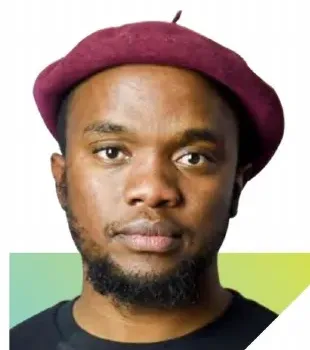
Mbangiso Mabaso
Founder and CEO, Sisanda Tech
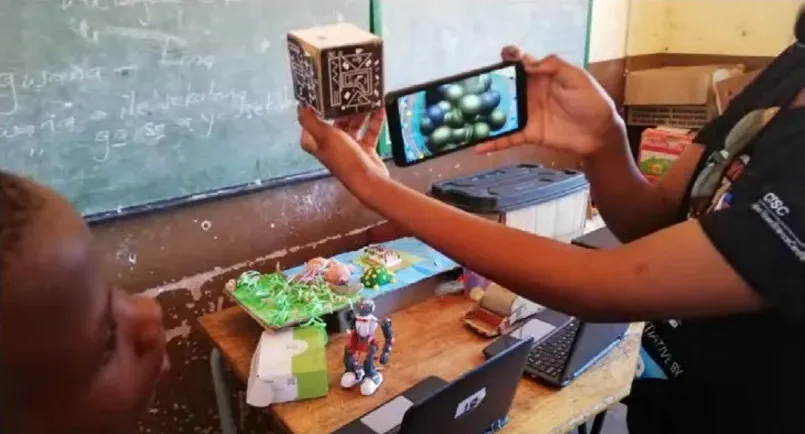
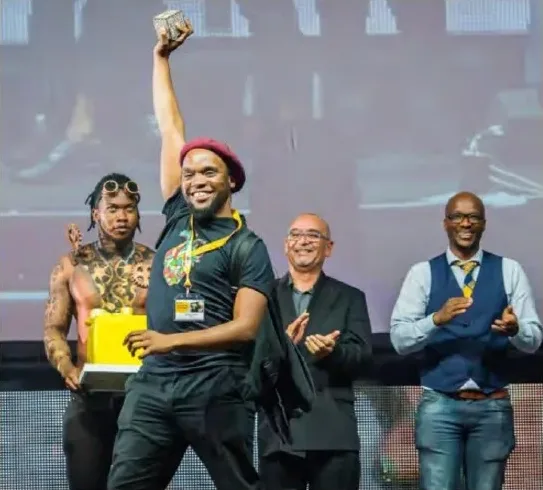
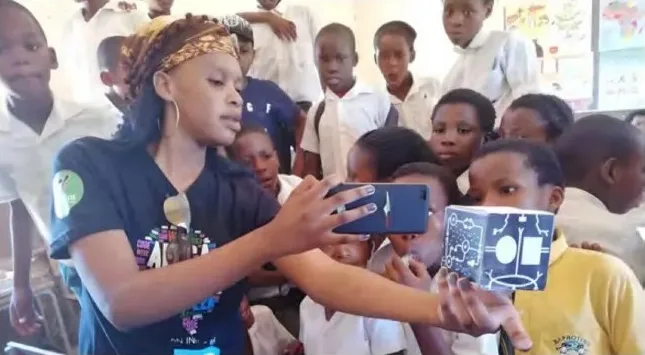
Mbangiso “Baso” Mabaso is the Founder and Developer at Sisanda Tech. He started in 2017 intending to provide science learners in Africa access to a virtual science lab called Sisanda App Universe that will allow them to experiment anywhere and anytime. Baso graduated as an Electrical Engineer but only worked for a year as an electrical engineer because he fell in love with making video games. In 2019, Sisanda App Universe was named the Most Innovative Solution at the MTN Business App awards.
What was your introduction to XR?
My introduction to XR came after I transitioned from making Games with Construct 2 to Unity. At that time, I was curious about finding a way to build a virtual science lab, so I got exposed to Google Cardboard which I thought was super cool. This led me to investigate augmented and virtual reality technology more, and I started building AR apps for playing cards using Vuforia. That app is now called Sisanda App Universe.
Why XR?
XR is a medium of possibilities. It excites me to think of the stories to be told through this medium. I have always looked at things and asked myself, “how can I enhance this space, how can it be magical, or how can I take this real-life experience and bring it into the virtual realm and amplify it even more?”. XR will make us live the Marvel Movie dreams. You can be anything in this medium.
I want to create more experiences that people can enjoy. Tell the stories through virtual worlds, characters, fashion, arts and music that haven’t been told before. I want to see people benefiting positively through my XR experiences.
How long have you been creating XR projects?
Creating XR Projects is as old as Sisanda Tech; I started in 2016 with a focus on building Sisanda App Universe - a virtual science laboratory for learners in South Africa. The app aimed to provide learners with a platform to explore their curiosity.
Currently, we have the right balance of AR and VR work. In AR, we mainly develop Sisanda App Universe; we also create Spark AR filters for clients or ourselves. VR developments came later; now we spend time creating virtual worlds and educational virtual reality experiences for clients. As they say, once you go VR, you might not come back, but I’m glad to be able to play with them both. Unfortunately, MR is still too expensive for us to experiment with.
What type of content do you create and why?
We started with a focus on augmented reality content to improve education in public schools. But we eventually expanded by creating virtual worlds, Instagram filters, and avatars. I love Amapiano, and we have created the first chesa nyama called HaMmabongi in the Metaverse, where avatars can gather around to listen to the bumpy Amapiano sounds. We expect to grow HaMmabongi to take Amapiano to the Metaverse. We were recently sponsored by Electric South, Twig and the British Council through a programme called Design Future Labs. The project aims to build solutions that promote sustainable fashion. We are working with the talented Fashion Designer Khumo Morojele to develop our prototype.
What is your most significant XR project so far?
Sisanda App Universe won the Most Innovative Solution at the MTN Business App Awards. HaMmabongi - is a combination of passion and love of Amapiano and the background it comes from. Bloc J- is our first virtual world to sell as an NFT.
What XR equipment and software do you use?
Unity is the oven where all the cakes are baked when it comes to software. Spark AR and Lensstudio for filters. My team members use Blender for 3D work, while I like Cinema4d. Our preferred SDKs are Vuforia and Niantic Lightship (every AR developer must start moving to this SDK, it’s super good). For hardware, I have a nice RTX Beast. We are still using the Oculus Quest - 1, holding it tight ‘til the project Cambria release. I have been happy working with this equipment, knowing that I was using my friend’s i3 computer to build the earliest version of Sisanda App Universe when I started my company. It was slow, but it did the work. Now the machines we have allow us to build to reach our goals.
How accessible is the equipment you use?
Initially, they were not that accessible, but through grants and clients paying us, we were able to purchase them and keep them in our office. So this makes it easy to work anytime.
Did you need training for this equipment/software - if so, where did you obtain it?
I will forever be a student. I need training to master Unity, become proficient in using mocap suites, and be proficient in all the advanced hardware I would love to gain skills on. I prefer to be a student and I have benefited a lot from the Metaverse Crew Community with their workshops.
What are your biggest challenges as an XR creator on the continent?
The high cost of connectivity on the continent is a serious problem. Downloading assets and uploading the build require significant data and speed. Continuous blackouts in South Africa hamper productivity; we can’t be competitive with such poor infrastructure.
Lack of Access to funding does not allow the creators to buy high-performance equipment, game development is expensive, and we require good computers to render our creativity.
Lack of skills, there are a handful of game development schools in Africa. To produce competitive content, we will need to train a lot of aspiring creators that can acquire these skills and join our companies or start their own. The aim is to see Africa being able to share high-quality XR content.
If we have fewer African creators, our unique African stories will not be told to the world. I see a situation where we are just the consumers of the Metaverse, not actively participating in creating unique experiences.
Mbangiso Mabaso
Is there an accurate representation of African XR Creators?
Not at all, I don’t know the number, but I think it’s still a handful of us.
What XR community events or activities have you engaged in?
The Metaverse Crew is a great community with a wealth of knowledge. There is a lot to gain from positive criticism of your work and the crew sharing best practices. MVC is key.
How have your previous projects and products been funded?
We are funded mainly by clients and grants. We have received funds from Government Agencies in South Africa, but we have not tried the VCs yet.
What type of funding should be available for XR on the continent?
I think that, at the exploration stage, grant funding with a stipend for founders is essential. Once they have figured out their business model, they can start raising other advanced funding methods.
How can Big Tech engage you?
Big Tech should be able to make the technology accessible and easy to use. In addition, they can provide developmental funding for creators and partner with us in promoting our products.
As the Metaverse becomes more of a reality, what are your concerns as an African XR creator/professional?
If we have fewer African creators, our unique African stories will not be told to the world. I see a situation where we are just the consumers of the Metaverse, not actively participating in creating unique experiences. The Metaverse presents opportunities for us to create certain assets like unique motion capture data. I come from the township, and how people walk in my kasi is not like the animation you can get from MixaMO. So this presents us with the opportunity to create unique experiences.
Is there anything else you would like to say about XR?
Now is the time to build the future, now is the time to tell magical stories, and now is the time to move from the classroom to powerful virtual science labs. Now is the time to express your creativity.
What can we expect in the next year?
More worlds. More Amapiano. More Art. More Fashion. More learners learning science.
And in the next ten years?
To be honest, I just want to see Sisanda Tech grow and outlive me. I want to see it contributing to the entire Metaverse. I want to see more XR Jobs created in Sisanda Tech. And I can’t wait for that collaboration with Kanye West.
From the Africa XR Report 2022, pages 224–229. Open the PDF at this interview.