
Creator stories N° 13 / 23
Egypt
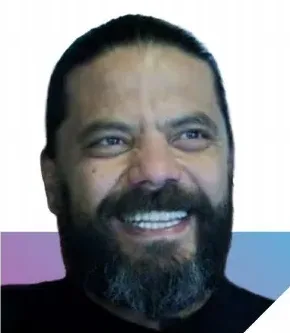
Maged Farrag
Creative and Managing Director, 5d VR
Maged Farrag is the creative and Managing Director of 5d VR. He has been working in tech for more than 26 years. Always fascinated by bleeding edge technology, Maged, a graduate of mechanical engineering, started out working with multimedia interactive touchscreen applications, the emerging tech of the time as he likes to describe it. In 2011, he founded a joint venture with a Danish gaming company, which eventually led him into Augmented Reality. In 2013, his company worked on their first Virtual Reality project and have not looked back since. This spotlight looks at 5d VR’s work, how they started the immersive section of the Cairo film festival and the challenges they faced.
Could you tell us about your first XR experience?
It was with the DK 2. When we first got our hands on it, they had this intro -Three degrees of freedom experience. Though the quality was horrible compared to what we have today, it was quite impressive at the time.
What was the first experience you created?
We created our first AR experience in 2011 and it was a multimarker AR dance and football game. Our first VR experience was for a big real estate project in 2013. At the time, I didn’t really know much about VR, more than just watching videos online and just being impressed and waiting for the right moment to actually start developing our own experiences.
So, when I got the call requesting for it, I said yes, and I came back to my team. The good thing is that my team was already into game development and we had done some Augmented Reality. Venturing into Virtual Reality was not that challenging, but we used Crytek at the beginning then when DK 2 came out they didn’t release the drivers for Crytek so we had to redo everything again on Unreal. It was quite painful at the time, but at least we learned a lot.
Is the work you do now exclusively XR?
Well technically speaking we are exploring the horizontal landscape of the technology, we do 3D mapping, holograms and all sorts of interactive media content. It’s more or less some type of extended reality when we do 3D mapping or hologram, it’s like Augmented Reality without a headset. It feels almost the same. We do a lot of Kinect applications as well; whenever we have a chance we try new technologies.
What did you set out to achieve when you first started out in XR?
Apparently, I think it’s maybe something in my DNA that I’m always seeking something new. Even now we’re considering and thinking, we’re done with VR, what’s next? The Metaverse, NFTs or whatever is coming out there. Since I founded my first startup, it’s like I’ve been on a mission more or less to always seek new technologies and new solutions and try to see how they make sense.
How did you go from mechanical engineering to software?
Right after graduation, I had a friend who graduated one year earlier, and he got into touchscreens and multimedia at the time. He convinced me that I should join him. That was the start of this whole journey. I relied on whatever materials I could get my hands on, to learn and see about what worked and what didn’t. But I believe the most learning we got actually was on-the-job.
You moved from multimedia to XR. Between 1994 and 2013 when you started to do XR work, what did you do in that space of time?
When we started with multimedia, it was pre-Internet. We didn’t even have CD ROMs. We had to rely on information kiosks to invent a solution. So we’d do a multimedia solution and put that on an information kiosk using the touchscreen, and it was quite innovative at the time. People did not have all the smartphones out there. So just using a touchscreen was quite magical.
I compare that very much to VR/AR and the whole immersive computing space right now. Multimedia back then was like the emerging tech and everybody was excited about using it for retail, education, events, and as you can see now it is all over the place. Everything is based on using multimedia more or less.
What are you currently doing?
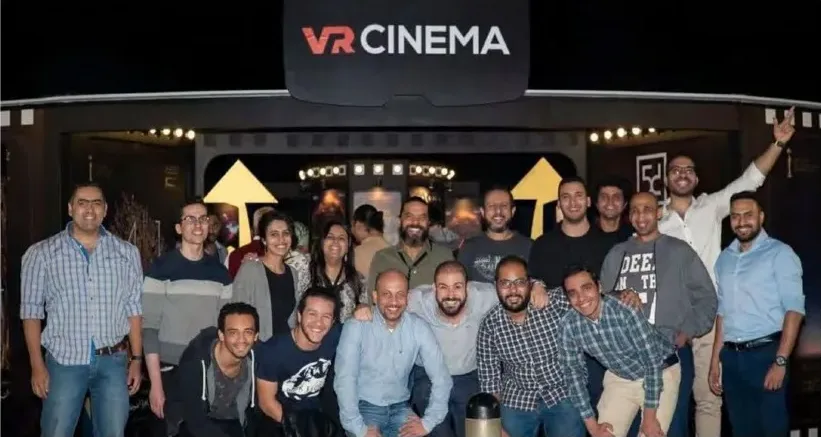
We mainly develop enterprise solutions for marketing, events and training. Our customers are businesses, ranging from small, medium enterprises to large fortune 500 companies and sometimes, we also deal with governments. Recently, we’ve done a bit of work on cultural heritage and how to use the technology to document and disseminate information about cultural heritage which is very common for what I used to do with multimedia.
Are you heavy on XR or a model like the distribution of the work you do?
The distribution of the work when it’s for an event, we supply our own hardware and we can put the experience up quickly and people just use it. Most of the AR solutions we’re doing at the moment are web-based. It’s the simplest. The most reach you can get with the distribution is in WebAR. We have many projects actually running now for different WebAR experiences.
What’s the size of your team at 5D VR?
We have almost 25 full-time employees, but we have an extended network of partners and companies we use whenever we have an overload of work or things that need to be done within a short while.
What’s the geographical distribution of your clients?
When we officially started 5D VR in 2016, 90% of our work was for clients abroad, mainly in the UK and the gulf UAE. Last year, it was almost 60% abroad and 40% for local clients. At the moment we have clients from the UK, Denmark, the Gulf states basically UAE. So yeah, we’re proud to have more or less like we say a global footprint, we have delivered different projects technically speaking all over the world.
What do you think the increase in local clients indicates for XR locally?
Well, there’s a growing interest in the local markets. Maybe the local companies are a bit afraid to try new things. Some of them are always looking for the wow factor and creating this kind of impression so that they have the guts to actually try something new. But most of the time, they want to see if it works, so they want somebody to try it first before they start using it.
Every other day, I would say I receive a phone call from somebody who’s interested in the concept of the Metaverse, some high ranking government agencies want to use technology in training, which is coming a bit late, because we’ve been using VR for training for a long time now, but it’s good that they realised that it works and it’s effective, and it’s actually more cost effective. So there’s definitely a growing interest. That is, I would say, a reflection of the growing awareness of the technology and the effectiveness of the different solutions.
What is the most impactful XR project you’ve worked on?
There have been a few of them. I have developed a passion for cultural heritage projects, because I think there’s much more than the commercial value of doing a 3D scan for a timeless piece that will be put on AR or VR or even just online. You cannot put numbers on it. So for me, I think the cultural heritage projects are the ones I am proud of the most. We’re currently working with the museums of the presidency of Egypt. I think it will take some time because in that project, we’re actually 3D scanning a lot of pieces and some shooting on a turntable or gigapixel. We’re also doing a lot of actual capturing of the items, not to mention putting that in an interactive environment.
Our mission is to actually make that available on the web and on a mobile app. So that’s definitely a project I’m totally proud of. Also, we did the Egyptian pavilion during the World Expo in Milan in 2015. It was an extremely challenging project and we had so little time to execute the whole pavilion from start to finish. We had no option but to seek different partners and try to distribute the work among a lot of people so it could be done on time.
We actually managed to get nine different companies from Hungary, Ukraine, Australia, and three companies from Egypt, and we got all the people working together under our direction to deliver our vision. It was quite impressive.
I remember the first HoloLens project that we did. We did it totally without even seeing the HoloLens. We ran some tests, had the client on the other end testing things, and we managed to deliver. Even with the lack of hardware availability, there’s still a way to work around that and get things done
Maged Farrag
On the technical side, what equipment do you currently use in development?
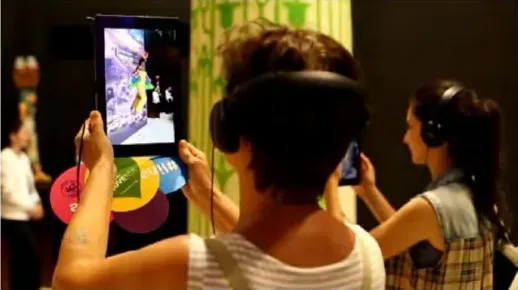
All kinds of equipment we can get our hands on. So like we say we’re technology agnostic. We’ve been using headsets all the way from Google cardboards to Microsoft HoloLens Two, so we deliver across any kind of device or hardware, even if we don’t have the device at hand.
I remember the first HoloLens project we did. We did it totally without even seeing the HoloLens. We ran some emulations, had the client on the other end testing things, and we managed to deliver. Even with the lack of hardware availability, there’s still a way to work around that and get things done.
How easy was it to get hardware and what kind of problems did you encounter?
With the hardware, especially at the beginning, we used to pay a lot of customs and a lot of taxes. Sometimes when we’re getting a headset for the wireless transmission, for example, it could take three to four months, just going through different government authorities to get clearance. So, this is the kind of hiccup we can face especially with the hardware. But again I get some hardware with me from travelling, when we have no other option we just order it and pay the taxes and just wait. So it’s always depending on the time we’re making the purchase, the time we need the hardware, and how much time we have, how we can make it accessible.
For software we use Unity and Unreal for development. We also use all kinds of WebAR. Most of the available WebAR solutions, whether it’s 8thWall, ZapWorks or XR Plus, we’ve used all of them. That’s on the development side. On the art side, we use 3Ds max, ZBrush, you know all the tools for creating 3D content. Then for the cinematic or the video production part, we use Adobe Premiere as well as others from the whole Adobe suite like, After Effects whenever you need to do post production for example.
How easy was it for you, getting people with the right skill set to work with?
It’s a lot easier now than when I started with AR, because it wasn’t that common. However because we use the same game engines and development tools, it is easier as there’s a growing population of developers in the game community in Egypt. Then we have our team, the heads of the different teams are quite capable of getting people on board, orienting them on our pipelines and how to work, and actually giving them the required training for how we do things
What are some of the big challenges you faced trying to build XR or being an XR creator in Africa?
Well, at the time we started venturing into it, the hardware was not available, people did not know the tools. So everything was very challenging. But at the moment, I would say the challenge will be access to the market because we have the capacity to deliver a wide range of services. Also to some extent, I would say the awareness and the general knowledge of the clients, as they sometimes get the wrong information. You see something that’s totally VFX and they say okay, we want a hologram like that, but it’s not a hologram. This becomes a challenge, especially if people have some idea in their head and they don’t want to change it.
What’s the XR community like in Egypt? Do you have people within your space doing similar work with you that you can engage with?
I believe that now in Egypt, there’s a good number of companies and startups that deliver across the spectrum of extended reality at large for different solutions. From real estate solutions to virtual tours like Matterport (there’s a lot of these), to even industrial applications and solutions and at least a couple of startups who are doing their applications for medical purposes. So there is now definitely a growing community of artists and developers with passion for the technology.
Do you think they like what having a community brings into this space?
Well, that community is like a building block. If you don’t have the right community, nothing can actually flourish and grow. We’re sharing resources, sometimes we rely on each other like if I’m short on a headset I can get it from a friend’s company or someone who can help me with it and vice versa. The community is more or less about being there for each other and thriving to do better. So, having a community is a very strong component and aspect of growing any industry. Since we started creating the Africa XR hackathon, this has made us feel part of an even bigger community across the continent.
What kind of clients do you deal with mostly?
In Europe, there might be VR studios that want to expand their team. So, we don’t have to deal with the clients, we deal with XR studios like ourselves. We partner with them and then we become an extension to their teams. This is how we get our projects in Europe mainly. There’s still many instances when we took the clients firsthand. Usually, there’s an agency who’s providing a service, training or event for its clients and now they want to adopt VR or AR, so they come to us. We partner with them and it makes sense. And if everything goes as planned, it’s a win-win situation.
What role did you play in the Cairo Film Festival?
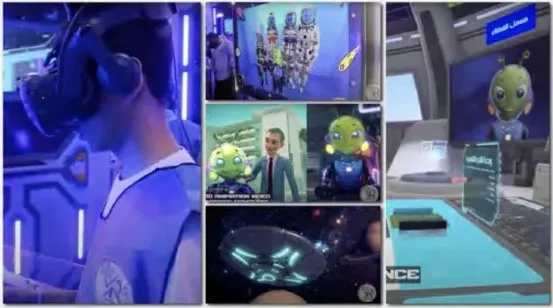
For the Cairo Film Festival, we did the VR section in 2018, which was the first time to do a VR section and in 2019. In 2020, with COVID, everything had to be put on hold when it came to the VR section. Our mandate for the festival was to screen various experiences, and get speakers to create a whole VR section; but our internal mandate was to actually make the technology accessible to people. So film makers as well as the general audience could try different AR and VR experiences. That’s why we made it totally for free, and we had a big hall that we constructed in the Opera House and we were always selecting award winning experiences that we would screen. It was a very good exercise and we got very positive feedback from all the people who would just go and experience VR, with most of them experiencing it for the first time.
What kind of policies do you think should be put in place to support the XR space?
Well, that’s a tricky question, because the Metaverse is decentralised. What kind of role will the government play? It’s still under discussion and there’s a lot of debate going on about that. I attended a couple of workshops for a government entity who’s interested to know about how they can venture into the Metaverse and how they can support it. So one thing to start with, is to actually make a report like the one that you’re doing across Africa, but we need a report about the industry in Egypt to actually get an in-depth analysis of the market. I feel policymakers can support the creators by putting in whatever programmes for training, creating incentives, programmes for reducing taxes, and for customs so we can get equipment at least at the same price they’re sold in the US or Europe. Things like that will help to actually boost the whole ecosystem.
How do you communicate with people without prior knowledge of the XR space especially within Africa?
Well, the most convincing way especially in our industry is show and tell. You’ll have to show them, okay, you don’t know about having so many XR startups in Africa. So just show them that they are out there and in our work you have to see it. Awareness is important so I make many talks and presentations to show the audience different use cases in Virtual Reality, Augmented Reality and Mixed Reality.
What role should big tech play in the XR space locally and internationally?
Well, let’s be frank, all the big players’ main concern is to own the whole thing, which will never happen because Meta is working on their own version of the Metaverse, Microsoft is doing Mesh, and Nvidia is doing Omniverse. So I think it’s more of a race right now where they’re concerned more about gaining the most market share or owning the whole thing. I would say that they would be concerned and willing to support creators from European countries or the US because they know the economic scale. Maybe they don’t trust the same could happen in Africa. So we just have to prove them wrong. If I were to ask the government to do something about it, I would say to put some pressure on these tycoons to actually just start a small initiative, even if it’s something about training or technology transfer.
As an XR creator, what additional thing would you like to say?
Well, it’s an interesting space to be in for sure. Whatever we are creating now will have a strong long term impact because while there’s still a big gap between the XR industry in Africa and abroad, we are proving our potential and paving the way. I think nothing can happen without what we’re all doing as XR creators in Africa by making the solutions and the technology accessible and available for people to understand, try, and make use of.
What are some of your projections for XR globally, long term and short term?
In a couple of years I think AR glasses or AR headsets will become more common. I know there’s been a rumour every year that Apple is going to make their headsets. I believe this will have a massive impact on the market like when they did the smartphone.
They will create the whole ecosystem around it and it will be very powerful. However it’s not only about Apple, but having this kind of technology accessible to the consumers will create a great impact to the market and to the industry at large. So just having more headsets out there, and the mixed reality with 5G, with all of these elements just being put together will create even more new use cases than we can’t think of at the moment.
I think in the short term, this will be more or less the reality. I also think that in the short term, we will understand more, the full potential of the Metaverse, what can be done, what cannot be done, and what kind of problems are out there. That will help us to make things in a better way.
From the Africa XR Report 2022, pages 210–217. Open the PDF at this interview.