
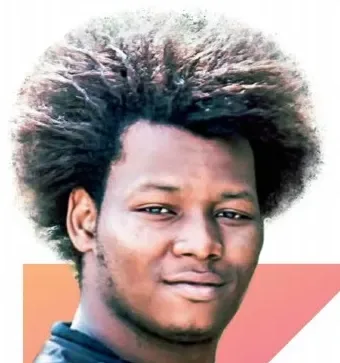
Creator stories N° 12 / 23
Senegal
Laurel Gbenafa
Founder & CEO, Virimma XR
Laurel Gbenafa is a software developer who has been working in video games/VR development for over seven years. Apart from managing his own agency, Laurel also works occasionally as a project consultant or researcher on other freelance projects. Over the course of his career, he has been a part of several impactful solutions including a house virtual tour app for people house hunting remotely, and a VR patient platform for medical students to practise specific skills before working with live patients. In this feature, Laurel shares his experience working in VR, the challenges and successes he has faced, and what he looks forward to in terms of support and regulations that will grow the VR space.
How did you get started as a game developer, and what was the first project you worked on?
It started with a passion for video games. I’ve always been immersed in video games and my father quickly noticed this obsession and used it to spur me to aim for good grades in school. So, the more I did well in school, the more video games I got.
This continued till I was about 15 or 16 when I finally thought to myself: “How is a video game built?” To answer this question, I did a bit of research on how to make games, how game engines work, and before I knew it, I got into programming. Since there was no game development school in Senegal, I studied software engineering at university. Not only that, I have also been doing a lot of self-learning: watching tutorials, looking at other people’s work, hanging around experts from the industry, travelling around the world and working on a few projects here and there.
I remember the first set of projects I worked on was before university, and they involved me tinkering with things, trying to figure out what worked and what didn’t. These experiences turned out to be something I could leverage several years later.
From being a game developer, you transitioned to XR, how did that happen, and can you share some XR projects you’ve been involved in?
I mentioned hanging around experts earlier as part of how I learnt game development, and venturing into VR was similar. I was in my first year in university and there were these talk sessions I used to attend.
One day, someone brought a Google Cardboard to the session and the experience was amazing! Imagine going from only seeing in front of you to having an immersion experience unlike any you’ve ever felt before. The seeds were sown! I later travelled with a friend to Belgium for a hackathon, and while touring a tech shop, we stumbled on a type of VR headset which we bought. Back in our hotel room, we tried many things, and it was different from the cardboard, everything was smoother. It was at that point that I decided to go into VR.
Being an Otaku, the first VR project I worked on was an app that allowed me to read my manga scans in a Japanese home setting, with a tatami, half-closed windows, etc. Subsequently, I have worked on other projects, one of which was a remote visit VR app that was part of a hackathon. The idea for the hackathon came from the challenge I experienced moving houses.
Usually, when searching for an apartment, you contact an agent who arranges a tour of houses, and charges you each time you go on a tour irrespective of whether you find a house you like or not and so on. Then there’s the number of hours you spend visiting these locations. So, when my friend and I were looking for a house, we realised that we could make the process much better with a VR app where clients could tour multiple locations from their phone or from a housing agent’s office.
That was our brief, and we executed it by mapping about five houses in 360 and building a VR app for each. The app included sounds, for example, one of the apartments was in front of the sea, and while it’s good enough to say that it’s in front of the sea, if somebody is to visit from the opposite side of a city, it would be good to hear beforehand, how close the house is to the sea. Is it noisy? Peaceful? Or is it something that is just not liveable? We also included pictures of the houses, including a tour of the neighbourhood, and we added as much information that could help people decide whether they were interested in leasing or not.
What was the reaction to your project at the hackathon?
People were like “Oh, this is really ambitious but you guys have to ensure you have something to show at the end of the day, because it’s just three days.” Fortunately, we were able to finish. We built both an app that could be viewed from the phone, and a web version that could be viewed from a real estate agency. We came second place in the hackathon!
Which of your projects would you regard as most significant or impactful?
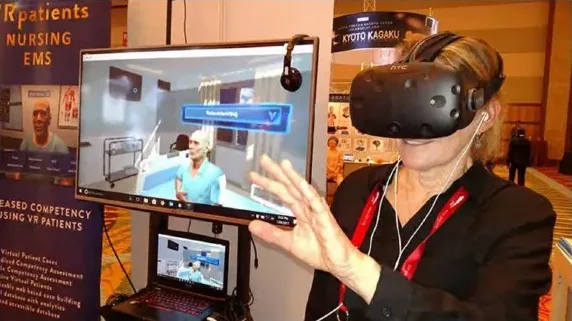
That would be the virtual education systems - VR Patient, the medical simulation I worked on. Beyond being technical, it’s a significant solution that allows medical personnel to practise life saving skills on a regular basis without limitations, making them ready for real-life situations, reducing errors and improving responses.
Essentially, I like it because it makes learning interactive as opposed to trying to cram a book day and night. This will make medical students more ready and interested in saving lives.
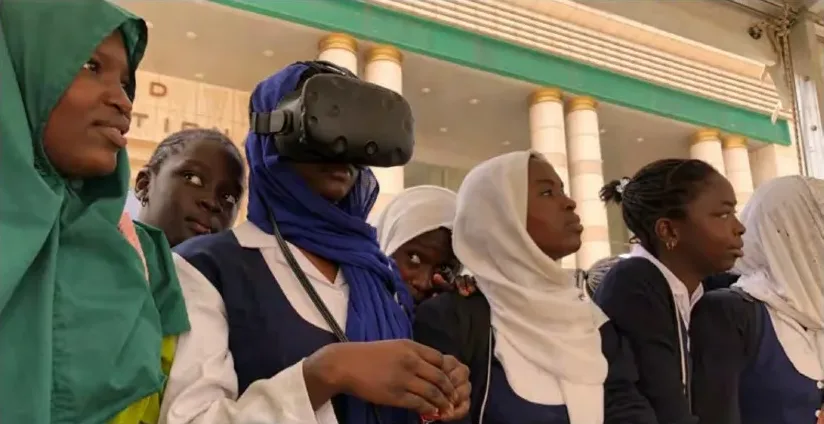
Every field has its tools, that said, what are the XR tools that make your work possible?
Generally, when it comes to VR, you need to have a nice environment, especially in 3D. Otherwise, when the environment is not good enough it clashes with the experience. You’re not really immersed and your brain spends more time trying to look for what is wrong.
Bringing it down to myself now, I have a nice blend of software and hardware I use for my work. In terms of software, I’m a Unity-certified trainer, Unity-certified 3D artist and certified game associate. I use Unity 3D for building content, I also use Unreal Engine, sometimes I use Blender for authoring and 3D creation and a bunch of other things like sculpting. I also use ZBrush and Substance Painter.
For hardware, I have a motion sensor capture and six Kinects which I can mount together and extract motion from. I also have a Vive with trackers, an Oculus Quest, a PICO 3, a Galaxy Gear – which is a little bit old, a Google Pixel headset, a regular Oculus, a cardboard and the hobo VR. I plan on getting the Oculus Quest 2 soon. For AR, I use an iPad and I have a few headsets and a good computer.
You have quite the equipment cache. How easy was it to acquire it and what other challenges have you faced since breaking into Senegal’s XR space?
It has definitely not been easy acquiring this equipment, but I have been ingenious in sourcing them. Though not optimal, it works for me. That being said, it is not cash-wise to purchase every single piece of equipment just to test something or know if something is relevant for your project. You will end up spending a lot of money if you do that. What would have been great is to have a means to access some tools to try them out and see if they will solve your problem.
A second challenge is getting people with the understanding and skill set I need for projects. This ends up increasing the time needed to complete a project. What I have done to solve that challenge is to educate them to the level needed to work on major projects. Because if you say, “Okay, I need to build this project, and I need a 3D artist,” you’re probably not going to find one. Instead you will find somebody that is passionate about 3D art, and then you have to train them.
A major change the government can champion is to convince more people to bet on tech and give immersive tech a chance.
Laurel Gbenafa
Have you struggled with people accepting or understanding the work you do as a game/XR developer? How do you handle such situations if or when they occur?
I think most people now know what VR is about, but the bulk of the misunderstandings I get is from clients coming and wanting things, but not measuring how much work and how much preparation it takes to go from an idea to something that actually works, and not the prototype they can just brag about.
I’ve had many clients come to me like, “Hey, we need this. It needs to be done in two weeks,” when they don’t even have a brief. Yet they expect a finished product that should take a year or two, to be ready in two weeks! Initially, we tried to meet these deadlines, but we later realised that we were shooting ourselves in the foot and we may not always have the bandwidth to take them on.
How do you fund your work? And if you were to get access to more funding, what would you do with it?
Besides hackathons and winning some competitions, most of everything I have in terms of equipment was personally funded. Since there’s nobody you can turn to for help.
If I get more funding now it will be channelled to key fields that VR can have a profound impact on. In my head, I think it’s not just about creating VR content for just about anything. We have to be able to focus on the things we want to highlight the most. As an African, I think something that will spotlight African culture and history through storytelling.
People are already curious to learn about our culture, so much so they travel to the continent. Now with AR, we can make the experience of visiting our past or telling our stories more engaging, reach more people and dispel the misconceptions they may have about Africa.
How do you find clients and what does your client list look like in terms of geographical spread?
I have more international clients, some I got online, and most were referred to me from previous clients. Also, I prefer to work with long-term clients.
Businesses do not exist in a vacuum and this applies to XR too. In your opinion, what kind of regulations/policies will make XR thrive in Senegal?
A major change the government can champion is to convince more people to bet on tech and give immersive tech a chance. Due to some past tech projects that were mismanaged, most Senegalese would rather stick to what they know, since it works. But if the government can support us in the XR space such that we are successful, we will not have to keep convincing anyone that the tech we’re trying to promote is actually important. The best way to get people’s buy-in is to show by example.
What do you think tech giants like Meta and Apple should do to support XR growth in Africa?
For the tech giants, it would be great if they could help us to reach more influential people who are interested in our work and also help us to get more funding.
I think those are major enablers for other VR developers like me to build a success story that can then fuel and trigger other successes later on. I think at the core, we have to succeed in disrupting at least something, and getting the backing of these tech companies will go a long way.
One year and ten years from now, where do you see XR globally?
In the next one year, I think the focus will be on making the hardware better. We have made progress in some areas but I think there’s still room for hardware improvement. I see a tech rush with people improving, launching new VR headsets with new features. Creators will also be trying new things, trying to add new immersion or exploring new immersion-like possibilities, and new content creation possibilities.
Ten years from now, I see VR being used in almost everything that needs to be technical, like teaching somebody how to handle a specific thing, or a specific engine, or a tool or learning and mastering a skill set, or learning how to create things. I see it being used a lot in those fields first, and then a lot in entertainment like games, stories, 3D movies, interactive movies, etc. A third field I foresee VR being used in, is collaborative remote work where people can work on projects at the same time and for meetings.
From the Africa XR Report 2022, pages 204–209. Open the PDF at this interview.