
Creator stories N° 09 / 23
Nigeria
Joel Kachi Benson
Creative Director, JB Multimedia Studios / VR360 Stories
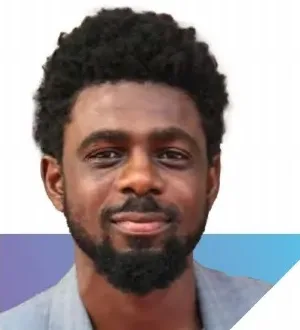
Joel Kachi Benson is a documentary filmmaker and VR content creator, with over 10 years experience as a visual storyteller. In 2018, he began exploring 360 filmmaking at a client’s request and since then, he’s made a 360 film every year. In 2019, Daughters of Chibok, his 360 narrative documentary, won the Golden Lion for the Best VR Story at the Venice International Film Festival, making him the first African to win this award. In this spotlight, we share the story of how Joel got started and what he thinks Africa needs to create more award-winning VR filmmakers.
How did you get started as a filmmaker?
I have always been intrigued by the visual medium. I always wanted to be involved with it. My first real attempt was making music and wedding videos, things I was never excited about. In the end it was just too hectic, for example, with the wedding videos, the bride would tell me things like, ‘remove the pimples from my face,’ or ‘make me look glossier.’ I found that too stressful. Then at some point, someone gave me the opportunity to make a documentary. The idea was for me to speak to interesting people and record them telling their stories. I was excited to hear about their lives and what they were doing. These people did not care how they looked or if their pimples were showing; it was better content and less stress. That’s how I got started. From there it morphed into storytelling and I have been doing that for almost a decade now.
It sounds like you broke into the video space, did you ever get any formal education in the medium?
I didn’t get any formal education, at least not in the traditional sense. I didn’t go to a regular university. I finished high school and at the time, I couldn’t further my education because of financial challenges. I started making videos and since then I have saved up for filmmaking courses. I have been to the Central Film School London; Legacy Media Institute in Virginia, USA; Nation Film and Television School Beaconsfield, UL; and StillMotion in Portland, USA. I got my break in VR in a similar way, by saving for informal training in the USA.
Could you tell us a little more about that?
I had been making documentary films for some time at this point. Someone I had been working with, Damilola Ogunbiyi, called me up and told me she needed me to make a 360 video for her. I had no idea what that was and I told her this. At this point, I had never even used a headset in my life. She in turn pushed me to do some research, which is what I did.
In my research, I ended up watching all these 360 videos on YouTube, moving my cursor around to rotate. I thought they were cool, but I didn’t know how to make them. At this point, I did some research into where I could learn and I found this guy in the US. GoPro had people all over the world that were certified VR trainers and he was on the list in Chicago. I had a valid US visa, so I cleared out my account and told my wife. I remember Dami saying, “Just do this, it’s going to change your game.” And I am glad I took her advice. I flew out to the US, bought a 360 camera - the GoPro Omni -and the rest as they say, is history.
How did things progress from that trip to you making your first VR film?
I remember when I wore the headset for the first time. It was a Coldplay concert. I wore it and it felt like I was there. I remember saying to myself, “This could be a powerful tool for storytelling. Imagine the documentaries I could make, the places I could go to. I could use this as a tool to push my storytelling forward.” I completely forgot about Dami’s project. I thought I could take this to Maiduguri, to an IDP (internally displaced people) camp, shoot something there, tell these powerful stories, take people to these places that they ordinarily would not be able to go to, and that’s what I did.
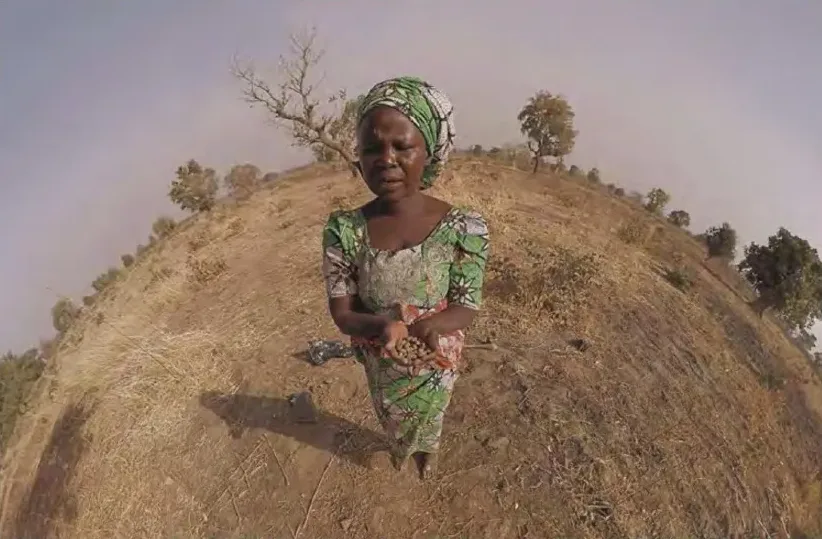
When I came back, the first VR project I did was called In Bakassi. It was the story of the life of a child in an IDP camp. Since then, it has been one project after the other. The next year, I made Daughters of Chibok, then Noah’s Raft.
In your experience, what would you say is the main difference between the VR films you make and your 2D films?
Stories told in 360 have a way of transporting people to places they have never been to before. It is something I am pretty intentional about. The stories I tell in VR need to be amplifying something. People often ask me about the power of VR. Where does the technology truly shine? I am of the opinion that VR has the ability to take you to places you otherwise couldn’t go to. In Daughters of Chibok, we took people to Chibok, this town they had heard so much about but knew little of. When deciding whether to make a story in VR, I ask myself how accessible and unique a place is. If it’s somewhere that is easily accessible, then it might just be another VR tourist piece. But if it’s somewhere hard to get to, with voices that need amplification, then it becomes a no-brainer.
Stories told in 360 have a way of transporting people to places they have never been to before. It is something I am pretty intentional about. The stories I tell in VR need to be amplifying something.
Joel Kachi Benson
Diving into the more technical bits, can you tell us about the equipment you use in your productions?
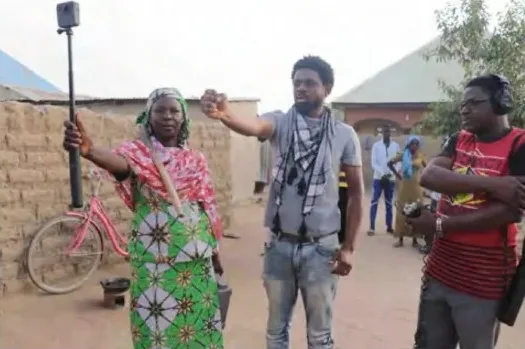
I started with the GoPro Omni but I don’t use it anymore. It has gone into my private museum. The GoPro, while a beautiful camera, was a bit of a hassle. For instance, if one of the cameras (the Omni has 6 cameras) decided it was not going to work, none of the cameras would. An even bigger challenge we had with that camera was that we couldn’t monitor. It was the craziest thing to make Daughters of Chibok with. I would choose a camera to be the main character, set the scene, run away to hide in a corner, and hope for the best.
I use the Insta 360 Pro now. It’s a pretty cool camera. With this camera, I can monitor and the post-production flow is better. After I record it provides me with a pre-stitched piece, then I can move to Adobe Premiere Pro which is where the stories are created. I guess that’s the thing with technology, as it changes and evolves, you evolve with it.
My big dream is to get the Insta360 Titan. It’s this massive camera that costs about fifteen thousand dollars. It’s a camera I have worked with before, and it has great resolution, especially for night shots. For the next project I am working on, it’s a bit ambitious and there will be some night shots, and that’s where the Titan shines.
Have you found it challenging to get your hands on this equipment?
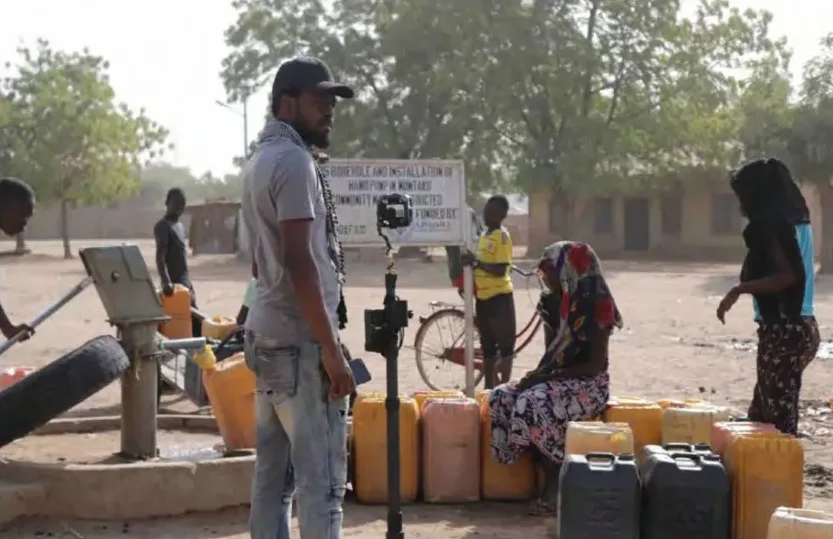
I won’t say so. For the equipment, it’s really all about having the money to buy them. Perhaps, it’s because I am more focused on the story, I don’t see hardware as much of a challenge. I use whatever I have access to. And the thing is that whatever your price target is, there’s a kit in your range. So, I don’t let that worry me. What drives me is the story. If I want to tell a story and the only thing I have is a small GoPro with 2 lenses, then I’ll go ahead and make the story with that camera.
What would you then say are some of the biggest challenges you face?
Finding the right people. Getting people with the skills you need is like finding a needle in a haystack. What you need is to find people with the passion, and that can be quite tough. The work we do can be quite gruelling and monotonous. What you need are people with the right mix of passion and patience.
Another problem is that a lot of people don’t think there is money in VR. They don’t see the financial opportunities. They ask questions like how many watch VR? And where is the money in it? You can’t blame them; look at the reality around us. There is not much institutional support for XR, except for people like me who use our money to fund these crazy dreams.
Speaking of getting the right people, how do you put a team together for your projects?
For a project like the one I am currently developing, I’d say that the core team would consist of about 4 to 5 people. There’d be me, the director, providing creative guidance. We would have someone in charge of running communications and writing for the project. There would also be 1 or 2 people shooting the project itself, and then one more person for post-production. I am not a big fan of large teams, so for a project like this, there would be 5 people.
You’ve talked about funding your projects and needing money for equipment, tell us how you finance your projects?
So far, all of my projects have been self-funded. We keep busy doing commercial work, and profit from our commercial work funds our VR work. All my three movies have been self-funded. Half of the reason for this is that I couldn’t find funding opportunities. The other reason is that there is a very short buffer period between when I get an idea and when I start working on it. Getting money from people takes time and I don’t have time. I am also sort of exhausted by the process of asking for money. You do all this writing without any guarantee.
For our next project, we are thinking of looking for some funding. It’s an ambitious project and it will cost more, so I am hoping we find partners that believe in us and believe in the project.
What kind of support do you think needs to be in place for these technologies to take hold?
For one, we need funding opportunities similar to what’s available to our counterparts abroad, where you can get money for a project without anyone pointing a gun to your head to produce a return on investment. You are allowed to fail. That doesn’t exist in Nigeria. I think that’s going to be the biggest challenge. There is just zero support for it (XR.) The bulk of our content is consumed outside of Nigeria. The bulk of our support is also from outside Nigeria. That lack of support can only send us backwards. There’s not going to be much progress.
From a policy standpoint, the people in government need to understand what XR is in the first place. Just understand it. What do they know about XR? If they know anything, are they speaking to someone higher up about it? We can’t always be playing catch up.
Everyone around the world is trying to get a hang of this technology. Everyone is trying to figure it out. Everyone is trying to do stuff. This is the time for us. Kids in secondary school should be able to experiment with XR. We cannot keep consuming. We have to start creating. And there has to be a system that encourages people to create. Nothing says a kid in secondary school can’t start messing around with a small 360 camera. I don’t know if there’s anything like that in place. I personally don’t know of any, but this is what we need. More systemic and institutional support.
From the Africa XR Report 2022, pages 174–179. Open the PDF at this interview.