
Creator stories N° 08 / 23
South Africa
Ingrid Kopp
Co-Director, Electric South
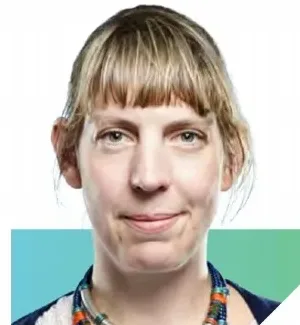
Ingrid Kopp has worked in documentaries and interactive media since 2000. In addition to her work with Electric South, Ingrid co-founded Immerse, a publication on non-fiction emerging storytelling. Before moving back to South Africa, Ingrid was head of the Interactive Department at the Tribeca Film Institute in NYC. She also programmed immersive work for the Tribeca Film Festival. She is co-chair of the World Economic Forum Global Council on Virtual and Augmented Reality. In this spotlight, she shares her XR journey and her concerns about the future of the African XR ecosystem.
How did you get started in immersive media?
I began working in television in 2000 on Channel Four. This was an exciting time for storytelling and technology. I was also interested in documentaries because I didn’t know what I wanted to do and wanted to try a little bit of everything. And I realised that documentaries were a place where I could explore various interests.
Working in the documentaries department at Channel Four was an incredible first job. It also allowed me to see how technology and storytelling intersected. As a result, I became very interested in the democratic potential of new technologies, and that stayed with me throughout my career. Then, I moved to New York in 2004, where I worked in television and did some work with online communities.
I became very interested in the web and social media, which eventually led me to work in immersive media at the Tribeca Film Institute. I oversaw the interactive department and began programming many interactive works for the Tribeca Film Festival. Then, around 2014, I began doing more and more VR work, and in 2015, I returned to South Africa. And now we’re here.
Do you recall your first encounter with XR? What piqued your interest?
I’ve always been interested in new technologies, especially when it comes to the arts and storytelling, so I’d been reading about early VR experiments in the 1980s and 1990s. But the first time I wore a headset was at the Sundance Film Festival in 2012 for Nonny de la Peña’s Hunger in LA project. It was a massive, extremely complicated rig. I mean, it was utterly unlike any headsets we are using now, but it was the first time I experienced a VR project. And it’s interesting, because the first time I saw one was at that Sundance, but it just went exponentially faster after that. I was constantly in VR from 2013 onwards.
Tell us more about your work at the Tribeca Film Institute and when you started working in the immersive section?
I was working for a British organisation called Shooting People, a network of filmmakers. I was in charge of the US office. We were doing a lot of work online to create communities for filmmakers to collaborate and work together. As a result, I became very interested in community management and web project management. And I’d started teaching a lot of boot camps for filmmakers, all geared toward getting them to use the web to promote themselves, promote their films, and think differently about how to reach audiences.
So, it wasn’t precisely immersive media, but I was working a lot on online platforms. I was pretty at ease in web-based online environments. And I began writing about the kind of confluence of technology and storytelling that I saw from about 2007 onwards, primarily web experiments and app experiments. The Tribeca Film Institute then asked me to assist in the application for a grant to support immersive non-fiction projects. After we received that grant, I began working for them as the department head.
I supported an extensive range of projects at Tribeca, like The Enemy, by Karim Ben Khelifa, and Travelling While Black by Roger Ross Williams. We did some fascinating web documentaries, like one called Hollow. There was a project in India, Priya’s Shakti. It was a fantastic piece that looked at gender-based violence in India, using comics, murals and Augmented Reality to tell different stories to young people and teenagers, which I always thought was clever. One of the things I liked best about working there was how I was able to do work that was utterly multidisciplinary in its approach.
It wasn’t all one type of thing, and that was always the most exciting thing for me. I did notice, however, that from around 2014 onwards, there was definitely more of a focus on VR.
Many of the other projects faded away because there was so much interest in VR, and we began to work on a slew of new VR projects. By the way, the same thing happened at the festival. In 2013, I began programming for the Tribeca Film Festival, and there were no VR projects that year. Then there were a few the following year, I believe. Then it was almost entirely VR after that.
Did you have any early indicators about the potential of immersive media for storytelling?
I think it’s because of my background in interactive and immersive media. I’ve always been open to new experiences. I know that many of these things are experimental and that not every path leads somewhere. Still, I’ve always been open to it and comfortable with it.
You know, when I first saw VR, I was excited. I could see the incredible potential for an entirely new kind of storytelling about embodiment and presence. I saw the massive potential for creating these fantastic storytelling experiences in 3 DoF and 6 DoF.
Honestly, this is where my entire career has led. It’s just a case of following one’s natural curiosity.
I am not a forecaster or a future predictor. I believe there’s potential here, let’s explore it. My biggest motivation for co-founding Electric South with Steven Markovitz was that so much of the work I saw was rehashing old narratives about Africa. We were sick and tired of hearing these on the continent. And I just thought, ‘There’s so much potential for African storytellers to tell a different kind of story about Africa. Or, more accurately, a variety of stories about a variety of African countries, and we need to back it up.’ I know there are incredibly talented people on the continent who could do incredible things with this technology. Let’s see how it develops.
How did your relationship with Steven begin, and how did you two decide to start Electric South?
We knew each other from the documentary and film worlds before I moved back to South Africa. We had met at a few film festivals and worked together on a project in different capacities, so I was aware of his track record as a producer. I had mentioned to him that I was moving to South Africa, and I had no idea what I was going to do at the time. And he said, ‘Oh, well, you know, that’s fantastic. I’ll let you know if I hear of anything.’
Steven had done a lot of work with the Goethe Institut, centred on short films, and he was ready to try something new. He knew I had done a lot of work in Virtual Reality. So he said, ‘Why don’t we do something around VR? We could run a workshop, and you could curate some VR projects,’ because he knew I was also a curator. Then the problems began, because I was looking for African-made work, I mean, made in Africa by African artists, and I couldn’t seem to find anything.
But, there were a plethora of African-themed projects in the works. To be honest, I thought this was a problem, and I just thought it needed early intervention and early funding and support. Fortunately for us, the Goethe Institut was highly supportive. As a result, they funded the first workshop. We had Jim Chuchu and The Nest Collective, Selly Raby Kane, Ng’endo Mukii, Jonathan Dotse, and some other notable artists.
People from all over the continent came together to create our first four new dimensions 360 films. That was all supported by Goethe; I suppose we were fortunate in some ways in terms of timing. That initiative led to the formation of Electric South, as we wanted to carry on the work.
Could you tell us about some of the creators you’ve worked with?
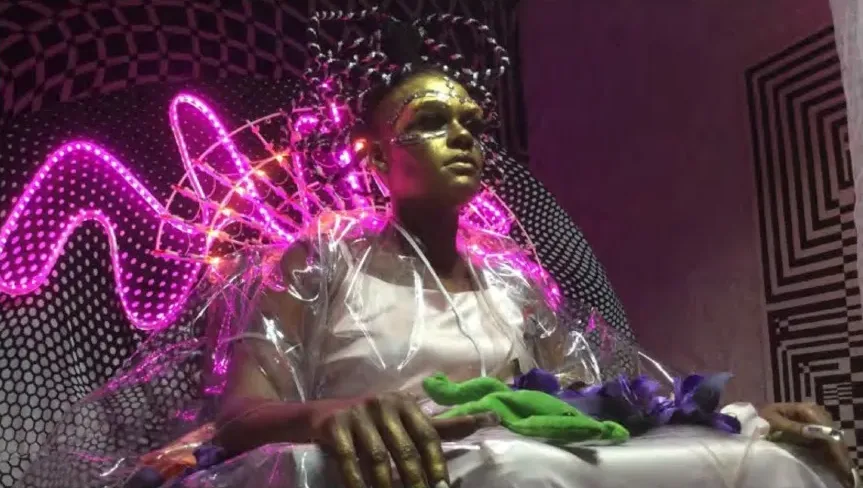
We’ve worked with Selly Raby Kane, who’s a fashion designer, she just brought this amazing visual aesthetic and style to the piece. The Nest Collective has such an incredible collaborative, interdisciplinary approach, which I loved. Let This Be A Warning was just really fascinating. Johnathan Dotse with Spirit Robots, and also Ng’endo Mukii with Nairobi Berries. All of them had this sort of really interesting, Afro futuristic theme. Those were the first projects we produced in Africa.
We’ve had people like Nyasha Kadandara who’s just an incredible journalist, and visual storyteller. She really impressed us, because it was such a hard film for her to make in terms of access to Lake Chad. Dylan Valley making Azibuye, was really interesting, in terms of thinking about space, and how you can tell a story in a space, because so much of that is about the occupation of a home. We’ve had people in our labs, like Francois Knoetze, and Amy Louise Wilson, who made the beautiful Subterranean Imprint Archive, which is all layered and has amazing different stories within stories in it.
I’ve learned so much from the artists. Every time we solve one problem as we make one piece, another problem comes up in the next piece. And I mean that in a good way. It’s like we learn so much from making this work in different ways in different countries with different artists who have different approaches.
What challenges did you face promoting and supporting African creators to create immersive stories?
We were extremely fortunate to have Goethe on board so early and open to this new experiment. As a result, they were nothing but helpful. And I can’t say enough positive things about how they helped us figure out all of this stuff from scratch, like where to find headsets. Interestingly, we ran the entire workshop without a single 360 camera. No Samsung, we didn’t even have a bunch of GoPros with a rig. We had nothing.
Katy Morrison and Oscar Raby flew in from Australia. They showed us how to scan with an iPad, like a small scanner attached. So we would do some basic scanning and then import it into Unity. As a result, we conducted some Unity scanning experiments. Extremely rough! Jessica Brillhart arrived; she was working for Google as their VR principal filmmaker at the time, but she was unable to bring the jump rig because it was brand new at the time, there weren’t many of them.
So we ran this workshop with very little equipment. And now, when you think about the kinds of workshops we run and the kinds of equipment we have access to, it shows how much things have changed between 2015 and 2022. And it’s not to say that things aren’t still challenging. I’m sure we’ll get into this and other things regarding purchasing equipment and gaining access to everything you need. But it’s a lot easier now than it was in 2015. I mean, dramatically different.
Why do you continue to do it?
That’s an excellent question. Every time I think something is impossible or too complicated, and there’s never enough money, something amazing happens. I think that’s also a testament to the fantastic community. I’m sure you’ve spoken to people like Judith of Imisí 3D, and Brian, who founded Black Rhino VR. Then I met the Eden guys Rick and Gareth, and through them, I’ve met the entire Metaverse Crew. There are people in that kind of ecosystem who have been so supportive while also going through many ups and downs.
Knowing that they’re doing cool stuff has always been very inspiring. Every time I’m feeling down, I’ll run to a lab or go to an event. I’ll see this fantastic work that we’re doing in Africa. I think it’s also important to acknowledge that I’m incredibly fortunate to be able to do what I do. Another way to describe it is to use my privilege from living and finding a community overseas and having a little bit of cultural and financial capital. I think that’s why I see myself as a cultural facilitator or cultural producer.
In a way, I feel like I need to give something back for having the opportunity to do all of these different things and get paid for many of them. That’s why I’m so enthusiastic about establishing this ecosystem in Africa.
People in the global south need to be a part of this conversation. And it shouldn’t matter if you live in an area with poor Internet, as I do right now. You should still be a part of this discussion because this world is coming, and it must work for you.
Ingrid Kopp
What kinds of policies do you believe can go a long way to support the industry?
There are definitely people like Judith, who are much more well-versed on the policy front than me.
One would hope for more funding for creative technology and to infuse it into higher education across African universities. It always amazes me that it is often more expensive to fly from one African country to another than to fly to Europe and back. It’s not fair and it can make collaboration really hard. I always use ITP as an example of what kind of creative tech education I would like to see more of. It’s a school at NYU, but a kind of institution where you can play and learn how to do coding and things like that, and the creative side of things.
I’d like to see more of this in higher education across various African countries. We need more opportunities to experiment and play.
Where do you believe the funding should come from?
Every healthy ecosystem requires a little bit of everything. A bit of government funding, some venture capital funding, philanthropy, and wealthy individual angel investors. You don’t want to rely on just one thing because I don’t trust the market to make good decisions. You cannot only be accountable to the government either.
Who has contributed to the work you’ve been doing with Electric South?
We would not have been able to do this without the Ford Foundation. Since the Goethe Institut got us started, the Ford Foundation has been our primary funder and has enabled us to accomplish so much. Almost all of our workshops here, and many of the productions, are thanks to them and their grants. So that’s been incredible. The Bertha Foundation has also been extremely helpful, giving us a home for our workshops and funding a lot of our distribution.
We recently received funding from the National Film and Video Foundation here in South Africa. This is very exciting because now we are seeing public money in South Africa supporting South African artists to create XR projects. That is the first time that has happened to us, and it is exhilarating. I’m trying to figure it out because I’m missing some people.
We were initially funded by Blue Ice. We’ve collaborated with the British Council on some projects, including a really exciting new initiative on sustainable fashion and XR. So, it’s all these different governmental and philanthropic organisations coming together to make this possible.
Is there a robust African community present in immersive media and XR?
There is a vast and fantastic community in the storytelling space. I wish more people were doing the work in a lot more countries. As I previously stated, I believe I am much more focused on the storytelling XR space. Much of our focus has been on Lagos, Nairobi, Johannesburg, and Cape Town, which is missing out on many African-focused stories.
I’m also aware that it may not always appear to others to be as expansive or inclusive as it should be. I believe there is still much work to be done in the community. And it would be fantastic if we could broaden our communities a little and have a lot of overlapping communities. You know it’s tough to build a community, especially in over 54 countries with different languages.
What myths do people have about immersive media and the XR market?
There are many. People see only one type of VR or AR project, and they form an opinion. That’s crazy to me because these mediums are elastic. They are flexible, and they can do so many different things. If you saw a VR project and didn’t like it, that’s just one project. There are so many different approaches to VR.
What goes into setting up the New Dimensions workshop, and why did you start it?
The work at the New Dimensions workshop came out of our first workshop with Goethe, which we did with no cameras and no equipment and not knowing what we were doing. But we had fantastic mentors in Oscar, Katy, and Jessica. And I believe that has continued. So we rely on bringing these talented artists who have no experience with XR to a location and then inviting these incredible advisors from Africa and beyond. They spend a week together, share learnings, develop their projects, and then get more support for their projects. And in some cases, we’ll produce some of them; I wish I could say that we produce all o… [text cut off in the printed report]
What role should Big Tech play in supporting African XR artists?
We’re a fantastic market with many young people, I think with the youngest population globally coming up. So there’s enormous potential here for big tech. A lot of that could also become very exploitative.
So, I hope there will be a greater emphasis on things like privacy and data protection and making sure that the big tech of the future isn’t just trying to get eyeballs and attention. Given where we are now, I think that’s a very optimistic view. But I wish it would expand to a more global population rather than just trying to get people on board and then doing unethical things.
I hope things will become more about delivering quality experiences and tools while protecting people’s time and attention. I don’t know if I have a lot of faith in that happening. But that’s my hope.
With all this talk of the Metaverse, I hope it doesn’t just become a space where that can happen in 3D. I want to see spaces for experiments and creativity. It’s nice to see organisations like Meta supporting the creative space. That kind of help is desperately needed. So I think it would be great if there were more initiatives like that while making sure that all of the other ethical things happen.
Do you have any concerns about the African XR ecosystem and our roles in the Metaverse’s growth?
My concern is that we will not play a significant enough role and will be ignored. I worry that it will not reflect our requirements and meet our needs in the future. More training is required so that people can be involved in the design and participation of these spaces. We need people here to build the software and hardware that will be a part of this future. Because I believe that if we don’t, the future will be very dystopian. It needs to be much more reflective of the needs of multiple societies and communities. So, the right not to be online is also a part of it. But, I believe the only way to get there is to be more global and inclusive in our focus, like what do indigenous communities need? What are the requirements of remote villages? What do the people of Lagos require?
I’m not a forecaster or a futurist, but I know VR will play a role in the future. It may not appear as it does now. There’s going to be some new Internet that will be 3D, and we’ll be able to access it from various devices, including VR and AR devices. And there will be plenty of opportunities there. I’m particularly concerned about who gets to design those tools and devices. It scares me to think that this new world will be designed in Silicon Valley by people who have a very Silicon Valley perspective on the world. I know this may sound quite rich coming from a white woman who lived in Cape Town until recently, which is a privileged place to speak from. Still, I genuinely believe that, unless there is a more global approach to design, storytelling, community building, and building new institutions, we will end up in a jaded dystopia.
People in the global south need to be a part of this conversation. And it shouldn’t matter if you live in an area with poor Internet, as I do right now. You should still be a part of this discussion because this world is coming, and it must work for you. So that’s how I see it, and that’s the bigger picture in all of this, as we should be involved in the design and creation of this future, whatever it may be. It cannot be left to individuals in London and Silicon Valley.
Along with that, we need to make the future internet accessible, so many of these new technologies don’t consider people who are blind or deaf or have other disabilities. All of these things must be considered as we design and build what this Metaverse will become.
From the Africa XR Report 2022, pages 166–173. Open the PDF at this interview.