
Creator stories N° 07 / 23
Nigeria
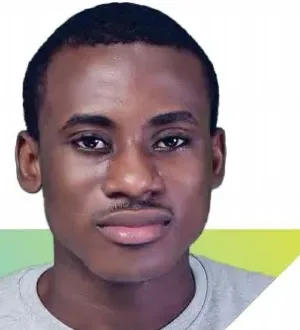
Hammed Arowosegbe
Founder, Swift XR
Hammed Arowosegbe is a Senior Software Engineer who currently works at Vault Hill, a UK-based company, where the Metaverse is being built into a social VR space. He obtained a Bachelor’s degree in Mechanical Engineering, and has since undergone training in Software Engineering for Wireless Mobile Robotics. He is currently working on his Master’s degree in Artificial Intelligence. In this feature, Hammed has a lot to say about his XR experience, projects he has worked on and challenges and opportunities in the XR space.
How did you build up your skills in XR?
When I studied Mechanical Engineering, I majored in design. I was designing from 3D, and that gave me more knowledge of what 3D is generally. And of course, 3D is one major part of VR and AR, so that was helpful for me. Software engineering pushed me into getting the base knowledge for coding which further prepared me for a future which had AI, VR, AR, 3D and the Metaverse.
I started in the robotics industry, where I was trying to build automated systems with Arduino. We had this project where we were working with the Nigerian College of Fisheries and we needed to build a ship simulator. The goal was to be able to train some of the staff and students on how to drive a ship. While working on that project I came across the Unity game engine and used it to build parts of the experience, I also saw Unity could be used for AR and VR, and decided to learn more.
Considering AI, I believe the technology behind Augmented Reality is computer vision, which is also a sub field of AI, while VR is more of computer graphics. And all these are more in line with AI. I feel the future of the Metaverse is going to be an interactive world, where things are smarter, and AI will play a really important role in this. For me, it’s more about keeping myself in line, and then understanding some of those frameworks and starting to build for it.
Can you give us a quick walk through your career in XR so far? And have you had to work outside XR?
I do more of VR, although my preference is towards AR, which I feel has more relevance and resources than VR right now. AR might take over in the next five years and VR afterwards, but VR sells better and faster these days. At Vault Hill where I currently work, we try to build for both AR and VR. We are trying to bring a synergy that will make the two both accessible and executable at the same time, thereby building a balance.
What’s your big dream for XR and what are your contributions to this dream?
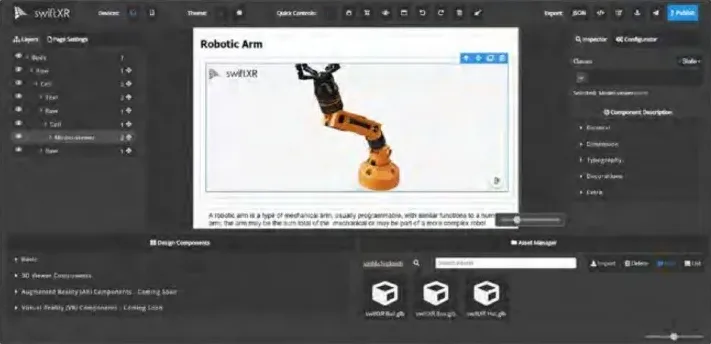
When I explore VR experiences I rarely encounter and get excited by African creations except for Daughters of Chibok, I think Imisi 3D was part of that, which was really good. So I would love to see more mind-blowing stuff come out of Africa. I think Africa’s problem is accessibility. That is why I have built Swift XR that helps anyone interested in VR and AR, even if they’re not tech savvy, to just drag and drop their 3D model on the platform and we take care of all the XR integration and compression, etcetera.
Can you remember your first XR experience and what was your first XR job?
I really cannot remember but I know the first thing I tried was YouTube VR. We had this Google Cardboard on VirtualBox, a cardboard that you can slot your phone into. It was like a YouTube 360 video, and we watched it. From there, I moved towards building AR apps.
The first one I built was a skeleton AR app and the goal was to show people the harmful effects of smoking. We were able to show people the lungs animated in real time, displaying the effects of smoking.
My first XR job was at a Tech company called DeepTech Africa, an AR/VR Startup and a part of Hello Tomorrow. There, I got training and started building experiences which included doing CPR in VR, etcetera.
Did it take you a long time to build Swift XR?
Yes, it took me four to five months out of which I worked for four months on my own to develop the initial building frameworks. And then my colleagues and I have been working to make it better. As a matter of fact, we just added a new feature for e-commerce.
Do you intend to make Swift XR a company on its own and is Swift XR the only personal project you’ve worked on so far?
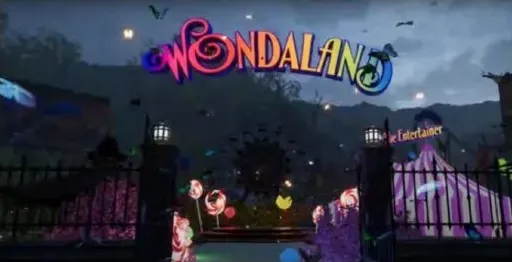
Yes, SwiftXR is a company on its own, I am also working on a game I intend to release, hopefully, this year. I did Teni’s Album, VR 360. I also did a project with Alpha and Nimbus when Marriot Hotels Ikeja was launched. That is the goal – to continue to build more stuff.
How did you get involved with the VR/AR Association?
When I started in XR, I connected with Rene, a Microsoft MVP and Director of Global Innovation at Valorem Reply who guided me early in my XR career. When I joined PwC, I generally decided to build more for Africa, but I needed more data insights. So, I joined the association through which I have had access to so many valuable resources and from there started the Nigeria Chapter of the VR AR Association. It’s not the best kind of growth that I want, because getting more members from Nigeria has been dicey due to funds. Still, we’re working on advocacy and making accessibility possible.
How would you describe your skill set and what software and hardware do you use for your work? How easy was it accessing these tools?
You know, I started out as a developer then slowly worked towards building an app and then pushing it out.
I use Unity and Unreal Engine although I’m better at Unity. I mostly work with Maya to develop my 3D model. I use Substance Painter to texture and then move into Unity, Unreal Engine, write some scripts and then build those out.
For VR hardware, I mainly use the Oculus Quest, Oculus Rift, and Vive Pro, which are like mobile and PC VR. For AR I use ARkit, ARCore Android, and iPhone and Android. I’ve tried my hands on Hololens, but not seriously because accessibility is an issue.
Getting my Quest 1 was not too difficult because I bought it off the company when they no longer had use for it. Quest 2 took about a month to arrive. We’re also working on how to create an e-commerce XR hardware store.
How did you learn to use the software you mentioned above? Did you ever take an online course or training programmes?
I had my background in Robotics where I got some experience in coding. I started with C, C++ and I moved to Unity. They are all similar, that is why the transition was easy from C# to Javascript, to Python, and I was able to catch up.
Online courses are your friends. I did a lot of YouTube initially, to understand what Unity was. I keep going back from time to time to do more research because there are more resources online. I learnt Maya from Pluralsight while Unity was more self-taught on YouTube.
Do you know any XR-related courses that can be studied in African Universities?
To be honest, I don’t think so. This is sad and I think we need to buckle up.
What’s the best project you’ve worked on so far and which do you consider the most significant?
I think the most significant project for me is the Swift XR, due to its complicated nature. It took a lot from me, it being new and all. Today, I can function as server architect, front-end person and also as an XR developer, thanks to the project.
Would you like to share some of the challenges you faced trying to be an XR developer?
A major challenge is that of access to gadgets (and money). XR requires a lot of processing power, and you can keep watching YouTube videos, but if you can’t practice, you’re wasting your time. I started with Quest 1 and today I have Quest 1, Quest 2, and the Samsung Gear VR. I also have a MagiMask and I am trying to get AR glasses.
I think Africa’s problem is accessibility. That is why I have built Swift XR that helps anyone interested in VR and AR, even if they’re not tech savvy, to just drag and drop their 3D model on the platform and we take care of all the XR integration and compression, etcetera.
Hammed Arowosegbe
You are a co-founder at HOFT developers, can you describe what it is about?
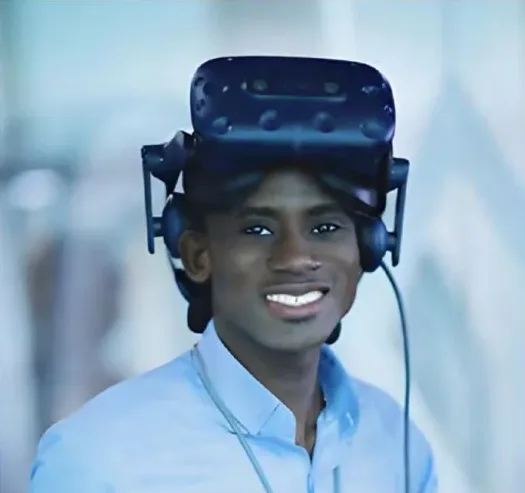
Yes, I founded HOFT with some of my colleagues. Our objective for establishing HOFT is to see how we can train people for free, as a way of giving back to the community. We get the brightest guys, train them and give them certificates. We have done two training cycles already and we plan another for Q3 2022.
It has not been easy, asking people not to pay money, because we end up getting a lot of applicants. We then have to separate the serious from the unserious. If you pay for a training, it is easy to be serious with it because you know that you paid money and you must finish the training.
The training runs for about six months. The first three months we teach them the whole skill set they need for XR now. We run them through Maya, Blender, Substance Painter and Unity.
Then they have three months where they get to work on a certain project based on what they’ve learnt. Most of the time, people drop out, they just do one month and they say, “I’m not doing it again.” So we are caught between making the training free, but ensuring that we make people more responsive and committed to the training.
How did you design the curriculum and what does it cover?
When developing the XR curriculum, what I considered was my experience learning the skills, what worked and what didn’t. And we have gotten results by following this, because after four months of training on Maya, for example, some of the students can already do really cool stuff with it.
Some of the courses we cover include AI and data science; how to use TensorFlow, Excel, Power BI Python, UI UX. There’s also mobile app development, which is more like React Native Kotlin, Java, or Android Studio.
In terms of geographical spread, our training is more distributed towards Africa, though the goal is to make it global, but we need funding. We are working to see how we can get funds for the training so that when people join the programme, we can give them Oculus headsets for free.
How have you been funding your projects? And if you get more funding now, what will you use it for?
Most of my personal XR projects have been self-funded. I believe you don’t need much money to get your first MVP, but as you start to scale up - maybe you want to build a multiplayer game - then you can start worrying about money. I would say money may not be a problem if you have the required skill set. But, if you are a corporate body, you need to find someone that is skilled, and of course start to spend money. It goes both ways.
If I get more funding now it will be channelled towards scaling up HOFT and SwiftXR. Though we are applying for grants, if they don’t work out, we have plans to bootstrap.
Do you think that people may get discouraged because XR devices are not as portable as phones?
I feel we are slowly getting there. The devices are slowly permeating the society and in no time, going about with the devices will no longer be strange. I also think that soon, a VR headset will have AR on it. That way, one device will be able to perform the functions of the two – VR and AR.
How do you describe your work to people who are unaware or do not understand what you do? Also, what are the misconceptions about your work?
It was quite difficult explaining what I do. I used to bring out my VR headset to demonstrate, until the advent of Meta’s transition from Facebook. Now, I just tell them that my work is in line with what Facebook is doing.
About misconceptions, people have a wrong mindset as to how much XR hardware costs. What I say instead is that they are available, but just not mainstream yet.
How would you define the Metaverse in plain language?
I’d say that the Metaverse is a way of taking so much from the real world and making it virtual. This enables humans to do so much more and, in a way, satisfy their thirst of wanting more.
Do you think there is adequate representation of African XR creators in the global space?
I think there is a huge gap. I know Imisí 3D has been here for a long time and is doing a lot of work. I also think that Imisi 3D is moving away from being a product company to being a community company, which is a lot better. Because to be relevant in this field, we need a community that understands what we are doing.
In the whole of West Africa, it is only Nigeria that has a chapter. Also, we do not have a company that is doing really fantastic on the global level yet.
Also, do you think we have a strong African XR community, and what do African creators stand to gain from it?
I don’t think we have a strong African XR community. I feel we are doing things in isolation, and I feel this isn’t right as there’s a need for us to push our awareness level up and this can only be achieved through unity.
If you do not have a community of people who understand what we are trying to do, one may not make it in that space. But if otherwise, everyone can leverage on being positioned in the space and when products are launched, it’s easy to get supporters and buyers.
Could you share some of the XR events that you’ve been a part of?
Most of the events have been virtual, but we are looking at more physical events. Some of the events are part of the African Game Week that’s happening in Cape Town, South Africa. I’m also part of events by Immersive Tech Africa, hosted by Arome Ibrahim. These will just shine a light on what people are doing in Africa.
How do you think big companies like Meta and Apple can engage you as an XR creator specifically? What role or what responsibility do you think they should play in this space?
Most of these big companies have lots of issues in system design and process flow, and an easy way to solve some of these problems is to throw them out to the XR community. For example, say Meta is having an issue with a certain kind of interaction for its avatar, they can take that problem and throw it open to Africans globally, turn it to a Hackathon, and that way, they can start to engage African developers to start building stuff that will be used globally. That will also boost morale, skill sets, and give validation for doing something that goes global.
From an ethics, policy and regulation point of view, what kind of policies and regulations do you think the government can put in place to benefit you as a developer and the XR Community in Nigeria?
I feel our government should not be too quick to make certain policies. To put it in context, we had a policy to ban cryptocurrency in Nigeria. Government felt it was a valid move and they gave reasons for it, but I feel like it should not have been a quick move. What if the US had, because of the movement of arms via crypto, banned crypto? It means companies like Binance and OpenSea, which are doing really well now, and have been able to scale up, won’t have existed. The government should not just make policies that cripple businesses, because at the end of the day, if these businesses become big they will pay tax to you, and you become richer.
I saw a video of Vice President Yemi Osinbajo putting on VR headsets, which is good. When we start to see more of these use cases in government as part of the government process, it will go a long way in growing the XR space. For example, the Nigerian Airspace Management Authority can start to use Hololens during their inspection and engineering process.
Short term and long term, what kind of predictions do you have for XR globally and in Africa, one year from now and 10 years from now?
One or two years from now, Africa will have more developers. Two years ago, I could handpick developers in Nigeria, but now you can’t handpick them again. Although I feel we are still small, at the same time we have more people, which is the same thing happening across Africa. More courses are coming out from Pluralsight and Udemy. Also, due to the move from Microsoft, Apple, and Meta into the VR space, you have more people jumping on the bandwagon. That means we’ll definitely have more developers.
Globally, ten years from now, AR is going to be mainstream. By mainstream, I mean becoming a device for everyday use. So, I see AR as mainstream short term, then when a hardware convergence comes, VR will overtake AR.
From the Africa XR Report 2022, pages 158–165. Open the PDF at this interview.