
Creator stories N° 05 / 23
Ethiopia
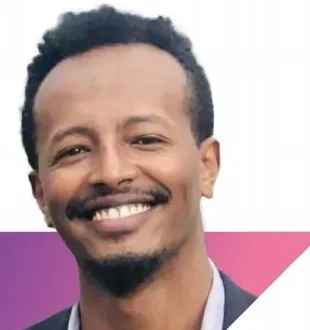
Daniel Getachew
Founder and CEO, Guzo Technologies
Daniel Getachew is the founder of Guzo Technologies, an Ethiopian company that specialises in creating and building VR experiences in CGI. His interest in technology started from childhood, leading him to obtain a Bachelor’s degree in Computer Science and a Master’s degree in Software Engineering. His career spans diverse fields in tech including UI/UX design, motion graphics and XR. He has trained students with different programming frameworks and once worked as a security pen tester. In this spotlight, Daniel shares his journey in the XR space, the challenges tech faces in Ethiopia and his hopes for the future of XR in Africa.
How did you get started in XR?
Being a graduate of Computer Science has allowed me to master Virtual Reality/ Augmented Reality. And then I studied software engineering for my Master’s degree, where my thesis was to create a QR code-based Augmented Reality framework. So, my academic life helped me learn about technology, tools and trends. I also worked on different projects relating to VR, and all these helped me get into XR as time went by.
Could you tell us about some of the roles you’ve experienced in your career?
For one who has different talents, I have been involved in different things. Mostly, I trained students using different programming frameworks which were available on the market. I taught around five or six different subjects. Most of the training was in web technology.
I used to work as an independent contractor for Gebeya and as a freelance worker for different applications, especially local applications. At Gebeya, they basically trained us to become professional developers and put us in a digital marketplace where clients could hire us. I got hired by a Swedish company as a full stack developer. I also used to work as a pen tester (a security pen tester).
I also used to work for the national television company. They hired me as an intern because I was not qualified to be a formal employee. I would create different visuals, especially when news starts, for the intro and outro. I also made a few animation videos, especially for kids.
After I graduated from Gebeya, I participated in local projects, which were big. In the music industry, I contributed to applications in the payment aspect. I participated as a full stack engineer, which is the web part, the DevOps part, the backend, mobile, and the API’s, hooking different payment systems to different products.
I’ve been doing this all over Africa through Gebeya. So I have clients from Senegal, Nigeria, Kenya, Egypt and especially Ethiopia.
Could you tell us about some of the experiences you’ve created?
The first experience, I can say, was my capstone project back on campus during my Bachelors degree. It was called Advanced security & multimedia management System and was one of the top-rated projects by the time I graduated. A total of 10 projects were selected at that time. One of its components was the Virtual Tour experience, which let you see the campus area so you knew exactly where to go. So, new students joining the university would be able to find their way around. It would help them identify the pharmacy, dormitory areas, cafeterias, and all other different things. It was a web-based experience, so you didn’t need a VR headset, but you could see it online in VR, which is cardboard. I never tested Virtual Reality headsets because at that time, we didn’t have one.
Before doing my Masters, I took three months to master Android in developing Android applications using a very unique product called B4X. It’s an Israeli-made product, which I discovered. The guy who created this platform is one of my role models. He came up with an entire framework that does iOS, Android, Java-based applications and open-source hardware products, like Arduino, Raspberry Pi.
I was so amazed that I checked his website and tried contacting him. He gave me one task, which was to translate or add a new language to the platform. I contributed our own language to that product (Amharic language) and I also contributed in building different libraries. For those three months, I was learning about Android applications, and that was the reason to build a mobile-based VR experience.
So what did you use for your 360 images?
I asked my dad if I could use the only precious digital camera we had at that time. I told him I would need it for the next 6 months and he was fine with it. I remember it was a 12 megapixel Samsung digital camera. Imagine having to take more than 70 images in one hotspot. And I didn’t have a 360 camera, so I needed to take individual shots and place them in Photoshop and other applications. I used that to generate the 360 images.
How were you able to learn all of these?
During my free time I would always check the Internet to see what others were doing. I wanted to be able to measure up to what other countries like the US and Europe were doing, so I taught myself. No institution would teach you about VR/AR or any software. I was able to learn from Youtube. I had a hard disk I used in collecting a lot of tutorials. I would watch those whenever I had the time.
I did a lot of reading just to see what I could do to either rebuild or recreate what’s known in Europe or in the US. I came up with the media streaming software. By the time I graduated, I gave it as a gift to the president of the university because they’d been using my product for five to six years, and they were specifically using it for graduation streaming.
Where do you see yourself working in the near future?
I see myself working on my own ideas or being involved in unique technologies, especially technologies which help Africa in general.
What led you to start your own company?
I had been looking for investors, unfortunately, none of them were qualified to understand the technology. I know investors have the cash and they don’t necessarily need to know about the technology, but at least they have to be supportive, or they need to back off from the decision, right?
But these people, they just wanted to see things their own way and would make you an employee in your company, so you don’t make any decisions. You would come up with the idea and hand it over to them.
Most of the investors that I met during that time were not qualified to work long term.
So, I started looking for a way to start my own company and luckily, I established those technologies and I became the CEO, even getting the team before I started the company. Having the right team members to boost your ideas is important.
I made the mistake of looking for the right investor, because investors will come once they see your company works or you have a good product.
When we started the company, we were focused on Virtual Reality and related services. But in about six months, the pandemic entered Ethiopia and made us panic as a startup.
Closing your office for eight months is really bad and you need to pay rent, you have a lot of bills, so we added a different department that only focuses on the hardware aspects i.e. robotics and IoT.
There are clients who need really small design work and a prototype, or a proof of concept. And I said, if we got these two different departments, one working on VR, the other working on the hardware, why not build or come up with the XR?
How has the journey been so far?
Establishing a startup is not easy in Africa. You know that the financial source is one issue. The other is having the right idea on time. Because, timing can be a problem. We thought we were ready to start VR but the situation in Ethiopia, especially, was not encouraging. It’s so frustrating, the politics, the chaos. There are unexpected factors which let you hold on to your idea. And finally, the pandemic.
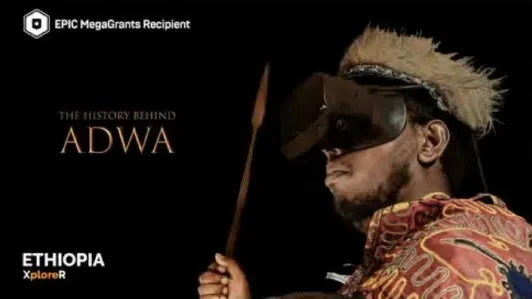
At that moment, I was looking for grants. That’s where I met some of the Epic Games employees and directors, and they told me about the opportunity, and recommended me to the MegaGrants programme. That was one of the best things that happened to our company last year. It took us six months to showcase different experimental projects. We created, we prototyped and we presented it to the team. The grant opportunity gave us the chance last year and we announced four projects.
During my free time, I would always check the Internet to see what others were doing. I wanted to be able to measure up to what other countries like the US and Europe were doing, so I taught myself. No institution would teach you about VR/AR or any software. I was able to learn from Youtube. I had a hard disk I used in collecting a lot of tutorials. I would watch those whenever I had the time.
Daniel Getachew
What’s the area of focus for your company?
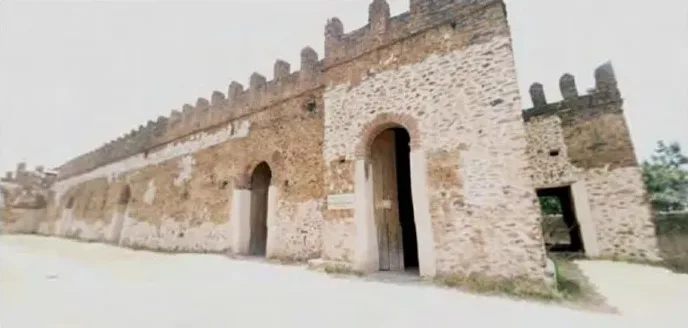
My team is mostly into the tourism sector because we see a big gap knowing that technology by itself is not enough. I think we found it easy to target the tourism sector because Ethiopia is known for different historical heritages, different cultures, and different ways of life. You can name maybe seven of the cultural celebrations, and also historical heritages, that are registered or inscribed in UNESCO. Using tourism was a good way to introduce the technology. Tourism is one of the major pillars put in place towards the country’s development. I feel like we create content for culture. We are the only company in Ethiopia that does photogrammetry. We scan statues, artefacts, and we come up with this futuristic museum that lets you experience all the things that you see in the physical museum. People who see the experience, or who play with the experience would be interested to visit and see the rest of the museum. Other sectors are becoming encouraged and motivated. At this moment, we are also building content for aviation, which is a training or EduTech-related VR content. But most of our projects lie in tourism, culture and the arts.
What has been your favourite experience in XR so far?
My favourite so far is a haptic feedback suit with the experience. There is a bike that you can ride physically in a stationary place and that experience will automatically let you drive some scenes in a VR experience at the same time. We added the haptic suit that we created locally, and used massage motors from a massage suit. We took those components and we modified our own components into those motors and programmed each motor based on different consequences.
At times, it could be audio signals, or something that you can send directly from the VR scene and the haptics will be triggered, that way, you can fully immerse the user in the experience.
We’ve been testing this product ShirShirXR. ShirShir means taking an experience outside with your bike, so you just go from one place to another place to enjoy the place or city. We named it ShirShir XR, because it has both the suit and the experience at the same time. My products are like my children. I don’t give priorities. The story behind that product gave us a chance to present our startup and also our country on a big stage at the Laval Virtual Awards.
How would you describe your business model?
Most African companies that specialise in XR either have good investments or a side project they focus on. We do virtual production, and right now, 80% of our revenue is from virtual production in advertisement. It’s not our official business model, but it’s a way of getting revenue. The business model is not something that directly relates with your annual revenue or a way of getting income to the company. But for us, we want to build VR content. Our VR business model is to produce, to design and to gamify VR content and maybe sell it to business owners. As you know B2C is really hard for VR business, because it requires a lot of gadgets and it might also require third-party application services like Oculus, or Steam and it also needs Internet access. So, on top of smartphones, this will be another additional item or gadget that you have to buy. Based on that number, we will have a target in sales. Our move is not for business for consumers, but rather, for business owners. Maybe it’s a model that lies in these two, which is business to government, or business to business.
What are the hardware and software you work with?
We have gaming machines, like Predator gaming machines, for VR content creation. I think we have four gaming machines, four Oculus headsets, one Oculus Quest, one Oculus Rift One, Oculus Rift S and two Oculus Quest Two headsets. We did most of the projects on Oculus. We have a green studio with lights and two Sony Alpha DSLR cameras that we use to do any production-based recordings and Mixed Reality projects, including Adey360.
We took one month to design that hardware without announcing the item. We just promoted it at different events and people loved it. They pay almost $2 for a one minute video. That’s how we make money for the company.
For software, we use Unreal Engine. I don’t know about other African countries but we rely heavily on this technology not only for VR, but for virtual productions, virtual events, and virtual-based scenes. We keep adding new features on a daily basis and we are still learning the technology. I started working on Unreal Engine after we established the company. Credit goes to my creative director who suggested the platform. We have a few projects that we are about to work on using Unity. It’s easy to use and has lots of added features. Here in Ethiopia, people know more about Unity than Unreal Engine. So, for us to be able to get these projects, we have to add Unity.
How do you select your team?
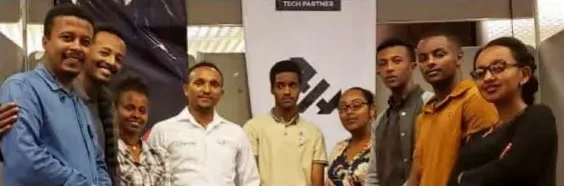
For me, it’s not about the number of people, but about getting the standard and like-minded people who want to learn new stuff and align with my vision. That’s how I found most of the team members. I have my creative director and my brother working with me. The others are people who are interested in working with VR and they are given guidelines. My creative director and I are highly involved in decision making and coming up with concepts. You need to have a team that knows the strategies and also the standards. Then, working on those different VR sections, you might need to hire freelancers to do a modelling part for that content. They will take care of those people and also tweak, modify and arrange the VR scene and the game mechanics. We have one who specialises in gamification. It makes things interesting and he knows the theory of games quite well. He’s not a technical person, but he leads us in the storyboarding, the concept, the flow, and the gamified ideas to be included into the scene.
What are you doing to grow African talent in the XR space?
Although I feel we are behind, with time we need to progress and keep building things in our country and the continent at large. Africa is still way behind. I already have a Youtube channel where I post things to motivate the young members of my community.
I want to be able to inspire the youths in joining this journey. Eventually, I plan to start a training centre. That way, we will have a good number of talents who are capable of producing more content for Africa, especially if they start from Ethiopia and then gradually expand to Africa.
Should the government implement policies to encourage XR growth in the industry?
Tech is now a never-ending idea. I’m sure they believe tech is one mandatory thing that they have to adopt in order to advance their country. The policy is there. But you still need your ministers to individually work on their sector and support the entrepreneur.
We have something we can work on and deliver to the public. We shouldn’t expect so much from the government as they have issues they are dealing with. Without security, peace or food, it’s hard to imagine VR.
What role do you think the community plays in moving the industry forward?
Without the community, having these kinds of ideas are useless. You’ve heard of the Meta stock now failing, right? That’s because he lost his community, his users. If you are well advanced in technology, but if you don’t have the proper community that understands your stake, it’s useless.
You have to invest as much as possible in the community and they have to be convinced of the impact. That’s the outcome of all startups focusing on AR and VR.
Where do you see XR in Ethiopia and Africa at large over the next year and in ten years?
I believe XR is in a good phase in Africa. I’m lucky to be part of this team collaborating with different startups all over Africa. Our future lies in us and we have a responsibility to pass it to the next generation. The more content we have, the more talents we have, and we will get enough publicity, so that investors will come and the ecosystem will grow.
From the Africa XR Report 2022, pages 142–149. Open the PDF at this interview.