
Creator stories N° 03 / 23
Cameroon
Christian Yves Fongang
CTO, SDK Games Africa
Christian Yves Fongang is an XR creator working in Cameroon. He employs XR technology to create gamification marketing campaigns for brands and creates customised VR training solutions for companies. He is also passionate about using his skills to create solutions that impact lives on the continent and globally. In this spotlight, Christian talks about how he got into the XR industry, and how emerging technologies will impact the future of Africa.
How did you start your career in software development?
I did most of my studies in Cameroon where I obtained a degree in Telecommunications and Networking. I had some basic programming knowledge from school, but most of the things I’m doing in programming on XR were self-taught. I got a job as a network administrator in a cyber cafe which gave me free access to the Internet and I decided to learn how to develop web applications on my own. After that job, I moved into software development and that’s where my professional career started.
When was the first time you had an experience with XR?
My first experience with XR was with a South African company called Free Minded Media. We were working on a DSTV project for the reality TV show, Big Brother Africa. This was around 2010-2011. One of the bosses gave us a task. We had to build this augmented reality kind of gamification, where the housemates searched for things using clues that were displayed with image recognition around the house. It was live on TV and we implemented it successfully. After that, together with the boss, we set up a company that focused on gamification using AR.
Could you tell us about the kind of content you create?
That would be both Virtual and Augmented Reality, depending on our projects or the needs of our clients. I am the CTO (Chief Technical Officer) coordinating two companies.
One company is focused entirely on gamification, AR and VR. I always insist on having gamification, AR, and VR depending on the clients’ needs. We also create some training tutorials for the industry on how to use Virtual Reality. I’m also involved in software development and mobile app development with the other company.
How easy has it been to find people with the skill set that you need to carry out projects?
It has not been easy. When I decided to leave South Africa and come back to Cameroon, I spent almost six months looking for people. I had to train people and keep the best that I could at that time. I’m always repeating the same process, which is to train and keep some of them based on the project that I have. When we need to do some 3D stuff and I can’t find the right skill in Cameroon, I’ll have some of my partners and colleagues who are still in South Africa do it for me.
What inspired you to move back to Cameroon and how is the XR industry there?
Moving back to Cameroon in 2016 was a choice I made because of the new technology. The cost of living in South Africa was very high, and training people cost a lot more.
To build a project like the one I have been working on, I needed to be in a place that required less funding. I believe we can build in Cameroon even if the market in South Africa is more ready.
Initially in South Africa, I was taking people from the university and training them in image recognition.
Back there, we were pioneering the field of AR. When I first moved back to Cameroon, XR was still new, and we were the pioneers. When people were looking for AR and VR solutions, most times they were referred to us. It was like nothing was done in Cameroon when I arrived here.
Now we are among the leaders in XR technology, though compared to people in Cameroon, South Africans are a bit advanced. I still have to get complex 3D work done in South Africa because they have the skills.
In these early stages of XR technology, how have you been able to get projects for your business?
So the first project I worked on was in AR back in South Africa, which was for DSTV. Here in Cameroon, the first project I worked on was for school people, it wasn’t public. After that, we worked with a big brand in Cameroon. People were surprised to see the campaign. The experience was wonderful, and I don’t think they will ever forget it. That was how we became a reference for what we’re doing, and we were approached by several companies that wanted to do something new.
What are the benefits of using XR technology?
I’ll talk about gamification first. For me, gamification is a great tool to use to educate people. I was so shocked that we didn’t have people who were working on it in Africa. Our history is going away. Our children spend most of their time experiencing things from abroad instead of experiencing things from Africa.
I decided to start working on gamification, although augmented and virtual experiences are more profound, because they engage the senses which, I believe, helps with memory retention. I would like people to use this technology to train themselves to be better people tomorrow.
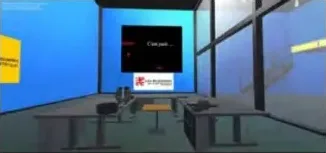
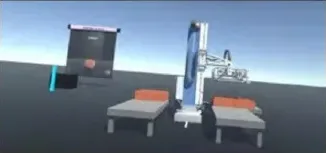
Let me make it clear that the kind of content that I’d like to work on is educational. I’m constantly working on educational content when I have free time and resources. Nelson Mandela said that education is the most important thing that can change the world. Education is very important for our children. When I don’t have the time and resources, I work on gamification campaigns for companies. At the moment we are working on a VR training program for a big brewery in Cameroon. The way it works is that people interact virtually with the machinery, doing everything that they would do physically. These are things that could cost lives and materials, but we are using Virtual Reality to solve that problem.
That’s interesting, how were you able to get the project with the brewery?
When I was working on gamification, I came across people who were working for big brands. They recommended my work to their management boards, and that’s how I started doing gamification for them and helping with their marketing campaigns. When one of the technical directors of the brewery in Cameroon wanted to do a project that would help develop the industry, he considered doing it overseas because there was to be significant VR input in the project. It was called Industry 2.0. However, the people on his management team mentioned that there was somebody in Cameroon who could get the job done. So we were contacted and given the job last year after passing the testing stage. We are now working on a VR training program for them.
Which projects are you particularly proud of?
I’m proud of my current project with the brewery because it has made a huge impact on their training process and cost. The idea is to build it in Cameroon and share it with other parts of the world where they have a presence.
I believe it has reached about five to ten countries at the moment. The educational program I’m working on is still under development so I can’t say that I’m proud of it yet. I should add that doing marketing campaigns is not so interesting for me because it impacts just brands. I want to impact lives.
What is your goal for the educational program and how do you plan to implement it?
The goal is very big. I started working on it when I switched to AR in 2014 and was planning to move back to Cameroon. I started in AR by doing some chemistry and science experiences. Sometimes I did a demo using a phone and a camera. We had to work with some teachers and the Department of Education in Cameroon to provide content. Unfortunately, people in Cameroon demand money whenever you want to work with them. So we decided to first break it down into multiple steps. The first step was to digitalize the content, which we did. The second step was to start introducing Augmented Reality slowly into the process. We were supposed to go live on TV to do campaigns for it, but COVID-19 hit and that stalled things for us. As things are slowly recovering after the pandemic, we are looking at how to get back on track.
We also have big concepts like creating content for VR and also building a content creator for educational purposes. The plan is for teachers to get into Virtual Reality and create experiences for their students. Even if somebody else makes a similar product, we are okay with it as long as we can help children learn faster and memorise better so they can become proficient in the future.
What software and hardware do you use for your projects?
The software that we use is mainly Unity. For hardware, we use the Oculus Quest, Oculus Rift, and the HTC Vive.
It has not been easy. When I decided to leave South Africa and come back to Cameroon, I spent almost six months looking for people. I had to train people and keep the best that I could at that time. I’m always repeating the same process, which is to train and keep some of them based on the project that I have. When we need to do some 3D stuff and I can’t find the right skill in Cameroon, I’ll have some of my partners and colleagues who are still in South Africa do it for me.
Christian Yves Fongang
Many people complain about access to equipment, how easy has it been for you?
Access to them is not easy here in Cameroon. I pay for equipment online and have it delivered to a friend in Europe or the US who passes it along to someone travelling back to Cameroon, and the person will bring it to me. Even when I want to get a computer with graphics cards, there’s no easy access to that. The last computer I bought was from South Africa, and it was my sister who was returning to Cameroon that brought it along in her luggage.
How does the lack of access to equipment affect your work?
If I want to work on a gamification campaign that requires body trackers, if we don’t have somebody who’s travelling, we have to cancel the client’s project, because they can’t wait for one or two months. There have been several instances of project cancellations due to a lack of accessories. Renting out equipment is also strained, because there are times when we have less than what a client wants. Even if they have the money for it, they’ll have to order it and wait till it gets here. So that’s a negative impact on our work.
Could you tell us about the challenges that you face as an XR creator?
There are three challenges that I face. The first is the lack of human resources, and the second is funds. Training people requires funding. You cannot just hire people and start training without giving them something. The third challenge is that the equipment is very expensive in our market.
What I try to do is to get university students as interns and train them, because it costs a small amount. At the end of the day, some of them will stay and work with me, and the others will go. That’s life. When it comes to funding, I get funds from the projects I do for paying clients and inject them into my project.
What misconceptions have you encountered regarding the work you do?
Mostly when I show people a demo of what we propose to do for them, they are amazed. Even if they believe it’s just a game, they are still amazed by it. So, it’s not really a bad misconception.
What are your thoughts on Africa’s representation in the XR space?
There’s a gap in our representation on the global scale. We don’t have a lot of African content representing Africa, and we don’t have the people that can create the content. I believe there is still so much that Africa can do in the VR and AR space, and we need more people that are skilled in XR technology.
How important do you think community is in growing the XR space in Africa?
There’s the African AR/VR hackathon in Cameroon. We have been working with the community that came out of there. That’s mainly the event I’m engaged in. I was also invited to South Africa in November, last year, to speak at the African Trade Fair. There was a discussion forum about the XR community.
Ultimately we must consolidate what we have at the moment. First, we need funding to support the community. If we can get pioneers to move from country to country to rally people to support the industry, that will be great. Secondly, we can organise showcases that will last for a week. By this, we’ll be able to create awareness and pique people’s interests. We are not just going to showcase what we have done, but also train people. For instance, we can do a showcase in Nigeria this year, next year we do it in Cameroon, and we move like that. We need people who have experience in the industry to move around these countries and get people’s attention.
Third, we have to consider where we can invest the funds so that we can get people’s interest. If we look at when the Internet came to Africa, it was popularised by opening cyber cafés where people could access it. So, if we open public centres with good equipment where people can go and experience Virtual Reality, it will encourage more people to use the technology. We can come up with a name for it.
If you had access to more funding, what would you do with it?
If I receive more funding I’ll focus on my educational program. I want to launch a TV show where we can demonstrate what we are doing for people to see and to gain their interest. As I mentioned, I’m mostly funding the program on my own.
I received a little support from some companies when I first did a TV show where I had two schools compete against each other using AR and VR. I did only one edition of the challenge before COVID-19 hit. So, with more funding, I’ll be able to relaunch the competition and get schools to participate.
What can you say about policy and how it can impact the development of the African XR space?
Let’s look at the Metaverse. We need to be able to protect not only the privacy of people, but also protect the content creator. Our work as XR creators is like that of an artist. Creating a Metaverse world is unlike the content creator system that we are currently working on, where people will have access to it. If I create a Metaverse, I expect that there should be a policy in place that ensures I receive some royalties. The privacy policy should also be clearly defined because people, especially children, are getting into the virtual world and they need protection so that they can access only appropriate content. There should be policies in place to regulate content in VR.
Do you think Africa is well prepared to experience the Metaverse?
When I want to talk about the Metaverse and how we can live in it, I usually use Mark Zuckerberg’s video to explain it to people. I use the video to show them that we’ll be able to live and interact within the Metaverse. Most people are still very confused because it removes the need to connect and interact physically. They are scared of being isolated from people. The fact is, you cannot stay indoors wearing the headset all the time. Yes, you need the headset to live in the virtual world and enjoy all its benefits. But, you need to take the headset off to live your life in the physical world.
I grew up with a lot of electronics around me, from Playstations to computers. I’ve always managed to split my time between them and pursue my social life. So, I’m not worried that I would be sucked into the virtual world.
The Metaverse is growing, and it’s something that I dreamed of when I was younger. Before I started the educational project, I was thinking that Africans travelled to the US or Europe to study. With what we have now and the accessibility to headsets, a person should be able to stay in Africa and study in the US.
You can attend a virtual class with your classmates and once the class is done, you take off the headsets and resume your normal life. So the Metaverse promises the ability for Africans to study anywhere in the world without leaving the shores of Africa. That’s why I only see the positives that the Metaverse offers if we can manage it.
How can Big Tech engage Africans in relation to the Metaverse?
I haven’t thought about how Meta can engage Africans. I assume that they are already working on some content. To answer your question, one way they can engage us is to build a platform for us to interact. Another way is to allow us to create our content and plug it there. For me, that’s the easiest way to engage us, and it’s what we propose to do for teachers with our educational content creator.
What is your vision for XR in Africa both short-term and long-term?
I’ll say I don’t have expectations one year from now. I said before that the equipment is still costly for us here in Africa. We are still trying to provide food to eat every day, and we don’t have the luxury of purchasing that type of equipment.
But in ten years, I’m looking at XR equipment being in every household just like we have the television. People should be able to experience everything, travel across the world without moving from their homes, learn new skills and embrace advanced technology. That’s how I envision the future of the Metaverse and XR in the long term.
My short-term goal is to stabilise my finances. Without financial stability, it will be difficult to create great stuff. I also want to finish the project that I’m working on with the brewery in Cameroon.
What more can you say about working in Cameroon?
I’ll say I’m a little bit lucky to have good Internet speed. It’s not as good as the one in South Africa or the States but it’s better than what most Africans have access to. We have problems with the Internet, equipment, and electricity. A content creator has to deal with electricity cuts for two to four hours daily. It would be cool if Oculus Quest or other headsets come with a battery pack so that we can charge and use it instead. If you have to deliver the work that day, you may be unable to meet the deadline.
Most of my clients are based in Africa. We are working on an approach to get referrals from one of the guys I trained. He continued his studies in Europe and was able to start working thanks to the skills he developed while he was with us. He mentioned that he’s getting a lot of orders for XR and wants to refer those companies to us. So we are looking forward to having clients from Europe and the US as well.
Beginnings are very difficult but I’m sure we’ll get there. I see young people in Cameroon building their skills even though they don’t have access to equipment. This is why I believe they will do amazing things when given the chance to.
From the Africa XR Report 2022, pages 126–133. Open the PDF at this interview.