
Creator stories N° 02 / 23
Kenya
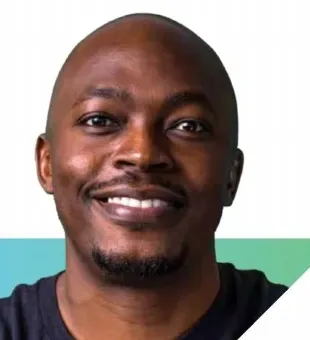
Brian Afande
Co-founder & Managing Director, Black Rhino VR
Brian Afande is the co-founder and managing director of Black Rhino VR, an award-winning extended reality agency based in Nairobi, Kenya. Since the company’s inception in 2015, he and his team have been breaking ground in Africa, and have achieved global recognition in the XR space. Brian believes that storytelling is a powerful tool to connect people and seeks to revolutionise XR in Africa through training and empowerment of the younger generation. In this spotlight, we share the story of Brian’s experiences coming into the XR space and what he thinks Africa needs to do to grow the XR industry.
Black Rhino has made a name for itself in the XR space, can you tell us how it all started?
This is a story based on faith. I have a background in computer engineering and I also graduated with a certificate in Philosophy and Epistemology from the University of Nairobi. I had a stint as a club DJ, and on radio and tv, but my strongest background is in marketing.
I was the Retail Portfolio Manager for an international company called Converse, which was operated by Kenya International Sports Limited. One Saturday when I was making my weekend rounds of the department stores, there was a terrorist attack, which the world came to know as the Westgate terrorist attack. I was one of the survivors, and that six-hour experience changed my life. After I was rescued, I promised God that I would try to do something different with my life.
I was young and had so many opportunities. I prayed about it and went into a Bible Study to understand my destiny. Two things were clear to me: I had to leave a legacy for my children, and I had to get married and start a family. Immediately after Westgate, I got married, resigned from Converse, and set up Black Rhino VR with my business partner, Michael Ilako. I tell a lot of people that Black Rhino is a business based on the Kingdom principles that underpin our faith, mission, and vision.
When you decided to use XR to create your legacy, were you already exposed to 360 videos or XR in general?
At that time, Facebook had just acquired Oculus for around $2billion and I wanted to understand why Facebook had made such a decision. When Michael and I delved into the technology itself, we discovered that 360 video was one of the sub-sectors of VR. We did a lot of research to understand more about 360 videos. Without any interaction with 360 and VR, we were able to do a feasibility study and create our unique value proposition.
We realised that we needed to have a 360 camera to understand how to shoot 360 videos. The only rig that was affordable was the GoPro 360 rise (It had six GoPro cameras embedded in it). We needed a good machine to render the files we were going to create. There were none present in the market, so we decided to build our own. The cameras and the Oculus DK2 (VR headset) were shipped in from the States, along with other computer components from different parts of the world, and we built our machine called The Beast. That’s how we were able to set up our 360 studio and start making 360 videos.
It must have been tough starting up at that time, how did you put everything together?
Michael and I got loans from our wives. We sat down with our wives to inform them that we wanted to start a VR company, but in retrospect, it was so hard for me to explain VR without having any experience. My wife didn’t know what VR was, but I explained it as best as I could, and she saw the passion I had for it and supported me. When we started, most of the work was done by Michael and I. Michael is a renowned filmmaker in Kenya and It was easier for him to understand the 360 pipeline so the transition from linear to equirectangular wasn’t a challenge. Our first employee was an intern. He was learning the ropes when we were on set and assisted with stuff like bringing cables or walkie-talkies. For the business itself, the first core team was three people. Michael was shooting and editing while I doubled as a producer and did the shooting as well. Back then, we realised there were financial opportunities in the VR space, so our first legal employee was an accountant. I always knew that one of the things that a company needs to have is a very sound financial policy and framework to support its growth.
How did you progress from there to landing your first 360 video gig?
We started with an organised R&D approach. For us, research and development were at the core of our plan. We couldn’t ask companies for money because we were still trying to understand the technicalities of 360 videos. There was one time when we did something for a hotel. We told them to give us accommodation for three or four days and we’d create a 360 video for them. They agreed. That was how we were able to stay at different hotels just creating outdoor wildlife experiences.
After our travels, we would edit all the footage that we got. We didn’t have an office at the time, so we converted one of the bedrooms in Michael’s home into a studio. After editing, we showcased our work, and that was how we got the big break with Safaricom. Safaricom had just launched a huge campaign in Kenya called Blase. They needed 360 behind-the-scenes footage of the TV commercial they were shooting. After we shot the footage for Safaricom, we got a huge contract to create an experience for them. And that’s how we settled into the commercial part of the VR business.
Looking back, what were the challenges you faced?
I feel like there were a lot of challenges back then simply because people’s mindsets were not ready for the technology itself. In Africa, technology anxiety was and still is real. Convincing people to take up XR technology was one of our biggest challenges. I don’t subscribe to coincidence. I think God orders our footsteps, and this takes me back to the Kingdom principles we follow at Black Rhino VR.
The thing is, my skill set and Michael’s skill set are unique and complementary. We were joined at the hip in those early days. We used to have brainstorming sessions until like three in the morning. We didn’t have the kind of robust software that has come up now, so we had to understand how to make things work. Even now that we are doing a lot of work within the XR spectrum, you still see people thinking that the technology is foreign and intimidating. That’s why a lot of the work we do at Black Rhino is demystifying the technology itself so that we can change people’s mindsets and help them understand the value of the technology.
Could you tell us a bit more about the kind of content Black Rhino creates and collaborates on?
I think 360 is still the lowest-hanging fruit and probably 40% of our turnover. What we also do is create experiences around computer-generated VR, Augmented Reality experiences, enterprise solutions, and content. We don’t do anything in Mixed Reality because the hardware is expensive. We also do a lot of training and capacity building, especially for young people that are interested in XR technology. I don’t want to be the only person creating VR and AR solutions. So, next year, Black Rhino will launch some XR platforms geared towards empowering content creators to disseminate and create their AR and VR experiences.
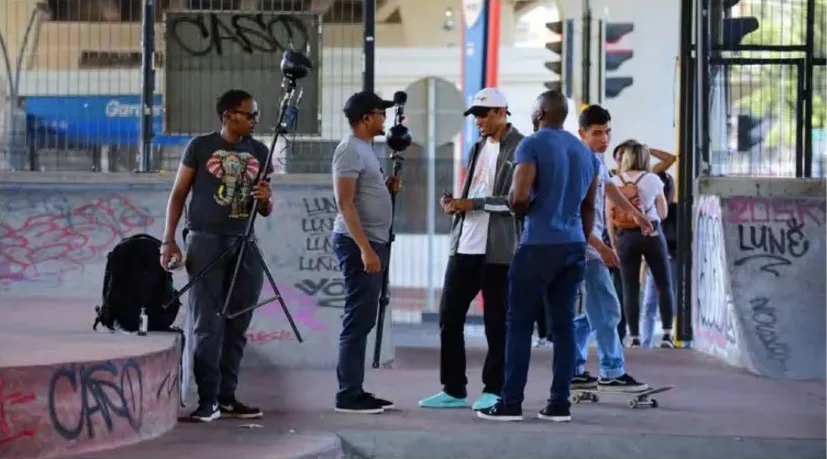
Extended Reality technology is still considered highly nascent in Africa. I believe in co-creation and collaboration because it helps to bridge the knowledge gap. One of my favourite projects was with Deep VR in South Africa. We had applied to the Oculus ‘VR For Good’ initiative, where content creators were partnered with non-governmental organisations, or people doing social causes to create a 360 video for the social cause.
We partnered with Skate for Great, an NGO in South Africa, and we worked with Deep VR to create the content in Cape Town. It was amazing for us because we used to read about them everywhere. And you know the guys were like, ‘Hey! Black Rhino, we’ve heard about you guys.’ And we were like, ‘Deep VR, we’ve heard about you guys too.’ You can’t make this stuff up. It was an honour to work with them, and the energy on the set was just magnificent.
You just launched a space, OUT Reality, what was the thought behind creating it?
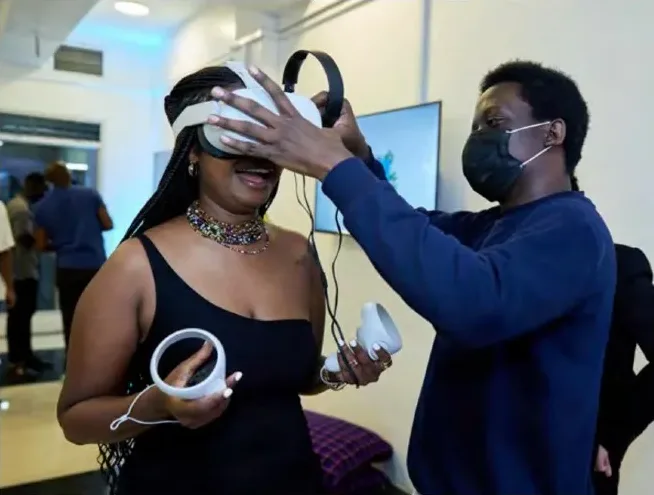
OUT Reality is our new baby. It was conceived with a vision to democratise access to extended reality infrastructure. It has two sides. The first is The Space, which is a platform for artists and contemporary art audiences to access technology and exhibit new media. The Space itself has a commercial arm as the first digital exhibition space in Kenya. So you can rent a space if you want to create amazing experiences or do interactive art pieces. Whatever it is that you want to do, it doesn’t have to be XR.
And then, The Lab, which has the infrastructure, a VR headset, rendering machines, and everything that you need. It is a space for artistic exploration and sits at the intersection of art and technology.
For instance, an artist can come and work with a guy in blockchain, or work with a guy in AI. The lab itself aims at providing an experimental space that promotes interdisciplinary collaboration. We want to demonstrate the value of extended reality in Africa, not just in Kenya. And one of the things that we feel is important is access to technology and infrastructure.
I think the policy that we should all be looking at is how to support the XR industry. I think supporting SMEs from the ground is so important and the support is not just monetary.
Brian Afande
Why do you think the community is important in growing the XR space in Africa?
My five siblings and I were orphaned when I was 16 years old. We would have lived on the streets if not for an uncle who took us in. Sometimes we went to bed hungry, and for many years I walked without shoes. So, one of the Kingdom principles that Black Rhino has is, the hand that gives is the hand that receives. Extended Reality empowered me and I’ve seen it do the same for others. Giving back to the community is Black Rhino’s meta culture. I think it was Nelson Mandela that said, ‘If you want to go far, you walk with others.’ So this is the point that we need to start experimenting and working with others, developing the value of the technology from the ground up, and demystifying what the technology is.
This is what makes up our mission and vision, and what informed the four Ds.
The first D is to design experiences based on the human-centred design approach. Humans are at the epicentre of XR technology. XR technology does not exist without human intervention.
The second D is to demystify the technology. People fear technology, that’s why we want to demystify it by organising hackathons, workshops, discussions, and partnerships.
The third D is to deploy the technology by creating the building blocks of the future, which will be the fundamental structures that will help us reach mass adoption of the technology. We put resources into building these structures and infrastructures to support the growth
The third D is to demystify the technology. People fear technology, that’s why we want to demystify it by organising hackathons, workshops, discussions, and partnerships.
The fourth D is to deploy the technology by creating the building blocks of the future, which will be the fundamental structures that will help us reach mass adoption of the technology. We put resources into building these structures and infrastructures to support the growth.
Sometimes it doesn’t make financial sense to run an XR agency, but look at what we’ve achieved - from two co-founders to a team of 15 people. God uses what’s in your hands to bless you just as he did with Moses when he turned the stick into a snake and parted the Red Sea. That’s why I know my destiny is deploying XR in the African context. I call myself an XR evangelist because I have witnessed it change the mindset and lives of people. Black Rhino has something called ESOP, which is the Employees Share Opportunity. Some individuals in the company have been with us for seven years. They are not employees but partners. We sit at the table as equal partners and talk about what we are trying to do with the technology. This is why we are passionate about empowering the next generation of innovators and inventors. It’s not a job, it’s our purpose; it’s not a business, it’s our legacy.
Do you have training or workshops?
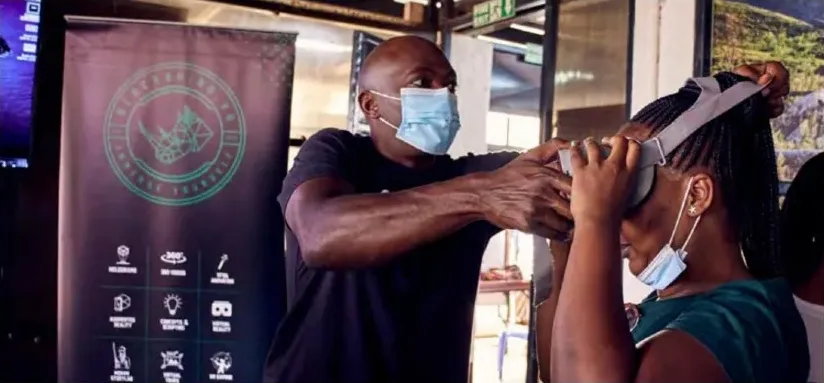
Of course, part of the demystification work that we do is to engage the community at every level. One of our schools is located in a slum in Kibera. We could have taken the school to an upper-middle-class neighbourhood, but we decided to take it to the slum because we believe that technology is the greatest equaliser. The school takes in six women from the film centre ecosystem. While three of the women are from Kibera, the other three women are from different professional settings. People come from urban areas to Kibera to understand not just the technology itself, but for cultural integration. We have workshops, demystification sessions, and discussions in every area across different demographics, and psychographics, to ensure that the potential and the power of the technology are understood. We also empower them to start creating solutions, or content, based on the challenges they’re experiencing in their society. So technology is an extension of their personalities which can be used to create immersive stories and AR experiences about the slums and urban cities.
You are passionate about building spaces and you need funding for that, how have you been able to finance your projects?
Our projects have attracted funding from different institutions. Just to name a few, we’ve gotten funding from the Ford Foundation, GIZ, Goethe-Institut, Meta, and the French Embassy here in Kenya. So there’s a lot of funding that is in capacity building. One of the challenges that people face with funding is that they don’t see XR as a business.
What is your business model? Even if you’re an artist, you need to understand that your art is also a business. The majority of XR is also within the Cultural and Creative Industry, and within the CCI, you have a lack of soft skills. People don’t understand how to write a business plan. People don’t understand how to do market segmentation. People don’t understand how to build a brand.
Speaking of funds, have you considered the role of policy in the growth of XR space on the African continent?
I’ve had numerous conversations around policy, but I must confess that it’s not my strong suit. Within the whole XR ecosystem, as Black Rhino, I don’t think there’s any policy work that will be done under our belt, because we are still trying to survive the tide, and look at how we can create financial viability, and also social impact at the same time. But if you ask me, I think the policy that we should all be looking at is how to support the XR industry. I think supporting SMEs from the ground is so important and the support is not just monetary. I say as Black Rhino, my problem is not money. My problem is shifting mindsets. I think support from big tech companies is a question of whether they have it as part of their company’s financial policy or not. Regardless, I see the value in creating policies that would support the growth of SMEs.
You’ve told us about the content you create and your projects, walk us through the structure of the business?
Great question. So Black Rhino’s business model is about 60% commercial and 40% community development. I want to talk about human resources before I go into the hardware. The company has different departments cutting across 15 individuals. The marketing intelligence team is in charge of sifting through the XR ecosystem, and getting market insights. The finance team handles the financial structure and policies. The business development team is in charge of creating leads, positioning the company in the market, and developing proposals and pitches.
PR and communications and community management handle all our communications. It’s the onus of our communications department that Black Rhino’s voice (brand voice) stays consistent across all our communication platforms. The business assurance team creates structures that support the business. They ensure that there are structures that support turnkey business and an exit strategy in case investors come around. The marketing department has me as the Managing Director, and we oversee the running of the business and make certain of annual revenue growth.
The hardware includes all types of VR headsets, rendering machines, Windows-based machines, diverse camera solutions (live camera solutions to professional filming 360 cameras), sound solutions (spatialized audio sound solutions and lapel sort of subject capture sound solutions), and 360 photography equipment that target e-Commerce platforms. I believe in the future of e-Commerce and we’ve invested heavily in it, leveraging on AR. I’m happy because it has come at a time when I believe in creating that value structure within the company, after years of investing hundreds of thousands of dollars into it.
In terms of logistics, we use different forwarders from all over the world. We believe in partnership. Our logistic partners help us bring in a lot of equipment. Access to some equipment from both a cost and logistical perspective is crazy. It’s the reason why we may be audacious enough to create the first VR headset out of Africa. We’ll leverage the computing power of mobile phones to achieve mass adoption of the technology. Even John Carmack from Oculus said that when Oculus discontinued the Gear VR, they missed an opportunity. Africans need to see how to invest in VR for mobile.
What are some of the biggest challenges XR creators are currently facing in Africa?
There are a lot of challenges. Number one, knowledge needs to be spread. We have a deficiency of skill sets, and our educational system is subpar. People in Africa believe that the West is more knowledgeable in XR. This is a form of neo-colonisation, because people look to the West for some of the answers of XR, although I’ve met very brilliant stellar Africans who understand different sub-sectors of XR.
From an engineering and storytelling perspective, Africa stands a chance in XR. I love to collaborate with the West because they have better social systems that allow them to afford a VR headset for $400. They have better companies that started way before we started in 2015. So I still believe in some form of bilateral engagement between, let’s say, some countries in the global north and global south. Another challenge is access to software and hardware. We need to start looking for ways to get past this, even if it means negotiating with companies like Oculus to get headsets at subsidised rates. Another challenge that we have is spaces. There are online and virtual communities but no physical communities. That is the reason we set up OUT Reality. These spaces are needed so that like-minded people can converge, experiment, and push the frontiers of XR.
What comes after is policy and how it can serve the community. From an educational standpoint, we need to spread the knowledge of XR to different demographics. There need to be discussions on how to incorporate it into schools curricula so that kids can start understanding the power of this technology and create their solutions as they advance. But I must say that we’ve proven to be resilient in Africa. We’ve found ways to ship in equipment, we’ve found ways to create communities and have meaningful conversations about what comes next. Already, we’ve created opportunities for us to start speaking and working towards a globalised XR presence. I see a future where Africans export XR content and solutions to the West and I’m proud because it’s by Africans but for a global market.
What more can you say about understanding the XR industry in Africa?
There’s a very bad joke that goes around where they say, the only thing Africans understand is consumption. We consume, we don’t produce. XR will start producing, whether it’s in Nigeria with Imisi 3D doing projects with students in schools, or in Ghana with NubianVR, or getting funding from UNICEF. I see the knowledge gap closing slowly at the grassroots level. In Africa we’ve been able to innovate around the mobile phone, more than on any other continent. So I would put my money and my resources into AR because I feel that Africans might lead the space when it comes to Augmented Reality.
Africans are not telling valuable stories to other Africans. We need to change this. Mark Zukerberg is in the clouds. He’s unreachable. So if you talk about him, I can’t relate. But if you talk about Nigerians or Kenyans creating experiences, I can tell these stories to Africans. I have this story about a guy who walked into my studio four years ago. He was a linear video director and photographer. I put a VR headset on him for the first time, and this guy has never looked back. The other day he created a VR experience where you can shop for African clothes and it’s not your traditional H&M sort of thing. He created a whole Metaverse. We can’t keep comparing ourselves with the West. Immersive storytelling didn’t start with VR in Africa. It started with our grandparents and their grandparents when they came to visit. Our food, music, and culture are enriched with immersive stories. Africans need to start telling success stories about other Africans and make those Africans ambassadors.
The Metaverse is the next generation of the Internet but on steroids. It’s a foreign sort of technology for now, because of the barriers to entry in Africa. We are still battling Internet issues in Africa. How will we be able to provide the sort of Internet speed that is required for the Metaverse? Although technology is crawling in Africa, one day like Usain Bolt, we are going to run very fast. Before that time comes, we have to look at the challenges of today and come up with Afro-centric solutions. Only then can we start talking about the Metaverse, because if you ask me, the Metaverse in Africa does not exist.
From the Africa XR Report 2022, pages 116–125. Open the PDF at this interview.