
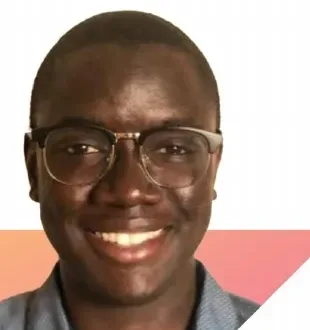
Creator stories N° 01 / 23
Senegal
Abdou Khadre Diop
Product Owner & VR developer, Ownlabs · CEO, Venturi SARL
Abdou Khadre Diop is an XR creator and founder of OwnLabs, a VR app provider for the simulation of science labs for college students. In this spotlight, he shares his journey into XR, the impact his solutions are making and his hopes for the future of XR in Senegal and the world.
This interview has been translated from French to English.
How did your first XR experience happen?
It happened with Ownlabs, precisely with the virtual scientific laboratory. I thought using Virtual Reality could be a good way to solve our problems, without the student noticing a big difference between what he is doing and reality, while keeping the operating costs acceptable for the school and for the student.
At the time I got myself a Google cardboard, I had a telephone and I felt that the problem of the scientific experiment can be solved like that. I made a fairly basic prototype with my phone and the tool. I learned all the steps: The game design that must be done before, how to cut and make objects, 3D, scripts, involving sound, backups, texture, all that stuff. It was really just for fun. I thought I could solve the problem like this.
When I started with the prototype, I was also going to see how the market side would respond. We researched the students in Senegal -how many per region - the number of boys and girls; and which schools had access to a computer room, and studied all the statistical data.
How did you acquire the necessary skills to venture into XR?
With Coursera and EDX, we trained ourselves. On YouTube there are great game designers, developers…you have to follow all these people and soak up technologies. Subsequently, during my Master’s program there were teams who came from abroad and shared their experience especially in the field of video games. So it helped me learn fast.
Do you work 100% with immersive realities or do you integrate mobile, web and others?
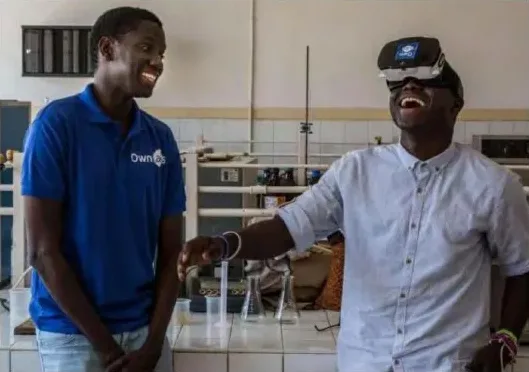
Our base is immersive realities, including virtual, mixed, and augmented; but we can adapt them to several media. We can go on the web, on stand alone headphones, fixed headphones, we have these different choices. Though the smartphone is much more suitable when it comes to augmented reality.
What applications did you use to develop your solutions?
We started with Unity because it was the most affordable platform technically. We also use Unreal now.
What motivated you to continue in the field of VR given the many difficulties it entails and the low level of knowledge of the population?
We know what it has brought to the people. Today, we have made a change, we have gone from only the scientific laboratory for high school students to solutions for plumbing, and with partners that we have, in electricity, automobiles, etc. It is quite diverse. And this diversification generates a much more important aspect which is the reduction of training costs.
What are the challenges you have encountered as an XR creator in Senegal?
We have challenges in finding the skills that are necessary for setting up a platform or creating a VR tool on the African continent. I’ve discussed it with people in Nigeria and Kenya who do pretty much the same thing and we all have the same problem finding competent people. There’s also the challenge of funding, as these technologies are not well-known. In fact, few organisations are willing to risk it.
Because this technology is not well-known and the market is not yet mature enough to adopt it en masse, we have to sensitise the community.
The last issue is with market adoption of these technologies. But thanks to the test phase that we carried out in January, we are quite confident on this subject, we’ve had very positive feedback from the school principals and the teaching staff for the technology of Ownlabs.
We have challenges in finding the skills that are necessary for setting up a platform or creating a VR tool on the African continent. I’ve discussed it with people in Nigeria and Kenya who do pretty much the same thing and we all have the same problem finding competent people.
Abdou Khadre Diop
How are you able to get the equipment you need?
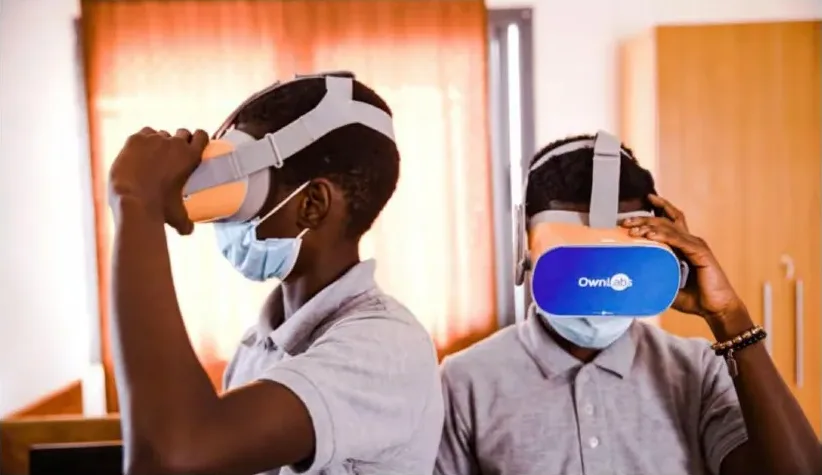
In relation to the purchase of equipment, we based ourselves on two different sources of financing. Self-financing, where we put money in and bought the equipment ourselves, then we added funding from our partners like Sonatel, Ericsson and the DER.
Do you have any partners or people you collaborate with?
As the technology was not that popular, we had to really try to make it known. We did this through the various competitions we won. We got an Ericsson Innovation Award to the tune of $25,000; won The Orange Prize for Social Entrepreneurship, and we were also able to win the challenge organised by the French Embassy and the French Institute, so it’s through these three points that we were able to have our partners, who continue to trust us to this day. Sonatel gives us support in training and funding. On the side of the DER, they help mainly in the financial structuring of our solutions.
In your opinion, what kind of funding do you think is best suited for the XR environment?
XR technologies are actually quite complicated for market adoption. I met people who invested 300,000 dollars just for a research and development product with no real link to the customer, and which still needs to be fine-tuned. On the other hand, the source of financing that could be adapted would be equity from these large groups that support start-ups. They tell us to master a technology they have uses for, we find solutions to tangible problems and we do big business. I think that’s the best source.
What are your thoughts on the regulations required at policy maker level that can support the XR industry?
I think that when politicians decide that one technology or another should be favoured, that gives a certain confidence to investors who say to themselves “Ah! Politicians want to support this, so we will follow.” It’s like what happened in France when the French State decided that the whole State must be on the Cloud, and the Cloud has done incredible good in France. In Africa, in relation to the regulations, it is quite vague.
What role do you think big tech companies should play to support the African XR space?
If the creators of hardware like Oculus, HTC, actually manage to make them easily accessible, I think it will allow content creators to have a much larger market.
What is your vision for Ownlabs in the coming years?
We are not going to limit ourselves to Virtual Reality headsets for science. We are going to move towards medicine and other fields because I think that our technologies can be used in a much broader way. It is up to us to be players in this immersive technology and offer solutions to people who work in these fields.
What makes you certain that XR technology is important for Africa?
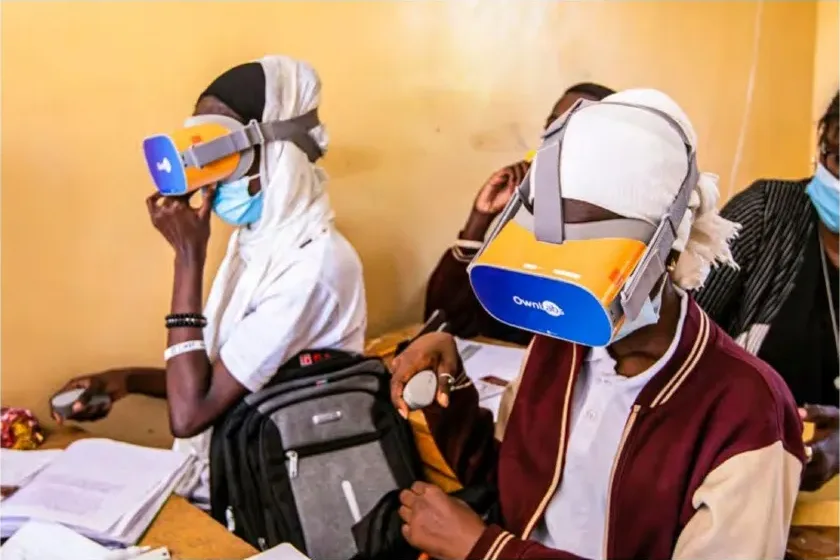
When I look at the feedback we have from people in the field, from students - because we have done four schools in Senegal in three different regions, where we have tested around 300 students and fifty teachers in high schools, the information we got proves that these technologies can be used on a large scale to solve problems such as science learning in high schools.
I think that if we take these technologies in hand and use them to confront the problems that exist on the African continent we can really have a huge impact.
From the Africa XR Report 2022, pages 110–115. Open the PDF at this interview.